Published by: AutodromeF1 Editorial Team
Audi F1 Project Navigates Leadership Transition Amid Ambitious 2026 Debut: A Strategic Reassessment of Priorities in the New Regulatory Era
London, United Kingdom April 6 – In the high-stakes world of Formula 1, where engineering precision meets corporate governance and human dynamics, few developments carry the weight of a sudden leadership change at a manufacturer entering its maiden full-works campaign. As the 2026 season unfolds under groundbreaking technical regulations, Audi’s Formula 1 project finds itself recalibrating its operational structure following the abrupt departure of Team Principal Jonathan Wheatley after just two races. This move, officially attributed to personal reasons, has thrust seasoned engineer and project leader Mattia Binotto into an expanded interim role while underscoring the German marque’s deliberate preference for integrated, long-term internal solutions over high-profile external appointments.
The transition arrives at a pivotal juncture. With new power unit architectures, revised chassis concepts, and a heightened emphasis on sustainable energy sources defining the 2026 regulations, Audi—having fully acquired and rebranded the former Sauber operation—embarks on its journey not merely as a participant, but as a committed constructor aspiring to challenge for podiums in the medium term and championships by the end of the decade. Early points scored through the efforts of drivers Nico Hulkenberg and Gabriel Bortoleto provide modest encouragement, yet the leadership shift highlights the complexities of aligning race-team execution with powertrain development across geographically dispersed facilities in Hinwil, Switzerland, Neuburg, Germany, and the emerging Bicester technical base in the UK.
The Context of Jonathan Wheatley’s Departure
Jonathan Wheatley, a respected figure with nearly two decades of experience as Red Bull Racing’s Sporting Director, joined the Sauber/Audi project in 2025 to spearhead the operational transformation. His appointment was widely viewed as a strategic reinforcement, bringing deep institutional knowledge of efficient race-team management and regulatory navigation. However, less than a year into his tenure—and mere weeks into the competitive 2026 season—Audi confirmed Wheatley’s exit with immediate effect following the Chinese Grand Prix.
The official statement cited “personal reasons,” a phrase that in motorsport often masks deeper strategic or personal considerations without delving into speculation. Industry observers have noted concurrent interest from Aston Martin, where Wheatley could potentially assume a senior role amid that team’s own restructuring involving Adrian Newey. Regardless of the precise motivations, the departure represents a significant inflection point. It removes a key operational leader at a moment when seamless coordination between trackside activities and factory development is paramount under the complex new ruleset.
Wheatley’s brief stint nonetheless contributed to the foundational groundwork for Audi’s entry. His experience helped stabilize processes during the critical handover phase from the Sauber identity to the full Audi branding, including integration of personnel and systems. Yet, the brevity of his involvement also illustrates the unforgiving timeline pressures inherent in F1 manufacturer projects, where personal commitments and professional ambitions can intersect unpredictably.
Mattia Binotto’s Expanded Mandate: Bridging Chassis and Powertrain
Stepping into the breach is Mattia Binotto, who has served as Head of the Audi F1 Project since 2024. The Italian engineer, previously Team Principal at Scuderia Ferrari from 2019 to 2022, now assumes additional responsibilities for day-to-day race-team leadership on an interim basis. This dual mandate positions Binotto to oversee both strategic project direction and operational execution, ensuring continuity across Audi’s dual-site model.
Binotto’s background brings distinctive strengths to the role. His technical expertise, honed through years managing Ferrari’s power unit and chassis programs, aligns closely with Audi’s need to harmonize the Hinwil-based chassis operation with the Neuburg powertrain development. In recent statements, Binotto has emphasized the necessity of focusing significant resources at the factory level to drive the comprehensive transformation required—not merely incremental development, but a fundamental evolution of processes, culture, and performance benchmarks.
He has made clear that while he will shoulder the interim team principal duties, Audi is not seeking a traditional standalone Team Principal replacement in the conventional sense. Instead, the organization is reorganizing to provide targeted support for race-weekend management, allowing Binotto to prioritize factory oversight where the most substantial work remains. This approach reflects a mature corporate philosophy: Audi, as part of the Volkswagen Group, operates within a structured framework that values systemic integration, accountability, and long-term project coherence over individualistic leadership models.
This structure contrasts sharply with more entrepreneurial or equity-driven arrangements sometimes sought in the paddock. It prioritizes engineers and managers who can navigate the intricate matrix of regulatory compliance, supplier relationships, and cross-departmental collaboration essential for success in the 2026 era, where power unit efficiency, energy recovery systems, and aerodynamic efficiency under new constraints will define competitive hierarchies.
Christian Horner and the Limits of External High-Profile Appointments
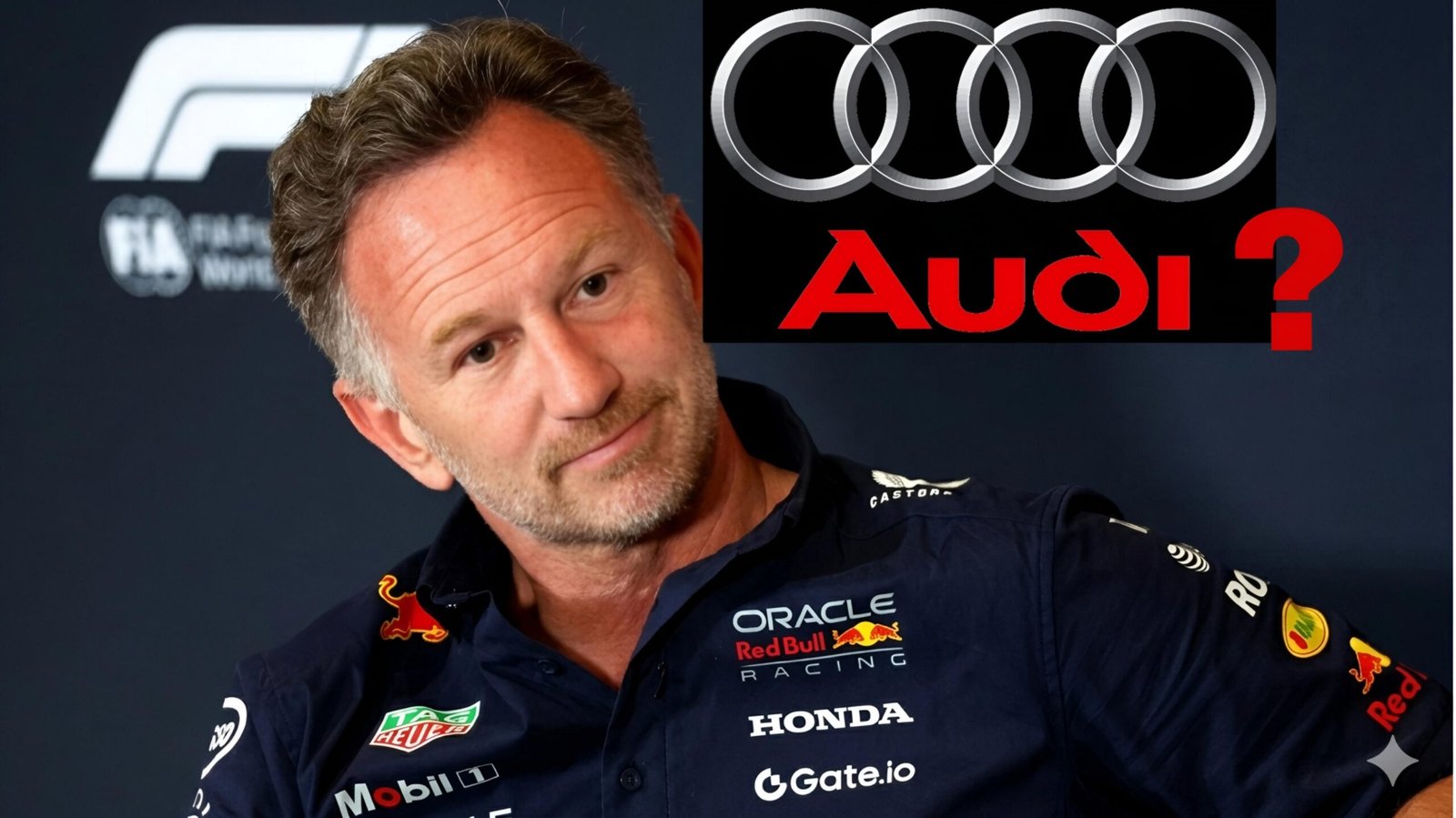
In the wake of Wheatley’s exit, paddock speculation inevitably turned toward potential successors, with former Red Bull Team Principal Christian Horner emerging as a topic of discussion. Colombian driver and pundit Juan Pablo Montoya publicly endorsed Horner, highlighting his two-decade tenure at Red Bull, during which he transformed the team from a mid-grid contender into a dominant force. “People underestimate what Christian has done, how long he did it for, and what he achieved,” Montoya remarked. “You might like him, you might hate him, but he could deliver.”
Such endorsements reflect genuine respect for Horner’s operational acumen, leadership under pressure, and ability to foster high-performance cultures. Horner departed Red Bull midway through 2025 following an extended and ultimately resolved internal period, after which he explored opportunities including potential involvement at Aston Martin. However, Audi has shown no inclination toward pursuing him as a candidate.
The reasons extend beyond personal or reputational considerations. Horner’s reported interest in an equity stake or significant ownership-aligned role appears fundamentally incompatible with Audi’s fully corporate, works-team model under Volkswagen Group governance. Unlike independent or privately backed outfits where equity participation can incentivize long-term commitment, Audi’s structure demands seamless alignment with broader corporate objectives, including technology transfer, brand synergy, and standardized decision-making protocols.
Audi’s leadership has consistently signaled a preference for internal or closely aligned solutions that reinforce project cohesion. Binotto’s expanded role exemplifies this philosophy: an experienced figure already embedded in the transformation, capable of bridging the cultural and technical divides between the Swiss chassis team and German power unit specialists. High-profile external hires, while sometimes delivering short-term momentum, risk introducing misalignment in a project where the 2026 regulations demand synchronized development cycles measured in years rather than races.
This stance is not a dismissal of talent but a deliberate strategic choice. In an era of escalating costs and technical complexity, manufacturers like Audi must safeguard against fragmentation. The focus remains on building resilient systems—robust simulation capabilities, data-driven decision frameworks, and talent pipelines—that can sustain progress independent of any single individual’s presence.
Drivers and Early Season Realities: Hulkenberg and Bortoleto
On track, Audi fields a balanced lineup blending experience and potential. Nico Hulkenberg, the veteran German with over 200 Grand Prix starts, brings stability and technical feedback honed across multiple teams. His consistency provides a reliable benchmark during this foundational phase. Partnering him is young Brazilian Gabriel Bortoleto, a promising talent making his full-season debut in the top tier. Their partnership, carried over from the prior Sauber campaign, fosters continuity and mutual development.
Both drivers have articulated realistic expectations. The 2026 car represents a “new beginning,” with Bortoleto likening the project’s early stages to “teaching a baby how to walk.” Hulkenberg has spoken of a “long road ahead,” acknowledging that meaningful progress under the radical new regulations will require patience, iterative learning, and incremental gains. Early races have yielded modest points through Bortoleto’s efforts, offering glimmers of competitiveness amid a midfield that remains fiercely contested.
These performances must be contextualized. The 2026 regulations introduce substantial unknowns: redesigned power units with altered energy deployment strategies, active aerodynamics in certain areas, and chassis concepts optimized for efficiency over outright downforce. Teams entering as full manufacturers, like Audi, face the dual challenge of developing both chassis and powertrain in parallel—a resource-intensive endeavor that inherently carries teething issues.
Audi’s publicly stated ambitions remain measured for the debut season: establishing operational reliability, gathering data, and laying foundations for progressive advancement. Longer-term targets envision the team as a consistent challenger by the early 2030s, leveraging the manufacturer’s motorsport heritage in endurance racing, rallying, and electric formulas to inform F1 development.
Broader Implications for Audi’s F1 Strategy
The leadership adjustments occur against a backdrop of intense industry evolution. The 2026 regulations represent the most significant technical reset in decades, aiming to enhance sustainability, reduce costs in certain areas, and recalibrate the competitive balance. For Audi, success hinges not on immediate results but on the disciplined execution of a multi-year roadmap that integrates power unit innovation with chassis performance while nurturing a cohesive team culture.
Binotto’s interim leadership offers continuity and technical depth, allowing the organization to assess internal structures more thoroughly before finalizing any supporting appointments for race operations. This methodical approach mitigates risks associated with hasty decisions in a volatile environment.
Furthermore, the episode illustrates the unique governance challenges facing manufacturer teams. Corporate frameworks impose disciplines—and sometimes constraints—that differ from those of privately owned squads. Equity demands, personal leadership styles, and rapid external hires must be weighed against the imperative of long-term project stability and alignment with parent-company objectives.
Audi’s commitment to F1 as a full works effort signals serious intent. The integration of advanced simulation tools, recruitment of specialized talent, and coordination across international sites demonstrate a level of investment commensurate with championship aspirations. Yet, as Binotto and the team have repeatedly stressed, transformation of this magnitude demands time, resilience, and unwavering focus on fundamentals.
Looking Ahead: Stability and Measured Ambition
As the 2026 season progresses, Audi’s primary objective is to stabilize operations while extracting maximum learning from each race and test session. The interim structure under Binotto provides a platform for this, with provisions for operational support to ensure race-weekend efficiency without compromising factory priorities.
Speculation around external candidates like Horner will likely persist in the “silly season” environment, but Audi’s signals point toward a preference for solutions that reinforce rather than disrupt the existing project architecture. This disciplined stance may prove advantageous in an era where regulatory stability (post-2026) could reward teams that build sustainably rather than chase short-term headlines.
For stakeholders, partners, and fans, the message is one of prudent optimism. Audi enters F1 not with naive expectations of instant glory but with the engineering rigor and corporate patience that have defined its successes in other motorsport arenas. The leadership transition, while disruptive in the short term, ultimately serves as a catalyst for refining structures suited to the unique demands of a manufacturer-led campaign.
In Formula 1, true progress is rarely linear or spectacular in its early chapters. It emerges from the quiet accumulation of knowledge, the alignment of disparate talents, and the steadfast pursuit of incremental excellence. Audi’s current path—prioritizing integration, internal capability, and long-term vision—reflects a mature understanding of these realities. As the season unfolds and the new regulations reveal their nuances, the German manufacturer’s ability to adapt and cohere will determine whether its four-ringed emblem can eventually shine at the pinnacle of the sport.
This strategic recalibration, though born of an unexpected departure, positions Audi to navigate the complexities of 2026 with clarity and purpose. The road ahead remains demanding, yet the foundations being laid suggest a project built not for fleeting success, but for enduring competitiveness in Formula 1’s evolving landscape.


