Published by: AutodromeF1 Editorial Team
Nico Hülkenberg and Audi Endure a Heartbreaking Near-Miss at the 2026 Chinese Grand Prix: Reliability Undermines Strong Midfield Promise
London, United Kingdom April 9 – In the high-stakes arena of Formula 1, where margins are measured in fractions of a second and every detail can redefine a season’s trajectory, the 2026 Heineken Chinese Grand Prix delivered yet another stark reminder of motorsport’s unforgiving nature. For Nico Hülkenberg and the fledgling Audi Revolut F1 Team, what began as a compelling display of resilience, strategic acumen, and competitive pace on the demanding Shanghai International Circuit culminated in profound disappointment. A solitary mechanical failure during a routine pit stop transformed a probable points-scoring finish into an 11th-place result, one agonizing position shy of the top ten.
This outcome not only denied the German veteran and his squad valuable championship points but also underscored the formidable challenges facing a manufacturer embarking on its inaugural season as a full works outfit. With its own power unit and an ambitious long-term vision aligned with the sport’s 2026 regulatory overhaul, Audi entered the weekend buoyed by cautious optimism. Yet, as the chequered flag fell, the team found itself reflecting on a weekend defined as much by promise as by preventable setbacks.
A Race of Grit and Missed Opportunity
Hülkenberg, starting from outside the top ten after a solid but unspectacular qualifying effort, demonstrated the kind of measured racecraft that has defined his lengthy and respected career. Opting for a one-stop strategy on hard compound tires initially, he navigated the opening laps with composure amid the typical chaos of a Shanghai start. The 38-year-old steadily progressed through the order, showcasing impressive energy management and tire conservation that allowed him to climb as high as eighth place by the time the pit window opened.
His decision to pit on Lap 35 for a switch to medium tires appeared perfectly timed. The Audi’s underlying pace had been competitive throughout the stint, suggesting that a clean stop would position him favorably against the tightly bunched midfield. Rivals such as Franco Colapinto in the Alpine were within striking distance, and with the car responding well to the balance adjustments, P8 or even P9 seemed not merely plausible but realistically attainable. In the cutthroat economics of modern F1, those positions would have translated directly into four or two championship points—modest in isolation, yet significant for a team still calibrating its ambitions in the early rounds of the season.
Instead, disaster struck at the most critical juncture. As the right-rear wheel gun malfunctioned, the stop ballooned to an excruciating 16 seconds. Mechanics scrambled, but the damage was irreversible. Hülkenberg rejoined the track well down the order, his hard-fought gains erased in an instant. He ultimately crossed the line in 11th position, one lap adrift of the leaders and just behind Colapinto, who secured the final point for Alpine. The German completed 55 laps, registering a fastest lap time that hinted at the untapped potential lurking beneath the surface of the Audi chassis.
Post-race analysis from the Audi garage was candid yet measured. Team statements acknowledged Hülkenberg’s “strong race” and “excellent pace and energy management,” while confirming that the wheelgun failure had “effectively taken him out of contention for the points.” The incident marked the latest in a string of reliability concerns for the squad, following Gabriel Bortoleto’s failure to start the main race due to a separate technical issue—marking the second consecutive grand prix where the Brazilian rookie was sidelined before lights out.
For context, this was no isolated anomaly in Hülkenberg’s weekend. The sprint race had already exposed vulnerabilities, with technical gremlins hampering progress. Across the full Shanghai program, Audi managed zero points, leaving the team 8th in the constructors’ standings after the opening three rounds with just two points accumulated overall. Such early-season teething problems are not uncommon for a new power unit and integrated operation, but they arrive with heightened scrutiny given Audi’s substantial investment and the weight of expectation surrounding its factory return to the pinnacle of motorsport.
The Veteran’s Enduring Class Amid Adversity
At 38, Nico Hülkenberg continues to embody the archetype of the consummate professional. His journey from Force India stalwart to Sauber survivor and now Audi standard-bearer reflects remarkable adaptability. Having finally broken his long-standing podium duck with a memorable result at Silverstone in 2025, the German arrived at Audi with renewed momentum and a hard-earned reputation for delivering under pressure.
In China, his performance prior to the pit stop failure exemplified precisely why the team values his experience. Starting on hard tires, he avoided the early-race incidents that claimed or compromised several rivals. His ability to maintain consistent lap times while nursing the tires through Shanghai’s demanding high-speed corners and heavy braking zones highlighted sophisticated race management. Observers noted that, without the stop drama, Hülkenberg’s trajectory would likely have seen him challenge for a top-eight berth, capitalizing on the Audi’s respectable one-stopper potential.
This near-miss carries particular resonance given the broader narrative of Hülkenberg’s career. Long regarded as one of F1’s most consistent midfield performers—boasting over 250 race starts without a victory or prior podium until 2025—he now shoulders the dual responsibility of mentoring young teammate Bortoleto while helping shape Audi’s competitive identity. His feedback on car balance, power delivery, and setup nuances will prove instrumental as the team refines its package across the season.
Yet the frustration was palpable. Finishing P11 after such a composed drive represents the cruel arithmetic of Formula 1: potential squandered by a component that, in theory, should function flawlessly. Hülkenberg’s ability to extract maximum performance from limited machinery has long been his hallmark; on this occasion, even that expertise could not overcome the mechanical betrayal.
Financial Stakes: The Reported Points Bonus Clause
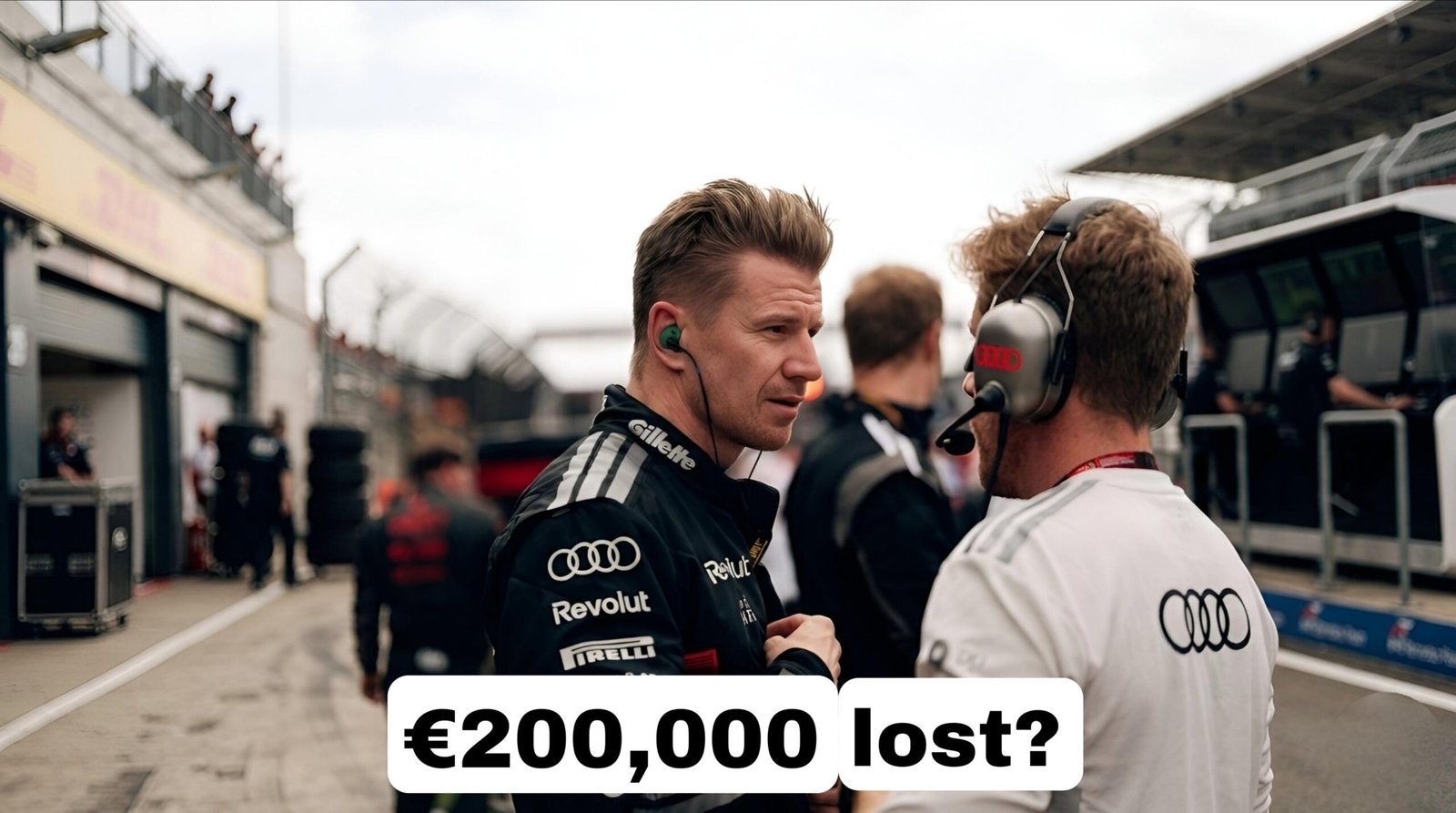
Compounding the sporting disappointment are the reported contractual nuances that add a distinctly human dimension to the weekend’s events. According to well-placed sources, Hülkenberg’s multi-year agreement with Audi includes a performance-related incentive structure featuring a substantial €50,000 bonus for every world championship point scored. While the team has not officially confirmed the precise figure, the arrangement has circulated widely since details emerged earlier in the year.
In a hypothetical P8 finish, this would have equated to at least €200,000 in additional compensation for those four points alone. Zooming out to the broader context of his 2025 campaign—during which he amassed 51 points, including that breakthrough podium—the bonus mechanism could theoretically have generated approximately €2.55 million on top of his base salary. Such structures, while not unprecedented (similar incentives featured in deals for drivers like Kimi Räikkönen during his Lotus tenure), place tangible financial weight on every on-track position.
For Hülkenberg personally, the clause underscores the high personal stakes involved in delivering consistent results at this stage of his career. For Audi, it reflects a strategic alignment of incentives designed to drive performance in a fiercely competitive midfield. In an era where base salaries for midfield drivers can range into the millions, these bonuses serve as both motivation and a performance barometer, tying remuneration directly to on-track output.
It is worth noting that these figures remain in the realm of reported details rather than audited public records. Nonetheless, their emergence has sparked considerable discussion within the paddock about the evolving economics of driver contracts as teams like Audi invest heavily in their long-term F1 programs.
Broader Implications for Audi’s 2026 Campaign
The Chinese Grand Prix weekend must be viewed through the lens of Audi’s ambitious transition. Having assumed control of the former Sauber operation and committed to developing its own power unit under the new regulations, the German manufacturer is effectively building a competitive entity from the ground up. Early-season data points to a car with genuine midfield potential—evident in Hülkenberg’s race pace—but one still plagued by intermittent reliability issues, suboptimal launch characteristics, and the inevitable integration challenges of a new technical package.
Bortoleto’s repeated DNS incidents highlight areas requiring urgent attention, particularly around systems reliability and pre-race preparation protocols. Meanwhile, the team’s overall points tally remains modest, positioning Audi behind more established midfield outfits. Yet leadership remains pragmatic. Public statements emphasize a “long road ahead,” likening the development process to teaching foundational skills rather than expecting immediate dominance.
Shanghai also illuminated strategic and operational nuances. Pit stop execution, long a strength for top teams, revealed a vulnerability that Audi must address swiftly. In modern F1, where average stops hover around two seconds, a 16-second delay is catastrophic. The team has committed to a thorough investigation, with engineers already dissecting telemetry and hardware to prevent recurrence.
Looking forward, the calendar offers opportunities for redemption. Upcoming circuits will test different aspects of the Audi package—tire management in hotter conditions, aerodynamic efficiency on high-downforce tracks, and qualifying performance where Hülkenberg has occasionally struggled relative to his race pace. Incremental gains in power unit mapping, chassis setup, and operational precision could quickly translate into the consistent points hauls the squad craves.
For the drivers, the dynamic is intriguing. Hülkenberg brings vast experience and stability; Bortoleto, the precocious talent with back-to-back junior titles, represents the future. Their intra-team battle, thus far relatively even, will intensify as the car evolves. Healthy competition, coupled with mutual respect, has the potential to accelerate development.
Lessons from the Paddock and the Path Ahead
The events in Shanghai resonate beyond one team. Pit stop failures, though rare at the highest level, have historically altered race outcomes and even championships. They serve as humbling reminders that Formula 1 remains a symphony of human endeavor and mechanical perfection—any discord can prove decisive.
For Audi, this episode represents not a terminal setback but a data-rich learning opportunity. The organization possesses the resources, engineering depth, and corporate commitment to resolve such issues. The presence of seasoned figures within the technical and operational structure suggests a methodical approach to problem-solving.
Hülkenberg, for his part, will undoubtedly channel the disappointment into heightened focus. His career has been defined by perseverance; this latest chapter will be no different. As the season progresses, the narrative around Audi will shift from early growing pains to measurable progress—if the team can translate its evident race pace into reliable, points-scoring weekends.
In the final analysis, the 2026 Chinese Grand Prix encapsulated the duality of Formula 1 in microcosm: exhilarating potential juxtaposed against mechanical fragility. Nico Hülkenberg drove with the poise and determination expected of a veteran leader, only to be thwarted by a failure beyond his control. For Audi, the weekend yielded no points but delivered invaluable insights.
As the paddock packs up and turns its attention to the next grand prix, the four rings carry forward both the sting of missed opportunity and the quiet confidence that comes from understanding precisely where improvements must be made. In a championship where momentum builds gradually, resilience often proves the ultimate differentiator. The journey for Hülkenberg and Audi is far from over; indeed, it has only just begun in earnest.
This setback, painful as it was, may ultimately serve as the catalyst for the refined execution and reliability that will define Audi’s sophomore phase in the sport. The midfield remains fiercely contested, and with the German manufacturer’s resources and ambition fully engaged, one suspects that points-scoring finishes—and the associated rewards—will arrive sooner rather than later.


