Published by: AutodromeF1 Editorial Team
Formula 1’s 2026 Regulations: Strategic Depth or Diminished Spectacle? Audi Principal Jonathan Wheatley Articulates a Measured Defence Amid Verstappen’s Sustained Critique
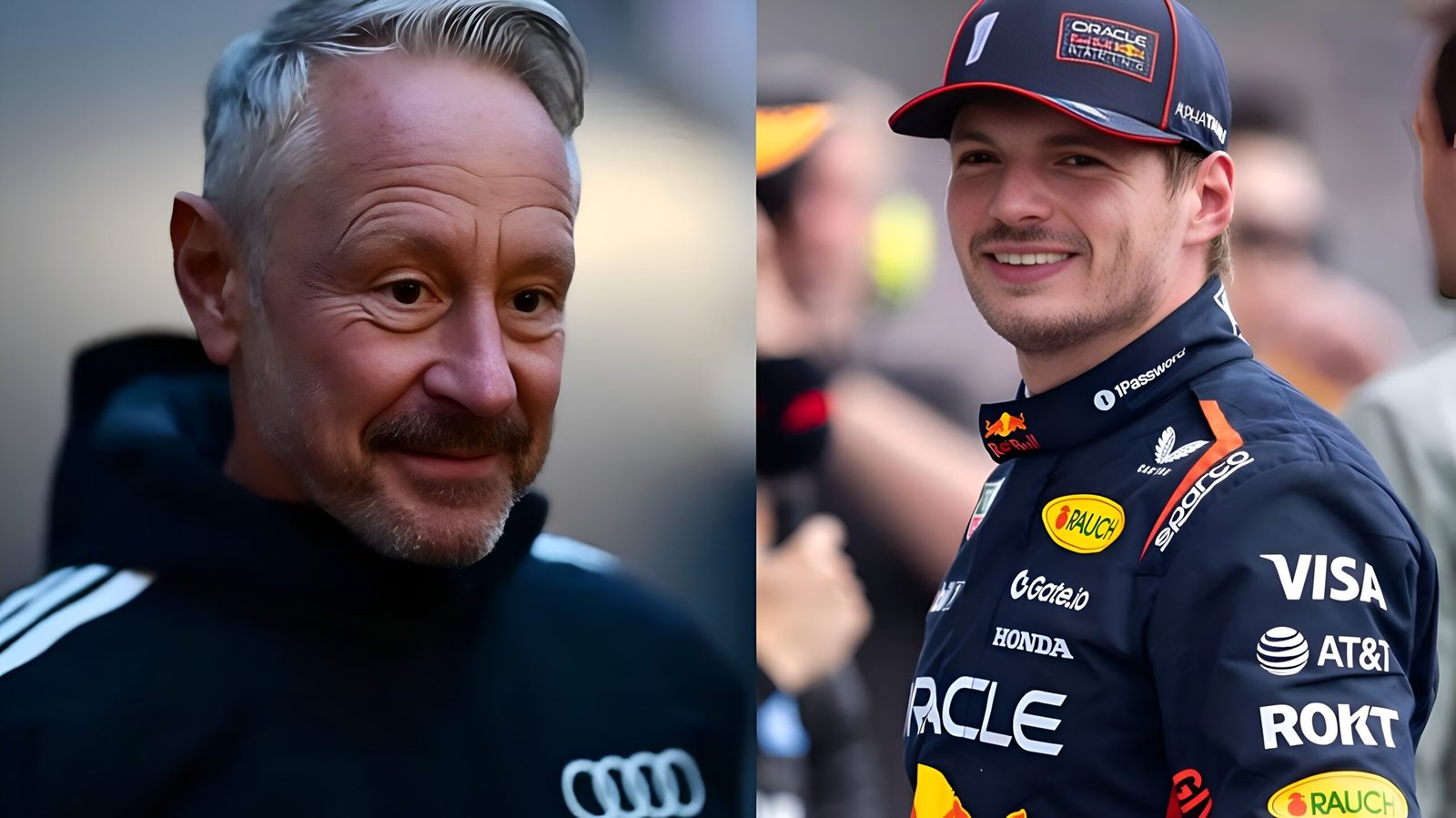
In the immediate aftermath of the 2026 Chinese Grand Prix, Formula 1 found itself once again confronting the perennial tension between innovation and tradition. The newly implemented technical regulations, conceived to usher the sport into a more sustainable and electrically dominant future, have elicited sharply divergent interpretations from those entrusted with extracting maximum performance from the cars. At the centre of this discourse stands Jonathan Wheatley, team principal of Audi, whose measured yet unequivocal endorsement of the regulations directly challenges the emphatic reservations expressed by Max Verstappen. Where the reigning champion perceives artifice and constraint, Wheatley discerns authenticity and strategic elegance. His commentary, delivered with the authority of a veteran who once shaped Red Bull’s championship-winning infrastructure, offers a perspective grounded not in partisan loyalty but in observable racecraft under the new paradigm.
Wheatley’s assessment is rooted in the tangible dynamics witnessed on the Shanghai International Circuit. Far from the “false racing” Verstappen has repeatedly decried, the former Red Bull strategist observed a contest defined by clean, competitive exchanges and purposeful overtaking manoeuvres. “There are battles going on in the field that I think are hugely encouraging,” he remarked post-race. “If you can’t win, then if you can just race cleanly, I have to say it didn’t look like any kind of false racing to me.” In Wheatley’s estimation, the energy-management imperatives inherent to the 2026 power-unit specification did not diminish the spectacle; rather, they elevated it by compelling drivers to exercise tactical foresight alongside raw speed. Position changes occurred organically, born of differential battery deployment rather than artificial aids, while strategic battles unfolded across multiple stints as competitors balanced conservation with opportunistic aggression.
This interpretation stands in marked contrast to Verstappen’s consistent and increasingly strident critique. Since the earliest simulator evaluations in 2023, the Dutch driver has characterised the regulations as “anti-racing,” lamenting the mandatory lift-and-coast protocols on straights and the heavy reliance on energy deployment over unadulterated racecraft. Following the Chinese Grand Prix, he reiterated that the cars felt constrained, the racing “a joke,” and the overall experience politically motivated rather than performance-driven. Such pronouncements, while consistent with his earlier warnings, have acquired additional resonance given Red Bull’s early-season difficulties and Verstappen’s own retirement in Shanghai. Wheatley, drawing on their shared history, acknowledged the legitimacy of this frustration without conceding the broader indictment. He noted that Verstappen’s perspective is “perhaps because of where he finds himself” competitively, yet emphasised that other drivers, notably those at Ferrari, derived genuine satisfaction from the same regulatory framework.
The debate, far from being confined to two principals, reflects deeper philosophical divisions within the paddock. Ferrari CEO Benedetto Vigna has urged restraint, cautioning against premature verdicts after only a handful of races. “It is better to wait a few more races before we give a precise opinion on the new regulations,” Vigna stated. “The idea of using and dosing energy is something that makes the sport more interesting.” His call for patience echoes the measured optimism expressed by Wheatley and contrasts with the more immediate scepticism voiced elsewhere. Even Toto Wolff, while refraining from direct engagement, has indirectly suggested that Red Bull’s current competitive struggles may be amplifying Verstappen’s discontent—an observation that, though pointed, underscores the human element inevitably influencing technical appraisal.
To appreciate the substance of this disagreement, one must examine the architectural intent behind the 2026 regulations. Developed through exhaustive collaboration between the FIA, Formula 1’s commercial rights holder, and the teams, the new framework fundamentally reconfigures the power unit: approximately half the total output now derives from the electric component, with the internal-combustion engine correspondingly downsized and complemented by sustainable fuels. Active aerodynamics, mandatory energy-recovery protocols, and revised chassis geometry are designed to reduce drag, enhance overtaking opportunities, and align the sport with global sustainability imperatives. The result is a car that demands not merely velocity but intelligent resource allocation. Drivers must modulate power delivery across laps, preserving battery reserves for decisive moments while navigating the aerodynamic trade-offs introduced by movable elements.
Critics, including Verstappen, argue that this complexity introduces an artificial layer—forced deceleration on straights to recharge systems, strategic “lift-and-coast” phases that interrupt rhythm, and a reliance on electrical deployment that can render pure mechanical prowess secondary. Proponents, Wheatley foremost among them, counter that these demands replicate the strategic richness long celebrated in endurance racing, where efficiency and timing are paramount. The Chinese Grand Prix, in Wheatley’s view, furnished empirical validation: overtakes were executed cleanly, battles extended beyond single corners, and the midfield produced compelling multi-car contests unmarred by processional dominance. Such outcomes, he maintains, demonstrate that the regulations are achieving their core objective—closer, more unpredictable racing—without resorting to contrivance.
Wheatley’s defence carries particular weight given his professional trajectory. Having spent years at Red Bull honing the operational precision that propelled the team to multiple titles, he now leads Audi’s ambitious entry into the championship. This transition affords him a unique vantage: intimate familiarity with Verstappen’s driving philosophy coupled with direct accountability for extracting performance under the new rules. His empathy for the Dutchman’s position is therefore neither performative nor dismissive. It reflects an understanding that elite drivers, accustomed to exerting near-total control over their machinery, may initially chafe against constraints that redistribute emphasis from outright pace to holistic race management. Yet Wheatley insists that this redistribution does not equate to diminishment. On the contrary, it rewards adaptability, rewards teams capable of optimising hybrid systems, and ultimately rewards spectators with racing that rewards intellect as much as instinct.
The broader paddock reaction reveals a sport in transition. Drivers’ meetings have reportedly become arenas for candid exchange, with several competitors echoing Verstappen’s concerns while others, particularly those benefiting from improved grid parity, express cautious enthusiasm. Online discourse mirrors this polarisation: traditionalists decry a perceived erosion of spectacle, while advocates highlight the closer racing and environmental alignment as evidence of progressive stewardship. Media coverage, predictably, has amplified the controversy, often framing it in binary terms—innovation versus entertainment—without sufficient attention to the gradual calibration period teams require.
Ferrari’s early promise under the new regulations lends credence to Vigna’s call for patience. The Scuderia’s drivers have already demonstrated proficiency in energy deployment, converting strategic nuance into tangible on-track gains. Audi, though still refining its package, exhibits encouraging signs of hybrid synergy. Red Bull, conversely, confronts the challenge of retrofitting a philosophy optimised for the previous generation of cars. These divergent trajectories are not anomalies but expected manifestations of a regulation set that deliberately disrupts established hierarchies.
Looking forward, the coming European leg of the calendar—beginning with Imola—will furnish a more comprehensive test. Variable weather, technical circuits, and evolving tyre compounds will either accentuate or mitigate the energy-management dimension. Should the pattern observed in China persist—clean racing, genuine overtakes, strategic depth—Wheatley’s assessment may gain wider acceptance. Should persistent complaints materialise into systemic issues, the FIA and Formula 1 will face pressure to refine deployment limits or aerodynamic freedoms without compromising the sustainability mandate.
Ultimately, the 2026 regulations represent more than a technical overhaul; they embody Formula 1’s attempt to reconcile its heritage of uncompromising performance with the imperatives of a sustainable future. Jonathan Wheatley’s articulate defence after the Chinese Grand Prix serves as a reminder that perspective matters. What appears artificial to one driver may represent sophisticated evolution to another. Verstappen’s criticism, born of unparalleled experience and unfiltered candour, demands serious consideration. Yet Wheatley’s counterpoint, grounded in direct observation and professional detachment, invites the community to withhold final judgment until the regulations have been afforded adequate opportunity to demonstrate their full potential.
In an era when motorsport faces existential questions about relevance and responsibility, the capacity to debate vigorously while maintaining constructive dialogue is itself a mark of maturity. The Chinese Grand Prix offered an early glimpse of what the 2026 framework can deliver: racing that is both technically demanding and viscerally engaging. Whether this promise endures will depend not on any single voice—however influential—but on the collective willingness of drivers, teams, and governing bodies to refine rather than reject. Wheatley has chosen the former path. Time, and the races ahead, will determine whether the sport as a whole follows suit.


