
Towriss explains why Pérez earned a deal through to 2029.

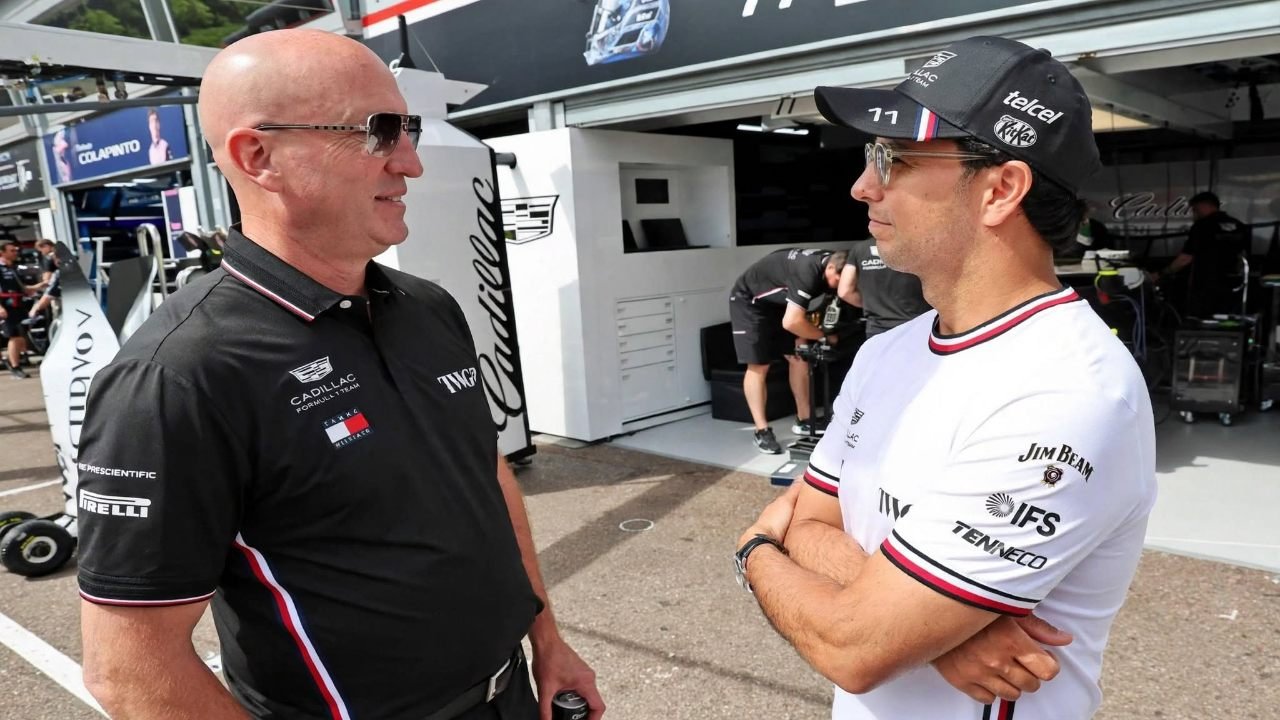
Cadillac Formula 1 Team CEO Dan Towriss has described Sergio “Checo” Pérez as fundamental to the squad’s early development, pointing to his results, technical feedback, network of contacts and relentless drive. Those qualities, Towriss explained, are why the Mexican driver was rewarded with a multi-year extension that keeps him with the team until at least 2029.
The announcement of the new deal came around the Mexico City Grand Prix, a weekend that also marked Pérez’s 300th Grand Prix start at his home race. For a driver who returned to the grid with a brand-new team after a year away, the timing gave the milestone an added layer of significance, and it offered Cadillac a natural moment to underline its long-term commitment.
Why Cadillac Rewarded Pérez With a Contract Extension
Speaking after the extension was confirmed, Towriss was direct about the reasoning behind it. “He has been fundamental to this team’s development in its early days, and given Checo’s commitment to the team, he deserved a contract extension, so it made sense to do it,” the CEO said.
The statement is notable because it places the emphasis on contribution rather than reputation. A new Formula 1 organisation must build processes, recruit people and develop a car at the same time, and Towriss made clear that Pérez has supported that effort in several practical ways, not only through his driving.
Results, Technical Feedback and a Network of Contacts
Towriss highlighted the breadth of Pérez’s impact on the organisation. “As well as his on-track results and feedback on the car, from a staff perspective, I think he has helped generate interest in the team through his network of contacts.”
That final point matters in a sport where talent is the scarcest resource. Experienced drivers can influence recruitment simply through their relationships across the paddock, and a team starting from nothing needs every credible voice it can find. According to Towriss, interest in the project is growing, and Pérez has been central to attracting the right people.
How Pérez Pushes Cadillac to Evolve as It Expands
The CEO also stressed the standard Pérez sets internally. “He constantly pushes us to think about how we will evolve as we expand, because no team on the grid will change more than the Cadillac Formula 1 team; we are a completely new team, and we have to evolve. More and more people are interested in this project, and Checo has been fundamental in helping us find that talent.”
This is a meaningful description of leadership. Pérez is not simply reporting what the car is doing; he is asking the organisation to anticipate what it will need to become. In a team that is adding people, systems and capability month after month, that kind of constructive pressure can keep standards from slipping while growth accelerates.
For readers following the team’s progress, this is a useful insight into how a new Formula 1 organisation measures value. Lap times and points matter, but so do recruitment, communication and the quality of the feedback loop between driver and factory. Both are essential to long-term success.
A Post-Race Routine That Drives Constant Improvement
Towriss also described the day-to-day intensity of Pérez’s approach. “He calls me after every race. He has a list of things he wants to work on, and he has never stopped putting in the effort, so we simply wanted to reward the effort he put in during the first year.”
A driver who makes contact after every race, with a prepared list of development priorities, is treating each event as part of a continuous engineering cycle. That habit is valuable to any team, but it is especially useful to a new entrant still building its foundations.
ALSO READ: Antonelli Named Commander of Order of Saint Agatha
What the Extension Means for Cadillac Through 2029
Pérez joined Cadillac for its inaugural 2026 season after a year away from the grid. The team, a brand-new entrant, selected experienced drivers to provide stability and direction during the demanding process of building an organisation from scratch. Towriss’s latest remarks suggest that this strategy has delivered value beyond what appears in the results sheet.
The reasoning is consistent with the rationale Cadillac gave when the extension was announced. The team emphasised Pérez’s experience, his technical input and his leadership in accelerating chassis development and refining trackside operations. Towriss’s comments add a more personal dimension to that official position by showing how those strengths appear in everyday working life.
Continuity is the central benefit of the agreement. Teams in their formative years face constant change in personnel, facilities and technical direction, so a driver contracted until at least 2029 offers a stable reference point. Engineers can develop the car around consistent feedback, and the organisation can plan its long-term evolution knowing that one of its most experienced voices will remain in place.
Pérez has publicly expressed his commitment to the long-term project of building competitiveness, describing the work as rewarding despite the challenges that come with starting from zero. That attitude, combined with the CEO’s praise, suggests a relationship built on shared expectations: the team values effort and honest feedback, and the project depends on both.
Taken together, Towriss’s remarks portray Pérez as more than a race driver in the early life of Cadillac. He is a consistent internal driver of standards, a connector who has helped draw interest and personnel, and a partner who treats post-race debriefs as ongoing work lists. For a completely new organisation on the Formula 1 grid, that combination of attributes formed a central part of the case for securing his services through at least 2029.