

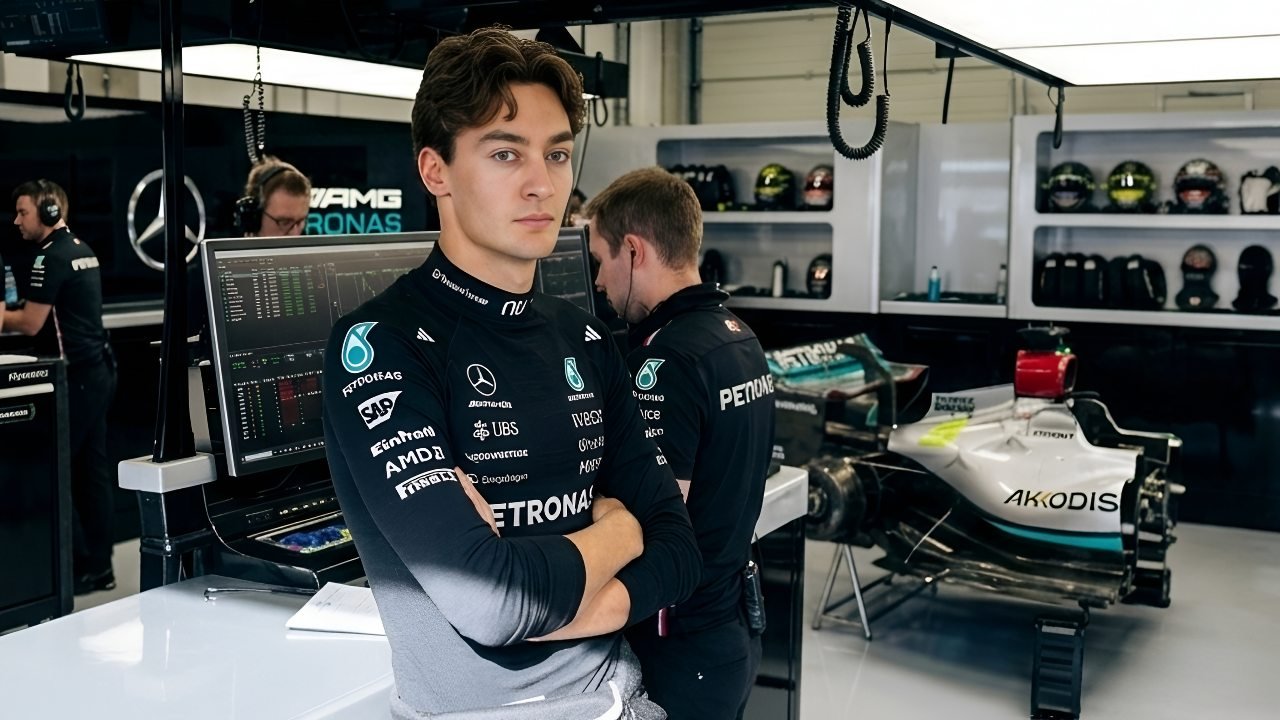
Inside Russell Bold Mercedes Formula 1 Title Push
As the 2026 Formula 1 World Championship enters its mid-season phase following the Barcelona Grand Prix, the narrative surrounding Mercedes-AMG Petronas and its lead driver George Russell remains one of resilient optimism grounded in demonstrated early-season prowess and strategic adaptability. Russell’s solitary victory at the season-opening Australian Grand Prix continues to anchor his campaign, even as the championship battle has intensified with consistent podium finishes and competitive performances across varied circuits. This report draws upon verified data from official Formula 1 sources, team statements, and established motorsport analyses to provide a comprehensive examination of Russell’s position, Mercedes’ technical evolution under the new regulations, and the opportunities presented by the remaining calendar.
The 2026 Season Context: A New Regulatory Era and Mercedes’ Resurgence
The 2026 regulations introduced significant changes to chassis aerodynamics, power unit architecture, and sustainable fuel requirements, fundamentally reshaping the competitive landscape. Mercedes entered the season with a car—the W17—that showcased superior power delivery, efficient energy management, and a balanced aerodynamic package, particularly evident in high-speed sectors and traction zones. Russell’s triumph in Melbourne, where he led a Mercedes 1-2 ahead of teammate Kimi Antonelli, underscored the team’s early mastery of these regulations.
Subsequent races revealed the inherent variability of the new formula. While Russell secured additional podiums and strong points hauls—placing him third in the standings with approximately 106 points after seven rounds—Antonelli has emerged as a formidable championship leader through clinical consistency and opportunistic victories. Russell’s tally includes one Grand Prix win, multiple podiums, and several pole positions, reflecting a driver operating at an elevated level despite the challenges of tyre management and setup compromises on less favourable tracks.
This single-win status since Australia has not diminished Russell’s public conviction. In interviews, the British driver has consistently articulated a belief in his and the team’s capacity to mount a sustained title challenge. His statements emphasize process-oriented focus, long-term development, and the recognition that championships are rarely decided in the opening phases of a 22-race season. This mindset distinguishes Russell’s approach: one informed by years of experience as a Mercedes reserve, Williams competitor, and now established frontrunner, tempered by the realities of intra-team rivalry and evolving machinery.
Dissecting Russell’s Performance: Strengths, Setbacks, and Statistical Depth
Russell’s 2026 campaign exemplifies both the peaks and troughs inherent in modern Formula 1. His Australian victory was a masterclass in qualifying execution and race management, capitalizing on pole position and maintaining tyre integrity over the race distance. Follow-up results in China (second place), Japan (fourth), and Miami (fourth) demonstrated adaptability, while incidents such as the Canadian Grand Prix retirement highlighted the fragility of power unit reliability under the new hybrid systems.
Statistically, Russell stands with one win, three podiums, and three poles through the early rounds. His points total positions him credibly within the title conversation, trailing the leader but ahead of several established contenders. What sets his season apart is the qualitative improvement in driving standards, often described by analysts as “more hungry than ever” after previous near-misses. Russell’s ability to extract performance from the W17 in high-speed corners and during qualifying simulations has been a recurring theme, aligning with Mercedes’ historical strengths in power unit efficiency.
Comparisons with teammate Antonelli are inevitable. The young Italian’s rapid integration into the team has added internal pressure, yet it has also fostered a constructive rivalry that pushes both drivers. Russell’s maturity—honed through seasons of consistent top-tier performances—allows him to contextualize setbacks without losing focus. As he noted in recent commentary, the deficit is bridgeable given the volume of points still available and the potential for developmental gains in the car.
Mercedes’ Technical Philosophy and 2026 Car Characteristics
Mercedes’ 2026 package has been lauded for its innovative approach to the revised power unit regulations, emphasizing seamless integration between the internal combustion engine and electrical systems. The car exhibits particular aptitude in scenarios demanding efficient high-speed running, strong traction out of medium-speed corners, and superior tyre management—attributes that stem from meticulous simulation work and wind tunnel validation during the intensive preparatory phase.
Early-season dominance in Australia and competitive showings in China and Barcelona suggest the W17 thrives on circuits with a balance of flowing corners and straights where aerodynamic efficiency and power deployment can be maximized. Challenges arise on bumpy, low-grip surfaces or tracks requiring extreme mechanical grip and frequent direction changes, where setup windows narrow. Team principal Toto Wolff and technical director James Allison have emphasized iterative development, with updates focused on ride height sensitivity, cooling management, and energy recovery optimization—critical factors as the season progresses into warmer European and Asian venues.
This technical foundation informs Mercedes’ track-specific strategies. The team’s data indicates strong correlation between car performance and circuits rewarding smooth aero balance, consistent tyre wear rates, and confident driver input in high-load areas.
The Australian Triumph and the Post-Opener Reality
The 2026 season commenced with palpable anticipation due to the most significant regulatory overhaul since the hybrid era’s inception. Active aerodynamics—featuring movable front and rear wings—alongside the elimination of the MGU-H, a boosted MGU-K (up to 350 kW), narrower tires, and sustainable fuel mandates fundamentally altered car behavior, energy management, and racecraft. Mercedes, having invested heavily in this “biggest project we’ve ever done,” emerged early as a benchmark.
In Melbourne, Russell delivered a masterclass. Starting from pole, he controlled the race with precision, managing energy deployment across the demanding Albert Park layout to secure a pole-to-victory result. Teammate Antonelli completed a Mercedes 1-2, underscoring the W17’s balance of chassis grip, power unit efficiency, and aerodynamic adaptability. This result aligned with pre-season testing signals where Mercedes demonstrated superior energy harvesting and deployment, particularly in high-speed sectors and traction zones.
Subsequent rounds, however, highlighted the season’s volatility. In China (Shanghai), Russell converted a strong grid position into second place behind Antonelli. Japan (Suzuka) yielded a fourth-place finish, while Miami and Canada presented mixed outcomes, including a retirement in the latter despite pole for the sprint. By mid-June, following Barcelona, Russell sat third in the drivers’ standings with approximately 106 points, one win, multiple podiums, and several poles—yet trailing the championship leader.
Statistics from official trackers confirm Russell’s single victory status while affirming his consistent podium contention and contribution to Mercedes’ constructors’ lead. This pattern reflects not a decline but the inherent challenges of a transitional season: adapting to new tire characteristics, mastering Boost and Overtake modes, and navigating intra-team dynamics with a rapidly emerging teammate.
Russell’s public comments underscore a mature mindset. In interviews with motorsport outlets, he has reiterated belief in his capacity to become 2026 World Champion, drawing on past resilience and the team’s developmental trajectory. This optimism is not mere rhetoric; it mirrors his career arc—from Williams debutant to Mercedes stalwart with multiple wins and poles. Sources highlight his hunger after years of near-misses, positioning him as a driver peaking in experience and technical acumen.
Remaining Calendar Analysis: Identifying Mercedes-Friendly Opportunities
With the season approximately one-third complete, the remaining schedule offers several circuits where Mercedes’ characteristics could translate into podiums or victories. Key upcoming events include:
Austrian Grand Prix (Red Bull Ring):
As the next race, Austria stands out due to its mix of elevation changes, fast sweeps, and traction-demanding exits. The layout rewards rotation and stability under acceleration—areas where the W17 has previously excelled. Russell’s historical affinity for the venue, combined with Mercedes’ early-season form, positions this as a prime recovery opportunity.
British Grand Prix (Silverstone):
Home soil for Russell and the team. Silverstone’s high-speed corners and demanding layout test aerodynamic efficiency and driver commitment. Mercedes has traditionally performed strongly here, and 2026 data from similar high-load circuits supports optimism. A sprint weekend adds strategic complexity that could favor precise execution.
Belgian Grand Prix (Spa-Francorchamps):
Often regarded as one of the ultimate tests of car balance and driver skill, Spa’s long straights and varied corners align well with Mercedes’ power delivery and high-speed stability. Weather variability could further play to the team’s strengths in adaptive setup.
Singapore Grand Prix:
The demanding street circuit emphasizes tyre conservation, mechanical grip, and precise handling through low-speed sections. Mercedes’ balance has shown promise in analogous urban-style venues, making this a potential stronghold for consistent points accumulation.
Las Vegas Grand Prix:
Night racing on a low-grip surface prioritizes straight-line speed and confidence in traction zones. The car’s power unit advantages and Russell’s qualifying prowess could shine here, particularly if updates enhance performance on artificial surfaces.
Additional consideration is warranted for
Hungary
Canada
(already contested but illustrative). These reward stability and tyre management over long stints. While more variable, sustained development could elevate competitiveness. Overall, the calendar’s mix of classic European venues and international challenges provides multiple windows for Mercedes to leverage their package.
Russell’s Psychological and Professional Resilience
Beyond statistics and technicalities, Russell’s continued public confidence reflects deep-seated professionalism. His comments—“I can still become F1 world champion in 2026”—are not mere bravado but statements rooted in self-awareness and team alignment. Having witnessed the sport’s unpredictability, Russell understands that momentum shifts through reliability, strategy, and incremental gains. His hunger, forged over seven-plus years of top-level competition without a title, fuels a measured yet ambitious outlook.
This resilience is bolstered by Mercedes’ infrastructure. The team’s commitment to 2026 as a foundational year for long-term success, following previous regulatory transitions, provides a stable platform. Russell’s collaboration with engineers on setup and feedback loops exemplifies the driver-engineer synergy essential for title challenges.
Comparative Landscape: Rivals and Broader Championship Dynamics
The 2026 field features intense competition. Ferrari’s Lewis Hamilton and Charles Leclerc, McLaren’s duo, and Red Bull’s Max Verstappen represent multifaceted threats. Verstappen’s experience and race craft remain benchmarks, while Antonelli’s emergence adds youthful dynamism within Mercedes. Russell’s position requires balancing intra-team support with personal ambition—a delicate equilibrium he has navigated adeptly.
Broader trends include the impact of sprint formats on points distribution and the evolving tyre compounds, which demand precise management. Mercedes’ focus on sustainable performance metrics positions them favorably for endurance across the season’s demanding triple-headers and flyaways.
Strategic Outlook and Potential Scenarios
Looking ahead, Mercedes’ trajectory hinges on several factors: successful implementation of mid-season upgrades, exploitation of circuit-specific advantages, and seamless operational execution. For Russell, maximizing qualifying performance—where he has shown class—will be pivotal, as converting poles into wins on Sundays remains the most direct path to closing championship gaps.
The 2026 title fight remains open despite Antonelli’s strong run. Russell trails but benefits from Mercedes’ constructors’ momentum and his experience edge. Historical precedents—dramatic mid-season turnarounds—support his confidence. Consistency remains his hallmark: high qualifying rates, lap completion percentages, and strategic acumen under pressure.
Challenges include intra-team competition, regulatory disputes potentially affecting power unit development, and rival evolutions (e.g., Red Bull upgrades). Yet, Russell’s self-reflection—acknowledging style adjustments while trusting team resources—signals maturity.
Scenarios range from a strong European swing propelling Russell back into serious contention to more measured points-gathering that keeps the mathematical possibility alive into the final rounds. In either case, the team’s data-driven approach and Russell’s expertise suggest sustained competitiveness.
Conclusion: A Title Bid Defined by Persistence and Precision
George Russell’s 2026 campaign, anchored by the Australian triumph and sustained by professional optimism, embodies the essence of elite motorsport: the fusion of talent, technology, and tenacity. Mercedes’ car characteristics align promisingly with several remaining circuits, offering tangible pathways for resurgence. As the season unfolds, Russell’s ability to maintain focus amid pressure will define not only his personal legacy but also the team’s standing in the new regulatory epoch.
Projections suggest Mercedes remains favorites for multiple wins and a serious constructors’ title push, with Russell capable of closing gaps if reliability and opportunism align. A late-season surge, echoing past comebacks, is plausible given the calendar’s Mercedes-leaning segments.
george-russell-mercedes-2026-f1-australian-gp-win
follow us https://x.com/AutodromeF1