Published by: AutodromeF1 Editorial Team
Personal Imperatives Eclipse Ambition: Bernie Ecclestone Dissects Jonathan Wheatley’s Abrupt Departure from Audi and the Human Realities Reshaping Formula 1 Leadership
In the rarefied corridors of Formula 1, where multi-million-dollar contracts and technological supremacy often overshadow the quotidian rhythms of family life, a veteran voice has cut through the speculation with characteristic candour. Bernie Ecclestone, the architect of modern motorsport’s commercial empire, has offered a pointed assessment of Jonathan Wheatley’s sudden exit from the Audi Formula 1 project. Speaking to the Swiss-German daily Blick, the former supremo dismissed purely sporting explanations for the move as “practically impossible,” insisting instead that the decision stems from an intensely personal calculus: a profound desire to return to England after an evidently taxing relocation to Switzerland.
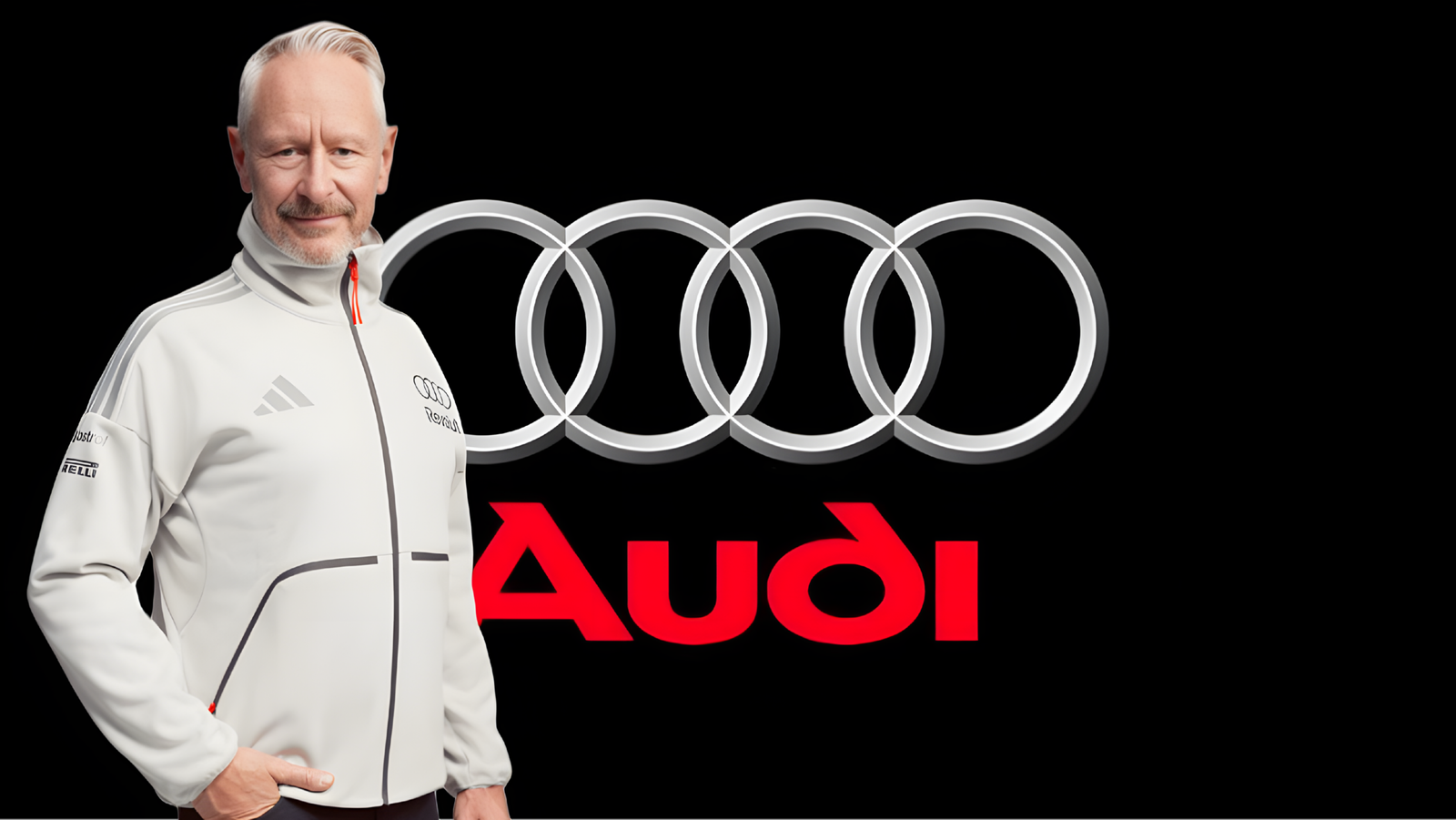
The timing could scarcely be more dramatic. On 20 March 2026, Audi Sport issued a terse confirmation that Wheatley, appointed team principal scarcely a year earlier to spearhead the German manufacturer’s ambitious entry into the sport, had departed with immediate effect. The official statement cited “personal reasons,” a phrase that in Formula 1 lexicon frequently masks deeper complexities. Mattia Binotto, the experienced former Scuderia Ferrari principal already embedded within Audi’s senior technical cadre, has assumed interim leadership responsibilities while the board evaluates longer-term governance structures. Yet the paddock’s collective gaze has already swivelled toward Silverstone, where Wheatley is widely expected to assume the team-principal role at Aston Martin, succeeding Adrian Newey in operational oversight as the aerodynamic virtuoso refocuses exclusively on technical direction.
Ecclestone’s intervention, delivered with the laconic precision that once defined his stewardship of the sport, reframes the narrative entirely. “From a sporting-career perspective, that’s practically impossible,” he told Blick. Wheatley had secured what many insiders regarded as the pinnacle appointment: guiding a works team from its embryonic phase through the regulatory upheaval of the 2026 power-unit era. To abandon such a mandate so precipitously, Ecclestone argued, defies conventional career logic. The only coherent explanation, he posited, lies outside the racetrack: an unwillingness to sustain life in Switzerland and a corresponding yearning to repatriate to the United Kingdom.
This perspective resonates profoundly with reporting that has quietly circulated within the paddock since Wheatley’s arrival in Zug. The lakeside municipality, nestled near Sauber’s historic Hinwil base, initially appeared an idyllic posting. Wheatley and his wife Emma had spoken warmly in early interviews about the quality of life, the alpine backdrop, and the professional synergies afforded by proximity to the engineering heart of the project. Yet the adjustment proved more arduous than anticipated. Family obligations, educational considerations for children, and the gravitational pull of established social networks in England exerted a cumulative strain. What began as an enthusiastic expatriate chapter evolved, by all accounts, into a period of quiet dislocation.
Such tensions are hardly unprecedented in Formula 1, yet they are seldom articulated with Ecclestone’s forthrightness. The sport’s leadership cadre has long navigated the peripatetic demands of global schedules, tax-optimised residencies, and cultural adaptation. Switzerland’s appeal—favourable fiscal regimes, political stability, and breathtaking scenery—has historically attracted principals and engineers alike. Yet the lived experience often diverges from the prospectus. Proximity to Hinwil may confer logistical efficiencies, but it cannot replicate the intangible comforts of home: extended family support, familiar schooling systems, and the cultural shorthand of British life. Wheatley’s case, therefore, crystallises a broader truth: even the most dedicated professionals remain, at core, human beings whose decisions are shaped as much by domestic imperatives as by aerodynamic targets or championship projections.
To appreciate the magnitude of this transition, one must contextualise Wheatley’s trajectory. A stalwart of Red Bull Racing for more than two decades, he rose from mechanic to sporting director, orchestrating the team’s ascent to multiple constructors’ titles. His reputation for operational rigour, crisis management, and unflinching loyalty preceded him. When Audi announced his recruitment in early 2025, the appointment was heralded as a masterstroke: a battle-hardened leader capable of instilling Red Bull’s championship DNA into a nascent German outfit. The project itself carried epochal significance. Audi’s entry, underpinned by a transformative partnership with the Sauber organisation and aligned with the 2026 regulatory reset, represented not merely another manufacturer’s foray but a strategic statement of intent within an increasingly electrified and sustainable sport.
Wheatley’s brief tenure, though curtailed, coincided with critical foundational work. He oversaw the integration of disparate engineering cultures, the recruitment of key technical personnel, and the calibration of operational protocols ahead of the new power-unit regulations. Insiders describe his leadership style as meticulous yet empathetic—a blend that earned rapid respect within the Hinwil facility. His departure, therefore, constitutes more than personnel churn; it disrupts institutional continuity at a juncture when stability is paramount. Audi’s measured response—elevating Binotto on an interim basis—reflects prudent contingency planning, yet the vacancy underscores the fragility of even the most meticulously assembled leadership teams.
Conversely, Aston Martin’s prospective gain is equally consequential. The Silverstone-based squad, buoyed by Lawrence Stroll’s substantial investment and the impending arrival of Honda power units, finds itself at an inflection point. Newey’s decision to relinquish day-to-day principal duties in favour of pure technical stewardship has created a governance vacuum that Wheatley’s pedigree is uniquely positioned to fill. Negotiations, understood to centre on contractual release terms and a requisite gardening-leave interval, appear advanced. Should the appointment crystallise, Aston Martin would secure a principal whose operational acumen complements Newey’s visionary design philosophy. The synergy could accelerate the team’s trajectory from midfield contender toward consistent podium contention.
Yet Ecclestone’s commentary invites deeper reflection on the evolving sociology of Formula 1 leadership. The sport has traditionally romanticised itinerant sacrifice: principals uprooting families, enduring gruelling travel, and subordinating personal lives to the exigencies of competition. Modern sensibilities, however, increasingly challenge this paradigm. Enhanced remote-communication tools, post-pandemic reevaluations of work-life equilibrium, and a generational shift among executives have amplified the visibility of domestic considerations. Wheatley’s move, far from anomalous, may presage a recalibration wherein personal well-being is accorded parity with professional ambition. In an era when teams court talent with ever more lavish compensation packages, the intangible currency of lifestyle satisfaction emerges as a decisive differentiator.
Paddock observers note additional nuances. The Swiss chapter, while professionally stimulating, imposed logistical strains beyond the obvious. Zug’s relative isolation from major international hubs complicated family visits and educational transitions. The cultural adjustment—navigating linguistic subtleties and administrative formalities—compounded the challenge for a British family accustomed to the rhythms of home. Reports suggest that Wheatley maintained exemplary professionalism throughout, shielding operational colleagues from personal turbulence. His decision to depart, therefore, reflects not disloyalty but an honest acknowledgment of limits—an act of self-preservation that ultimately benefits all parties by preventing protracted dissatisfaction.
From a regulatory and governance standpoint, the transition raises ancillary questions. Formula 1’s 2026 regulations, with their emphasis on sustainable fuels and chassis-power-unit parity, demand seamless collaboration between technical and operational leadership. Audi’s interim arrangement with Binotto mitigates immediate risk, yet the search for a permanent successor will necessitate alignment with the manufacturer’s long-term vision. Binotto’s Ferrari tenure demonstrated both strategic acumen and resilience under pressure; his stewardship could yet stabilise the project while affording the board breathing room. Meanwhile, Aston Martin’s integration of Wheatley must navigate the delicate interplay between sporting and technical hierarchies, particularly given Newey’s continued influence.
Ecclestone’s intervention also illuminates his enduring relevance. Though formally retired, the 95-year-old retains an unparalleled grasp of the sport’s human dynamics. His stewardship from the 1970s onward transformed Formula 1 into a global entertainment colossus precisely because he understood that championships are won as much in the boardroom and the living room as on the circuit. By foregrounding Wheatley’s personal motivations, Ecclestone subtly critiques the industry’s occasional tendency to prioritise narrative over nuance. In an age of data analytics and algorithmic recruitment, the reminder that leaders remain fallible individuals carries salutary weight.
Broader implications extend to talent retention strategies across the grid. Teams investing billions in infrastructure and personnel may need to reassess expatriate support frameworks: enhanced family-relocation programmes, flexible working models, and cultural-integration initiatives. The Wheatley precedent suggests that even the most alluring professional opportunities can founder absent holistic lifestyle alignment. For emerging markets such as Audi’s project, the lesson is acute: technical excellence alone cannot compensate for human factors when key executives weigh their futures.
In the final analysis, Jonathan Wheatley’s departure encapsulates Formula 1’s eternal tension between ambition and authenticity. Ecclestone’s assessment—rooted in decades of observing the sport’s undercurrents—distils a truth often obscured by press releases and podium platitudes: careers are not solely defined by trophies or technical triumphs but by the quiet calculus of personal fulfilment. As Aston Martin prepares to welcome a seasoned operator and Audi recalibrates its leadership architecture, the paddock confronts a subtle paradigm shift. The 2026 season, already laden with regulatory drama, now carries an additional narrative thread—one in which the human element asserts itself with quiet insistence.
Whether Wheatley’s repatriation yields the equilibrium he seeks remains to be seen. What is already evident, however, is that Formula 1’s leadership stratum is evolving. Professional excellence and personal contentment need no longer stand in opposition; increasingly, they must advance in tandem. Bernie Ecclestone, ever the perceptive chronicler of motorsport’s realities, has once again articulated what others merely sensed. In doing so, he has elevated a personnel transition from mere gossip to a revealing case study in the sport’s maturing understanding of its most valuable asset: its people.


