Published by: AutodromeF1 Editorial Team
Nico Hülkenberg Establishes New Benchmark for Audi with Record Top Speed at Suzuka, Secures Aramco Speed Master Award in 2026 Japanese Grand Prix Weekend
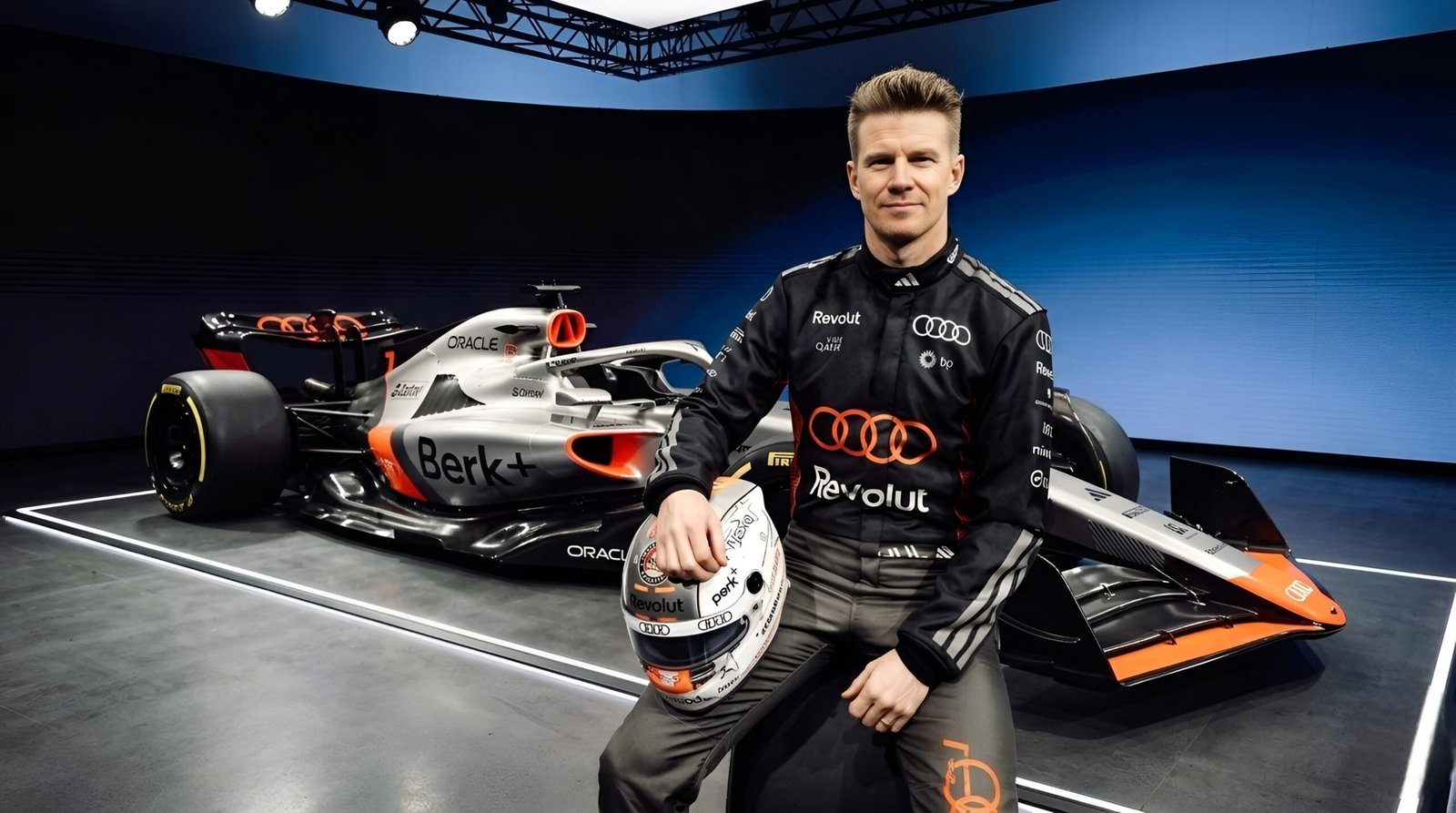
London, United Kingdom 31 March – In a display of engineering precision and driver composure that underscores the evolving dynamics of the 2026 Formula 1 season, Nico Hülkenberg delivered a standout performance for the Audi Revolut F1 team by recording the highest top speed of the Japanese Grand Prix weekend. The German veteran propelled his car to an exceptional 349-350 km/h through the speed traps at the legendary Suzuka Circuit, surpassing all competitors and setting a fresh internal record for Audi in its maiden campaign as a full factory entrant in the championship.
This achievement, confirmed through official timing data from the Fédération Internationale de l’Automobile (FIA) and Formula 1’s technical partners, highlights not only Hülkenberg’s enduring expertise behind the wheel but also the competitive edge Audi has cultivated in the radically revised regulatory framework introduced for the 2026 season. While the precise configuration of the new power units and aerodynamic packages remains a closely guarded aspect of each manufacturer’s development program, the raw velocity extracted by the Audi chassis on Suzuka’s long straights offers a compelling glimpse into the team’s progress amid one of the most significant technical overhauls in the sport’s modern era.
For context, the next highest speeds registered during the weekend belonged to Fernando Alonso of Aston Martin and Oscar Piastri of McLaren, both of whom reached 329 km/h. The margin—approximately 20-21 km/h—represents a substantial differential in Formula 1 terms, where even fractions of a kilometer per hour can influence overtaking opportunities, defensive positioning, and overall race strategy. Such a disparity on a circuit renowned for its high-speed demands and unforgiving layout further amplifies the significance of Hülkenberg’s feat. Suzuka, with its combination of sweeping curves, elevation changes, and extended acceleration zones, has historically served as a litmus test for straight-line performance. That an Audi machine should excel here so emphatically speaks volumes about the integration of its hybrid powertrain, aerodynamic efficiency, and chassis stability under the new regulations.
Compounding the achievement, Hülkenberg was formally recognized as the Aramco Speed Master for the 2026 Japanese Grand Prix weekend. This accolade, instituted by Formula 1 in partnership with title sponsor Aramco, honors the driver who attains the peak speed across all sessions—practice, qualifying, and the race itself. Unlike traditional classifications based on grid position or finishing order, the Aramco Speed Master focuses exclusively on measurable velocity, adding a distinctive layer of intrigue to each event. The initiative tracks cumulative performance across the season, culminating in an annual champion who embodies the pursuit of absolute speed in an era increasingly defined by sustainability, energy recovery, and intelligent power deployment.
The award’s structure ensures that every race weekend contributes to a broader narrative. Points or recognition accumulated from individual events feed into a season-long standings, rewarding consistency in extracting maximum performance from the machinery. Hülkenberg’s success at Suzuka not only elevates his personal profile but also positions Audi prominently within this specialized metric. In a field where manufacturers invest hundreds of millions in power-unit development, such validation carries substantial reputational weight, particularly for a squad transitioning from its previous identity as Sauber into a fully resourced Audi operation.
Hülkenberg’s weekend at Suzuka was not confined to straight-line dominance. Starting from a challenging 19th position on the grid—owing to a combination of qualifying circumstances and strategic considerations—he demonstrated the resilience and racecraft that have defined his two-decade career. By the conclusion of the 53-lap Grand Prix, the 38-year-old had advanced to 11th place, narrowly missing the points but showcasing the car’s potential in traffic and through varying track conditions. Observers noted that the elevated top speed likely facilitated critical overtaking maneuvers along the back straight and into the chicane complex, where momentum preservation is paramount.
From a technical standpoint, the 2026 regulations have recalibrated the balance between internal combustion engines, electric motors, and chassis aerodynamics. Reduced reliance on traditional downforce-generating elements, coupled with enhanced energy-recovery systems and sustainable fuel mandates, has placed a premium on efficient power delivery and drag optimization. Audi’s apparent proficiency in these areas—manifested in Hülkenberg’s velocity—suggests that the German manufacturer’s long-term investment in hybrid technology and simulation-driven design is yielding tangible results earlier than many anticipated. Industry analysts have long emphasized that straight-line speed remains one of the most transparent indicators of a car’s overall competitiveness, as it correlates directly with power output, aerodynamic slipperiness, and tire management under DRS activation.
Hülkenberg himself brings a wealth of institutional knowledge to the Audi program. Having contested more than 240 Grand Prix starts across stints with Williams, Renault, Sauber, Force India, and Haas, he ranks among the most experienced active drivers on the grid. His feedback during the development phase of the 2026 car has been widely credited within the team for refining handling characteristics and power-unit calibration. In an environment where rookie drivers and new power-unit suppliers navigate steep learning curves, Hülkenberg’s steady hand provides an invaluable reference point. The speed record at Suzuka thus represents not merely a statistical outlier but a validation of the symbiotic relationship between driver input and engineering output.
Audi’s entry into Formula 1 as a constructor marks a pivotal chapter in the sport’s history. Following years of preparation through its involvement in endurance racing and technology transfer from the Volkswagen Group, the marque has assembled a formidable operation headquartered in Hinwil, Switzerland, with significant resources channeled through its German engineering base. The 2026 season represents the culmination of this strategic realignment, and early indicators—such as the Suzuka speed trap performance—suggest that Audi is positioning itself as a credible contender rather than a transitional entity. The record also carries symbolic importance: it is the first notable benchmark Audi has claimed in Formula 1 since its official return, reinforcing confidence among stakeholders, partners, and fans.
Beyond the immediate results, Hülkenberg’s achievement invites broader reflection on the evolving nature of Formula 1. The 2026 rule set was conceived to foster closer competition, reduce costs, and align the sport with global sustainability objectives. Yet it has also introduced variables that reward innovative interpretation of the regulations. Teams that master the interplay between electrical boost, aerodynamic adaptability, and mechanical grip stand to gain disproportionate advantages on circuits like Suzuka, where raw acceleration zones alternate with high-load corners. The fact that an Audi driver eclipsed established frontrunners by such a margin underscores the potential for performance volatility in the opening phases of the new regulatory cycle.
The Aramco Speed Master series itself enriches the championship narrative. By shining a spotlight on velocity as an independent virtue, it complements the traditional drivers’ and constructors’ standings without supplanting them. Fans and technical enthusiasts alike gain additional insight into car behavior, while sponsors benefit from heightened visibility of engineering excellence. As the season progresses, the cumulative leaderboard will likely become a secondary storyline, with drivers and teams strategically targeting speed traps on high-velocity circuits such as Monza, Baku, and Spa-Francorchamps.
In the wider context of the 2026 Japanese Grand Prix, Hülkenberg’s performance injected a sense of optimism into a weekend that otherwise tested the resilience of several squads. Variable weather conditions, tire degradation challenges, and the inherent demands of Suzuka’s layout produced a race rich in tactical nuance. While the outright victory and podium positions were contested by the usual suspects, the speed record provided a counterpoint that emphasized merit beyond finishing order. It served as a reminder that Formula 1 remains a multifaceted discipline, where excellence can manifest in myriad measurable domains.
Looking ahead, Audi will seek to translate this straight-line prowess into consistent points-scoring finishes and, eventually, podium contention. Hülkenberg’s teammate and the broader driver development program will benefit from the data harvested at Suzuka, informing setup optimizations for forthcoming events. For the German driver personally, the Aramco Speed Master accolade adds another chapter to a career defined by perseverance and adaptability—qualities that have sustained him through fluctuating team fortunes.
Formula 1’s technical regulations have always been a catalyst for innovation, and the 2026 iteration appears poised to accelerate that process. Hülkenberg’s record at Suzuka offers an early data point in what promises to be a fascinating season of recalibration. As the championship caravan moves forward, the focus will remain on how teams refine their interpretations of the rules while drivers like Hülkenberg continue to extract every last kilometer per hour from the machinery entrusted to them.
In conclusion, Nico Hülkenberg’s 349-350 km/h top speed at Suzuka stands as a testament to Audi’s engineering ambition and the driver’s unflagging commitment. By claiming the Aramco Speed Master title for the weekend, he has not only secured a personal honor but also spotlighted the potential of a team determined to make its mark in Formula 1’s new era. The record will endure in the sport’s statistical annals, serving as both a benchmark and an inspiration for the battles yet to come.


