Published by: AutodromeF1 Editorial Team
London. United Kingdom April 17 2026
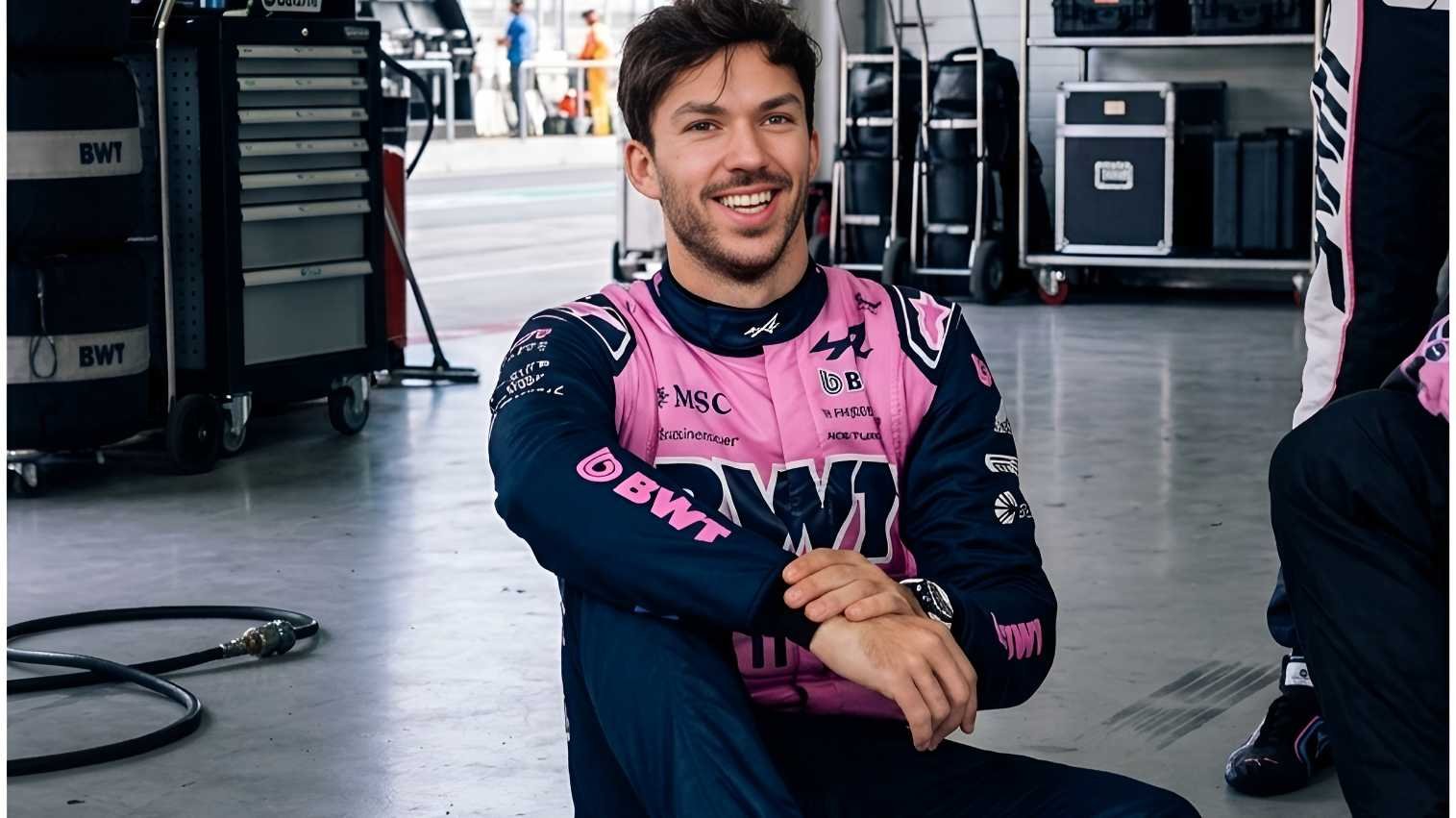
After a 2025 campaign that tested Alpine’s resolve to its limit, the first three Grands Prix of the 2026 FIA Formula 1 World Championship have offered the Enstone-Viry operation a commodity it sorely lacked last year: momentum. At the center of that shift stands Pierre Gasly, whose composed, points-perfect start to the season has yielded 15 championship points and re-established the Frenchman as Alpine’s technical and competitive compass.
Across Melbourne, Shanghai, and Suzuka, Gasly has converted three vastly different challenges — a rain-affected recovery drive, a tire-management masterclass, and a high-downforce stalemate — into a sequence of P10, P6, and P7 finishes. The return: 1, 8, and 6 points respectively. In a midfield separated by tenths and operational perfection, that 100% scoring record is not just statistically clean; it is culturally significant for a team that ended 2025 at the foot of the constructors’ standings.
Australia: Points From Adversity Set the Tone
Round 1 – Australian Grand Prix, Albert Park Circuit | March 8, 2026
Qualifying: P14 | Race: P10 | Points: 1
Alpine arrived in Melbourne with measured expectations. The A526, the first car fully influenced by Technical Director David Sanchez’s post-2025 overhaul, showed encouraging long-run pace in testing but remained a question mark over one lap. That question lingered when Gasly exited Q2 in 14th, citing traffic on his final push lap and a balance shift as track temperature dropped.
Sunday, however, illustrated why experience compounds in Formula 1. A first-lap Safety Car and a decisive call to extend the opening stint on the hard compound allowed Gasly to invert the strategy of the midfield. While rivals pitted into traffic, he ran in clean air, delivering lap times that matched cars that had qualified five positions ahead.
The decisive move came on Lap 42. Exiting Turn 12 with DRS, Gasly placed the A526 to the inside of Turn 13 and completed the pass on a direct rival for 10th. One point may read as marginal on paper, but it was Alpine’s first of 2026 and ended a points drought that stretched back to Abu Dhabi 2025. For team personnel, the radio message from Gasly — “Good job all weekend, we keep building” — carried weight beyond the single digit it secured.
Key Technical Takeaway: The A526 demonstrated strong tire warm-up on the C3 compound and a stable rear end under traction — two deficiencies that plagued the A525. Data from Melbourne showed Gasly’s average deficit to the race winner in the final stint was 0.37s per lap, compared to 0.91s at the same circuit in 2025.
China: Execution Meets Opportunity
Round 2 – Chinese Grand Prix, Shanghai International Circuit | March 15, 2026
Qualifying: P7 | Race: P6 | Points: 8
If Australia was about recovery, Shanghai was about conversion. The A526’s strength in long, loaded corners — particularly Turns 1-2 and 12-13 — had been flagged by simulation pre-event. Gasly qualified P7, just 0.112s off fifth, placing Alpine at the front of the midfield group.
The race unfolded into a strategic chess match. An early Virtual Safety Car on Lap 9 triggered a split in strategies. Alpine elected to keep Gasly out, inheriting track position and clean air. The gamble was clear: make the medium tire last to Lap 30, then fit hards to the end.
Gasly’s management was exemplary. His delta to the target lap time remained within +/-0.15s for 18 consecutive laps, preserving the tire while keeping a chasing car outside DRS range. When he emerged from his sole stop on Lap 31, he rejoined P7 and immediately set the fastest middle sector of the race at that stage. A retirement ahead promoted him to P6, which he defended to the flag with intelligent battery deployment and no lock-ups.
Eight points in Shanghai marked Gasly’s highest finish since Brazil 2023 and Alpine’s best result since 2022. More importantly, it validated the A526’s design philosophy: a car that may not be a qualifying star, but one that gives a driver tools to race.
Team Principal Commentary: Speaking post-race, Alpine Team Principal Oliver Oakes noted, “Pierre’s feedback loop since Bahrain testing has been exceptional. In China, he told us Lap 18 that the front-left would need help at Turn 1. We adjusted diff settings accordingly and the degradation curve flattened. That’s the difference between points and no points.”
Japan: Consolidation Under Pressure
Round 3 – Japanese Grand Prix, Suzuka Circuit | March 29, 2026
Qualifying: P7 | Race: P7 | Points: 6
Suzuka is a truth-teller. Its high-speed direction changes and limited overtaking zones punish cars with aerodynamic or balance weaknesses. For Alpine, P7 on the grid represented a repeat of China’s qualifying form, suggesting the A526’s operating window is genuine, not circuit-specific.
Gasly’s Sunday was a study in pressure absorption. He held P7 off the line, fended off a first-lap attack into the hairpin, and then settled into a rhythm. The race became a two-stop affair for most of the midfield due to higher-than-forecast tire degradation on the C2 compound. Alpine mirrored the leaders’ strategy, pitting on Laps 16 and 34.
The critical phase came post-second stop. Emerging 1.4s ahead of a car on newer tires, Gasly was told “hammertime to Lap 45.” He responded with four consecutive personal-best sectors, extending the gap to 2.9s and removing DRS threat. From there, he managed the gap, crossed the line P7, and secured another six points.
Three races, three scores. For context, Gasly needed until Round 9 to reach 15 points in 2025.
The Alpine Context: One Driver Leading, One Team Rebuilding
The constructors’ table after three rounds shows Alpine with approximately 16 points — 15 from Gasly, 1 from teammate Franco Colapinto, who finished P10 in China. The asymmetry is clear, but not unexpected. Colapinto, in his first full season after replacing Esteban Ocon, is navigating the steepest learning curve in motorsport. His Shanghai point was a well-managed drive from P13, but two scoreless weekends elsewhere underline the experience gap.
This dynamic places Gasly in a dual role: lead driver and de facto development lead. Engineers at Enstone confirm that the A526’s setup baseline each weekend has been derived from Gasly’s simulator program. His feedback on ride quality over kerbs — a weakness in 2025 — directly informed a floor edge revision introduced in Japan.
The contrast to 2025 is stark. Last season, Alpine finished 10th in the constructors’ with 23 points, 22 of which were scored by Gasly. The team endured leadership changes, power unit uncertainty, and a car that was overweight and aerodynamically peaky. The 2026 package, while not a podium contender, is consistent. It is a car that qualifies P12-P14 on a bad day and P6-P8 on a good one, with race pace that holds position.
Power Unit Progress: The Renault E-Tech RE26, the final power unit from Viry-Châtillon before Alpine transitions to a customer supply in 2027, has shown improved deployment and drivability. GPS traces from Suzuka indicate Alpine is now within 3-4kph of the benchmark in sector 1, compared to 7-9kph in 2025. Reliability, too, has been flawless through three events.
Why Gasly’s Form Matters Beyond the Stopwatch
Technical Leadership
In the cost-cap era, development efficiency is currency. Gasly’s ability to extract the maximum from the car every Sunday provides aerodynamicists with clean data. There are no “off weekends” to cloud correlation between track and wind tunnel. The A526 update package scheduled for Miami is built around a floor and diffuser concept Gasly validated in FP1 at Suzuka.
Commercial and Cultural Impact
Alpine’s parent company, Renault Group, has been explicit: Formula 1 must justify its investment. A driver delivering points at every round changes the conversation in boardrooms. It also stabilizes the workforce. Staff retention through 2025’s struggles was a concern; consistent Q3 appearances and Sunday points are a measurable morale driver.
Market Positioning for 2027
With the 2026 regulation cycle ending and new chassis/power unit rules in 2027, Alpine must attract top engineering talent and a potential marquee teammate for Gasly. A 2026 season spent in the midfield points is commercially more attractive than one spent at the back. Consistency is audition tape.
Expert View: What the Data Says
Analysis of Gasly’s first three races by independent performance consultancy RaceTrace Ltd. highlights three metrics:
Translation: Gasly is degrading tires slower than the midfield average, gaining positions on opening laps, and executing the pit wall’s strategy calls with minimal deviation. In a grid where the difference between P6 and P12 is often one lap of over-pushing, those margins are decisive.
Former F1 engineer and broadcaster Julien Fabreau commented, “We’re seeing Gasly 2.0. The 2020 Monza win showed he can lead; 2026 is showing he can build. He’s driving like a team principal inside the helmet — managing races, not just laps.”
Looking Ahead: Sustainability of the Trend
The next sequence — Bahrain, Miami, Imola — will test Alpine’s development rate. Bahrain’s rear-limited layout and Miami’s low-grip surface have historically exposed Alpine weaknesses. However, the team has earmarked a revised rear wing and beam wing package for Sakhir aimed at improving DRS efficiency, an area where the A526 still trails.
Gasly remains grounded. “Three races is not a season,” he told media in Suzuka. “But it’s a foundation. Last year we were chasing problems. Now we’re chasing performance. That’s a better place to be.”
For Alpine, the equation is simple: if Gasly continues scoring at this rate, a 150-point season is mathematically in play. That would represent a near sevenfold increase over 2025 and likely secure P6 or P7 in the constructors’. In the tightest midfield Formula 1 has seen in the cost-cap era, that swing is transformative.
Conclusion: A Case Study in Incremental Recovery
Formula 1 turnarounds are rarely revolutionary; they are cumulative. Alpine’s 2026 start is not defined by a headline podium or a shock pole. It is defined by three clean weekends, zero operational errors, and a lead driver who has converted every opportunity into points.
Fifteen points from three races will not win a championship. But for a team that began 2026 with questions about its long-term future, it is the most persuasive answer they could have delivered. Pierre Gasly has not just scored points; he has restored credibility. In Formula 1, that is the first lap of any recovery drive.
Season to Date: Gasly vs. 2025 Trajectory
The sample size remains small. The variables ahead remain numerous. But the trend line, for the first time in 18 months, points upward. And for Alpine, that direction is everything.


