Published by: AutodromeF1 Editorial Team
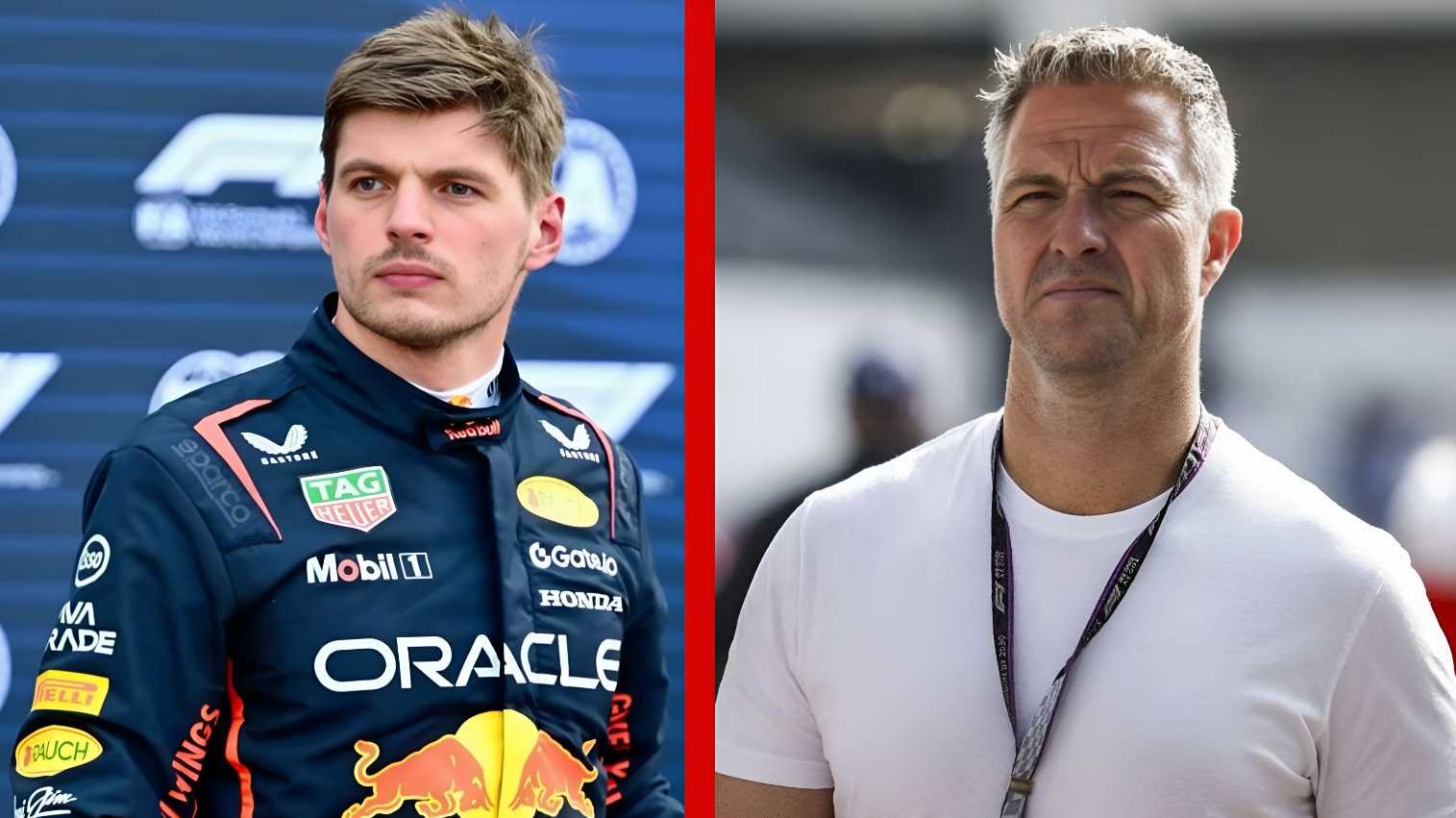
London, United Kingdom April 13 – Four-time world champion Max Verstappen enters the 2026 season facing technical and organizational change at Red Bull Racing. Former F1 driver and Sky Deutschland analyst Ralf Schumacher has publicly described Red Bull’s current condition as “a bit of a mess” and “chaotic,” citing the departure of long-time advisor Helmut Marko and the team’s early-season performance deficit as factors shaping Verstappen’s outlook. Verstappen, contracted through 2028, has himself questioned whether continuing in Formula 1 is “worth it” amid new regulations and family priorities. This article maps the verifiable developments, the stakeholder positions, and the competitive implications as Formula 1 begins its new power unit era.
The Performance Baseline: Where Red Bull Stands After Three Rounds
Red Bull Racing began 2026 with a new car, the RB22, and its first in-house power unit developed with Ford. The results through the first three Grands Prix reflect a team in transition. Verstappen and teammate Isack Hadjar have scored 16 points between them, with reports noting the RB22 “lacks power and reliability, particularly with the chassis”.
For context, Red Bull won 21 of 22 races in 2023 and secured both championships in 2022 and 2023. The current points deficit marks a significant departure from that benchmark. Team leadership has acknowledged the gap. The scale of the 2026 regulation change — a new aerodynamic formula plus a 50-50 combustion/electric power unit split — means all teams are managing correlation and reliability risks, but Red Bull’s early return is below its own recent standard.
Verstappen’s Public Position: Regulation, Motivation, and Family
Verstappen has been a consistent critic of the 2026 technical framework. He has described the concept as “FE on steroids” and said the cars feel “kart-like,” arguing the increased electric deployment reduces driver control.
Beyond engineering, Verstappen has raised the personal calculus of continuing. In 2026 media sessions he stated: “I’m thinking about everything inside this paddock… You just think about, is it worth it? Or do I enjoy being more at home with my family, seeing my friends more when you’re not enjoying your sport?”. He added that he convinces himself “every day” regarding his future in the sport.
These comments do not constitute a retirement announcement. Verstappen remains under contract with Red Bull Racing until the end of 2028, a deal announced in March 2022. However, the remarks indicate that performance and enjoyment, not contractual length, are the primary variables he is evaluating in 2026.
Ralf Schumacher’s Assessment: Communication, Structure, and the Marko Factor
Ralf Schumacher, a six-time Grand Prix winner and regular Sky Deutschland pundit, addressed Red Bull’s situation on the Backstage Boxengasse podcast in early April 2026. His analysis focused on organizational coherence rather than single-lap pace.
“The team is a bit of a mess at the moment; things are a bit chaotic, and there’s no proper communication with the outside world,” Schumacher said. He added that “Dr Helmut Marko is also missing as a figurehead to, how shall I put it, provide some guidance, in my opinion”.
Marko, Red Bull’s motorsport advisor and head of its driver program since 2005, departed the organization at the end of 2025. Schumacher noted that Marko “still had a contract” and “could have stayed,” but chose to leave after a 2025 season in which “the World Championship was narrowly missed”. Schumacher’s view is that “Verstappen’s recent actions have shown how much Red Bull are missing Helmut Marko’s presence”.
Schumacher also commented on the human element of Verstappen’s position: “His heart is in Red Bull, with all the successes, all the years together and his gratitude towards Red Bull. But on the other hand, you are afraid of what will happen next”.
Contract Mechanics: What Is Confirmed About 2026 and Beyond
Verstappen’s current agreement with Red Bull runs to the end of 2028. During 2024 and 2025, multiple outlets reported the existence of performance-related exit clauses in top-driver contracts, including one that would allow Verstappen to leave in 2026 if not in the top two of the championship.
As of April 13, 2026, Verstappen is competing in the 2026 season with Red Bull. No official announcement has been made by the team or driver regarding activation of any exit clause for 2027. Reporting on future moves remains speculative and is not presented here as fact.
Why Marko’s Departure Matters: Institutional Knowledge in a Transition Year
The 2026 season is Red Bull’s most complex operational challenge since entering Formula 1 in 2005. The team is fielding a new power unit for the first time, under the “Red Bull Powertrains” banner with Ford. Simultaneously, it is adapting to a new chassis regulation set.
Marko’s role since 2005 combined three functions: driver program oversight, senior advisor to ownership, and direct conduit between the race team and Red Bull GmbH in Austria. His departure removes a 20-year repository of institutional memory at the exact moment Red Bull is managing two parallel development streams.
Schumacher’s argument is that this loss of a “figurehead” contributes to the “chaotic” perception. The point is structural: in periods of high technical risk, teams benefit from simplified decision chains. Marko’s exit, combined with other personnel changes since 2024 including Adrian Newey and Rob Marshall, means Red Bull is executing 2026 with a revised leadership structure.
The Driver Market Context: Why Schumacher Told Rivals to “Reject Red Bull”
In a separate analysis for F1 Oversteer, Schumacher argued that “F1’s best drivers should reject Red Bull even if Max Verstappen leaves”. His rationale was tied to project risk: “Red Bull could be faced with losing star driver Max Verstappen at the end of 2026. They will be keeping their options open, but Ralf Schumacher has told drivers to avoid their project”.
The underlying factors he cited are verifiable: New power unit risk: Red Bull Powertrains is in its debut season.
Early performance: The RB22 “lacks power and reliability” after three races.
Junior program timeline: While Isack Hadjar is racing for Red Bull and Arvid Lindblad for Racing Bulls, “neither has yet shown they can be the next Verstappen”.
Schumacher’s position, therefore, is a risk assessment for drivers considering Red Bull in 2027 or later. He is not reporting a team collapse; he is advising that the combination of new engine + new rules + leadership change represents a higher variance outcome than established rivals.
Verstappen and the 2026 Regulations: A Known Philosophical Mismatch
Verstappen’s dissatisfaction with the 2026 rules is not new. He has criticized the increased electrification since the regulations were ratified, arguing they dilute the link between driver input and lap time. His position is consistent: he prefers high-power, low-weight concepts and has been open about exploring GT3 racing as an alternative discipline.
This creates a strategic tension. Red Bull, as a power unit manufacturer, is commercially and technically committed to the 2026 formula. Its star driver is publicly unconvinced by that formula. The resolution depends on whether car competitiveness can offset philosophical disagreement. Early 2026 results have not provided that offset.
What Red Bull Has Said: The Need to “Turn Everything Upside Down”
While Schumacher provides external analysis, Red Bull’s internal messaging has emphasized review and response. Schumacher relayed that “the impression is that they are trying to turn everything upside down and review it”, and that this impression “was the deciding factor” in how Verstappen evaluates the team.
This indicates the team is aware of the perception issues and is communicating an intent to react. The competitive question is timing: can structural and technical reviews produce lap time before driver patience or market forces intervene?
The Broader Calendar and Human Factors
Schumacher also addressed workload. “The demands of the modern F1 calendar, coupled with the new regulations, have clearly taken a toll on the driver,” he said. The 2026 calendar remains at 24 races. For a driver who has been in F1 since 2015 and has won four titles, the marginal utility of each additional season is weighed against family time, as Verstappen himself noted.
This is not unique to Verstappen, but his platform makes the comment material. It signals that driver retention in the 2026-2030 cycle will depend on more than money or trophies. Perceived enjoyment and team stability become retention tools.
Analysis: What Comes Next
The following section is analysis and does not report new facts. It interprets cited information.
Red Bull’s challenge is to decouple two variables: the 2026 rule set, which it cannot change, and team execution, which it can. If the RB22’s reliability and power delivery improve mid-season, Verstappen’s “is it worth it” question may be answered by results. If the car remains uncompetitive, the questions about structure raised by Schumacher become more acute.
For the driver market, Schumacher’s “reject Red Bull” comment sets a narrative that Red Bull must disprove with performance. Top drivers typically move to teams with the lowest perceived technical risk. Red Bull’s task is to move itself back into that category before 2027 negotiations intensify.
For Verstappen, the 2028 contract provides security but not immunity from frustration. His public comments suggest he will not continue absent enjoyment, regardless of paper terms. That is the leverage he holds, and it is why Schumacher’s focus on “chaos” and “communication” is relevant: those are the variables Verstappen can feel weekly, irrespective of wind tunnel data.


