Published by: AutodromeF1 Editorial Team
Analysis: The sport’s most successful active drivers offer contrasting assessments of the new technical era, with competitive context shaping the debate as Red Bull falls to sixth in the constructors’ championship.
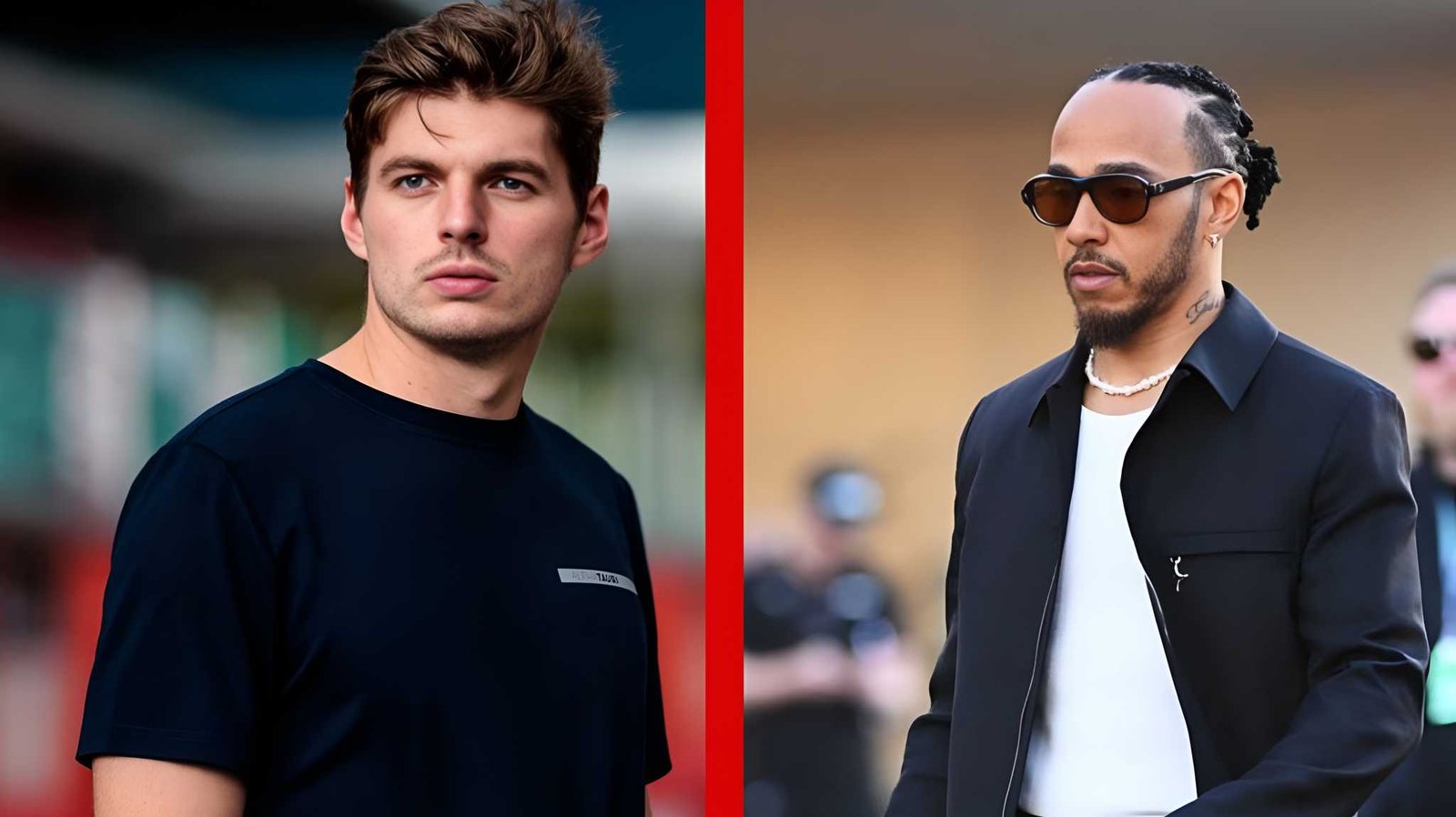
Formula 1’s introduction of heavily revised power unit and aerodynamic regulations for the 2026 season has produced an early and sustained disagreement between its two most decorated competitors. Lewis Hamilton, now competing for Ferrari, has publicly defended the new formula as delivering closer on-track competition. Max Verstappen of Red Bull Racing has maintained that the same regulations undermine the fundamental character of racing.
The exchange, which intensified following the Japanese Grand Prix at Suzuka, reflects both technical and sporting factors. While both drivers have acknowledged limitations in the current generation of cars, their conclusions differ sharply on whether the trade-off has benefited the sport.
Hamilton Frames Criticism in Context of Recent Dominance
Speaking to media in Japan, including RacingNews365, Lewis Hamilton addressed Max Verstappen’s repeated concerns directly, while also referencing the competitive environment that preceded the rule change.
“Naturally, when you have a good car, and you are competitive, it is nice to be out in front, and he’s had that for the last four or five years,” Hamilton said. “It’s been smooth sailing for him, and this is the first year it’s been so.”
Hamilton was careful not to attribute motive, adding that he could not speak for Verstappen’s personal enjoyment. He noted, however, that a significant number of drivers have expressed reservations about aspects of the new cars.
The statistical background supports Hamilton’s reference to a period of sustained success. During the previous ground-effect regulations from 2022 to the end of 2025, Verstappen won 51 of 92 grands prix and secured four drivers’ championships. He finished second in the 2025 standings, two points behind the eventual champion, after a season-long contest.
Hamilton’s own assessment of the 2026 machinery is qualified but positive. He described the cars as lighter and more nimble than their predecessors, and stated that he personally finds them more enjoyable to drive in race conditions.
“I personally enjoy it, it is a lighter car, they are more nimble and more fun to drive,” he said. “Do I love the power deployment? Absolutely not. Do I love the SM mode, not particularly, but as a whole, I think it is exciting for the sport.”
Verstappen Maintains Opposition to Energy Management Focus
Max Verstappen has been the most consistent critic of the 2026 regulations since pre-season testing in Bahrain. His objections center on the increased requirement for drivers to manage electrical energy deployment and harvesting during both qualifying and race laps.
During testing, Verstappen described the experience as “not much fun to drive” and compared the characteristics to “Formula E on steroids,” a phrase he has repeated in subsequent briefings. He has also labeled the approach “anti-racing” in comments reported by Reuters.
At the Chinese Grand Prix, Verstappen expanded on his concerns. “It’s terrible, if someone likes this, then you really don’t know what racing is about,” he said. “It’s not fun at all. It’s playing Mario Kart. This is not racing. You are boosting past, then you run out of battery the next straight, they boost past you again. For me, it’s just a joke.”
Verstappen has stated repeatedly that his position is not determined by results. After finishing eighth in Japan, he told reporters that he could accept a midfield finishing position if he found the driving experience rewarding. He has also indicated publicly that he is evaluating his long-term future in the sport beyond the 2026 season if the characteristics of the formula do not change.
Red Bull team management and Formula 1 leadership have both responded to those comments, stating their expectation that Verstappen will remain in the championship.
Hamilton Argues New Rules Restore Wheel-to-Wheel Racing
The core of Hamilton’s defense rests on raceability rather than outright performance. In interviews with Autosport and PlanetF1, he argued that the 2026 regulations have addressed a long-standing limitation of modern Formula 1 cars: the inability to follow closely through high-speed corners without severe aerodynamic loss.
“Out of all the cars that I’ve driven in 20 years, this is the only car that you can actually follow through high-speed corners and not completely lose everything that you have. You can stay behind,” Hamilton said.
He contrasted this with the previous reliance on the Drag Reduction System, which he described as a corrective measure for a fundamental following problem. Under the current rules, active aerodynamics and a smaller power differential in overtake mode create what he termed a more natural exchange of positions.
Hamilton invoked karting as a reference point for ideal competition. “If you go back to karting, it’s the same thing. People are going back and forth, back and forth, you can never pull away. No one has ever referred to go-karting as yo-yo racing. It’s the best form of racing,” he told Autosport.
He further stated that the regulations have produced “what racing should be,” citing his own battles during the opening rounds as the most sustained wheel-to-wheel contest he has experienced since the 2014 Bahrain Grand Prix.
Hamilton acknowledged the sport’s broader commercial position as relevant context. He noted that Formula 1 is experiencing peak levels of global viewership and commercial income, and referenced the recent Formula 1 feature film as an indicator of cultural reach. In that environment, he argued, the quality of on-track battles is essential.
“A lot of people are watching, and we are actually having some battles as opposed to processions where you’re just watching cars pulling each other around each time,” he said.
Red Bull’s Competitive Position After Three Rounds
The debate occurs against a significant shift in the competitive order. After three races in 2026, Red Bull Racing sits sixth in the constructors’ championship, level on points with Alpine but classified behind on countback.
The standings following the Japanese Grand Prix are as follows: Mercedes leads with 135 points, followed by Ferrari with 90 points and McLaren with 46 points. Haas is fourth with 18 points. Alpine and Red Bull both have 16 points, with Alpine holding fifth position.
This represents a marked change from the team’s performance during the previous regulatory cycle. The RB22 has demonstrated both performance and reliability limitations in the opening events. Both Verstappen and his teammate have described the car publicly using terms including “undriveable” and “all over the place,” with one driver also characterizing certain handling traits as dangerous.
Reliability issues have compounded the performance deficit. A retirement in Melbourne while running in the top five and a separate retirement in Shanghai while running sixth have cost the team significant points in the early championship.
In Japan, the competitive challenge was illustrated directly. Alpine qualified seventh with Pierre Gasly, ahead of both Red Bull cars. Gasly maintained the position through the race despite sustained pressure from Verstappen, who briefly passed at the final chicane before immediately losing the position on the following straight due to energy depletion.
Verstappen described the limitation afterward: “I think we were a tiny bit faster a lap, but you just can’t pass — well you can pass, but then you have no battery the next straight.”
Contrasting Development Approaches for 2026“
Analysis of the current standings points to strategic decisions made during the 2025 season. Alpine elected to curtail development of its 2025 car at an early stage to concentrate resources on the 2026 project, including integration of a new Mercedes power unit supply. The team finished near the rear of the field last year as a consequence.
Red Bull pursued the opposite strategy, continuing to develop its 2025 car through the autumn in support of Verstappen’s championship campaign. Upgrades were introduced as late as the Mexican Grand Prix. That commitment delivered race wins but reduced the available development time for the RB22.
Gasly, who has scored points in all three opening rounds with finishes of tenth, sixth and seventh, has described the Alpine A526 as among the best cars of his career. He has qualified seventh in three consecutive sessions, each time ahead of the Red Bull entries.
Technical Characteristics Driving Driver Feedback
The 2026 regulations introduced two major changes that directly influence driver feedback. First, the power unit now operates with an approximately equal split between internal combustion and electrical energy, with MGU-K output increased to 350 kilowatts. Second, cars feature active aerodynamic systems with a low-drag “Straight Mode” intended to reduce drag on straights while maintaining downforce in corners.
The combined effect requires drivers to harvest energy under braking and through lift-and-coast phases, then deploy it strategically. In qualifying, this has led to the practice known as “super clipping,” where drivers harvest early in a lap to ensure sufficient deployment later, often at the cost of lap time rhythm.
Hamilton has been candid about his dislike for this aspect. “Do I love the power of deployment? Absolutely not. I’m actually really disappointed,” he said in Japan. He also expressed reservations about Straight Mode, while maintaining that the overall package remains positive.
Verstappen’s criticism focuses on the same behavior, arguing that it replaces natural racing instincts with energy budgeting and creates artificial passing sequences where the attacking car inevitably becomes vulnerable on the subsequent straight.
Regulatory Adjustments Already Implemented
The FIA has acknowledged early concerns regarding energy management in qualifying. Ahead of the Japanese Grand Prix, the governing body reduced the maximum permitted energy recharge rate for the qualifying session at Suzuka. The change was intended to reduce the incentive for extensive lift-and-coast during flying laps.
Additionally, the number of active-aero deployment zones at Suzuka was limited to two straights, fewer than initially planned. Hamilton suggested this adjustment may reduce the advantage previously enjoyed by Mercedes in straight-line deployment phases and could allow closer racing through the circuit’s high-speed esses.
“Coming into the weekend, we were going to have to do a ton of lift-and-coast which is really, really not enjoyable to do for a qualifying lap. So we’ve changed that,” Hamilton noted.
Hamilton Acknowledges Shared Frustration
Despite his overall support for the regulations, Hamilton has emphasized that his position is conditional and that many drivers share concerns. He stated that a large proportion of the grid is not currently enjoying the driving experience, and accepted that his own view could change if Ferrari’s competitiveness declines.
“Everyone’s going to have an opinion every time we change the car. Some people like it, but you can’t please everybody,” he said. “If our car, all of a sudden, turns to a nightmare to drive, maybe it won’t be this enjoyable, but the fact is, we’re having a good fight, in with a chance, to fight for wins.”
He also referenced his own experience during less competitive seasons, noting the difficulty of maintaining motivation when a championship challenge is not realistic. “When you’re not in the position to, and you can see… that’s highly unlikely in the year, it’s very hard to stay motivated,” he said, drawing on the previous season where Mercedes was not in regular contention for victories.
Outlook for the Remainder of the Season
The championship now enters a four-week break before resuming in Miami. Red Bull has indicated that a significant upgrade package is planned for that event, targeting the fundamental balance issues that have affected the RB22 in low and medium-speed corners.
Alpine, benefiting from additional aerodynamic testing time due to its 2025 finishing position, has stated its intention to continue development through the spring races.
Mercedes has won all three opening grands prix in 2026, with Ferrari achieving podium finishes at each event, including Hamilton’s first podium for the team in China. McLaren sits third in the constructors’ standings, while Haas has emerged as an early surprise in fourth position.
The FIA is expected to continue monitoring energy management data from each circuit, with further adjustments to recharge limits and active-aero zones possible on a track-by-track basis.
For Formula 1, the disagreement between Hamilton and Verstappen highlights a central tension in the sport’s current direction. The 2026 regulations were designed explicitly to reduce performance gaps, increase sustainability through electrification, and promote closer racing. Early data indicates the field has compressed, with six different teams scoring points in the first three races and the midfield separated by fractions of a second in qualifying.
Whether that closer competition compensates for increased driver management tasks remains the subject of ongoing debate within the paddock. Hamilton argues that the ability to follow and exchange positions represents progress toward authentic racing. Verstappen argues that the method by which those exchanges occur diminishes driver skill and enjoyment.
Both perspectives are now part of the public record, and both will influence how the sport evaluates the success of its most significant technical reset in more than a decade.


