Published by: AutodromeF1 Editorial Team
Will Buxton Endorses Allan McNish as Audi F1’s Ideal Team Principal: An Internal Solution Rooted in Proven Leadership and Enduring Brand Loyalty
London. United Kingdom 1 April – In the volatile landscape of Formula 1 team management, where abrupt leadership changes can ripple through an organisation’s entire technical and operational framework, the sudden exit of Jonathan Wheatley from Audi’s F1 project has thrust the German manufacturer into an early test of its long-term commitment to the sport. Wheatley, who had been integral to shaping Audi’s 2026 entry strategy following the acquisition and rebranding of the Sauber outfit, departed the team in March 2026 citing personal reasons. The move, widely reported as unexpected, immediately prompted speculation about potential external opportunities, including links to Aston Martin. In the interim, Mattia Binotto—already overseeing Audi’s overarching F1 endeavour—has assumed the role of acting team principal, providing continuity while the search for a permanent successor unfolds.
Amid this period of transition, one of the paddock’s most respected and insightful voices has offered a compelling recommendation that stands apart from the usual cycle of external appointments and high-profile hires. Will Buxton, whose decades of experience as a Formula 1 broadcaster, analyst and insider have earned him unparalleled credibility across the sport, has publicly championed Allan McNish as the standout internal candidate for the vacant team principal position. Buxton’s endorsement is not mere speculation; it is grounded in a thorough assessment of McNish’s track record, his intimate knowledge of Audi’s corporate culture and his demonstrated ability to deliver results under pressure. In an era when many manufacturers entering Formula 1 have looked outward for leadership talent, Buxton’s advocacy highlights a refreshingly pragmatic alternative: elevating someone already embedded within the organisation who embodies the manufacturer’s values of engineering excellence, resilience and long-term vision.
Allan McNish’s credentials are formidable and multifaceted, spanning three decades at the highest levels of international motorsport. A former Formula 1 driver who competed for Toyota in 2002, McNish transitioned seamlessly into endurance racing, where he forged an indelible partnership with Audi. His three victories at the 24 Hours of Le Mans—secured in 1998, 2008, and 2013—represent not only personal triumphs but also chapters in Audi’s storied dominance of the prototype category. These successes were achieved during an era when the Le Mans prototype regulations demanded absolute precision in strategy, reliability engineering, and driver management—skills that translate directly to the unforgiving demands of modern Formula 1.
McNish’s leadership experience further strengthens his candidacy. As team principal of Audi Sport ABT Schaeffler in the ABB FIA Formula E World Championship, he assumed the role at a pivotal moment and delivered immediate impact. In his debut season, the squad secured the teams’ championship, a feat accomplished through meticulous operational discipline, strategic adaptability and the cultivation of a high-performance culture. That championship victory was no accident; it reflected McNish’s capacity to integrate engineering innovation with on-track execution while fostering cohesion among a diverse group of engineers, strategists and drivers. Observers familiar with Formula E’s compressed calendar and rapid technological iteration have frequently noted that the series serves as an ideal proving ground for talent destined for Formula 1, given its emphasis on energy management, software optimisation and regulatory agility—precisely the areas Audi must master as it prepares its 2026 power unit under the new technical regulations.
Buxton’s case for McNish rests on this precise blend of pedigree and practicality. Speaking shortly after Wheatley’s departure was confirmed, the pundit emphasised that Audi already possesses “the perfect man for the job” within its ranks. McNish, Buxton argued, commands genuine respect across the organisation, having contributed to Audi’s motorsport ecosystem for years before the F1 project formally accelerated. His appointment would represent more than a simple promotion; it would signal a deliberate choice to prioritise institutional knowledge and cultural alignment over the allure of external names. In Buxton’s view, this internal continuity could prove decisive in a season already defined by the complexities of integrating a rebranded chassis, a brand-new power unit and a driver lineup still finding its rhythm.
McNish’s current responsibilities further underscore his strategic value. Since January 2026, he has directed Audi’s newly launched Driver Development Programme, the successor to the former Sauber Academy. This initiative is not a peripheral activity but a cornerstone of Audi’s 2026 F1 strategy. By identifying, nurturing and preparing young talent for the demands of the pinnacle series, McNish is shaping the human infrastructure that will sustain the team beyond its debut season. The programme’s timing is significant: it coincides with the confirmation of Audi’s 2026 driver pairing—Nico Hülkenberg, a vastly experienced veteran whose steady hand and technical feedback will be invaluable, and Gabriel Bortoleto, the promising Brazilian graduate whose potential represents the future-facing dimension of Audi’s roster. McNish’s oversight of this pipeline ensures that driver selection, performance analysis and long-term career planning remain tightly aligned with the manufacturer’s engineering philosophy.
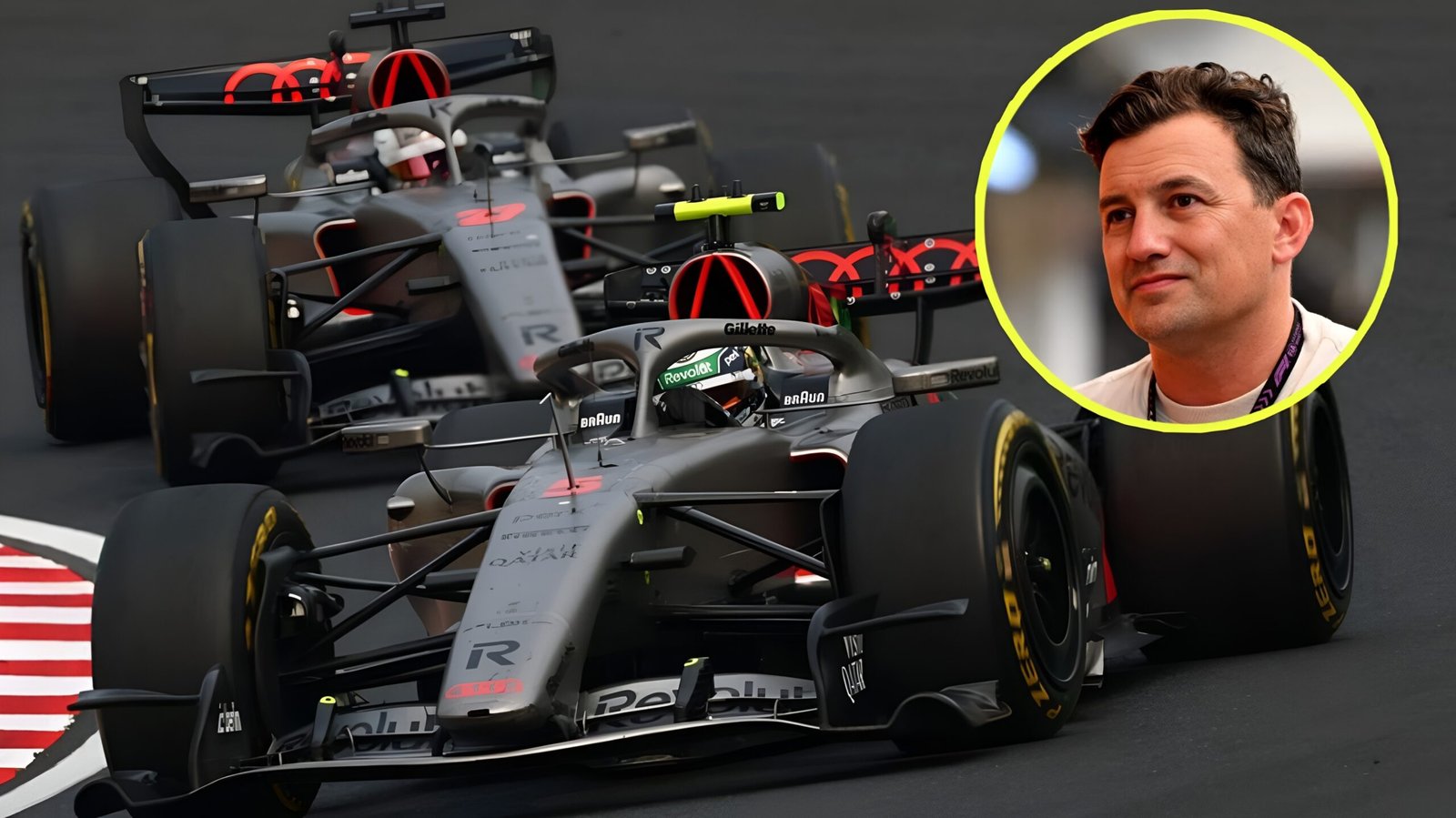
The broader context of Audi’s F1 entry adds weight to Buxton’s recommendation. The German marque’s return to the grid after decades of absence is one of the most ambitious undertakings in recent motorsport history. By acquiring Sauber and rebranding it as the Audi Revolut F1 Team, Audi has committed substantial resources to a project that encompasses power-unit development in Germany, chassis evolution in Switzerland and a global operational footprint. Early-season results in 2026 have been modest, as is typical for any manufacturer navigating the transition from customer to works status. Leadership stability, therefore, becomes paramount. An external appointment could introduce fresh ideas but also carries the risk of cultural friction and onboarding delays. McNish, by contrast, requires no introduction. His deep institutional memory—spanning endurance racing triumphs, Formula E operational mastery and now driver development—positions him to accelerate decision-making rather than slow it.
Critics might counter that McNish’s F1 driving experience was limited to a single season and that his most recent senior leadership role was in Formula E rather than the more commercially and technically complex environment of Formula 1. Such observations, however, overlook the transferable nature of elite motorsport management. The regulatory, logistical and performance pressures in Formula E mirror many of those in F1, particularly under the 2026 regulations that will place greater emphasis on sustainable fuels, electrical energy deployment and chassis efficiency. Moreover, McNish’s endurance racing background equips him with an acute understanding of reliability engineering and multi-stint strategy—areas that frequently determine race outcomes in Formula 1. His proven ability to win championships in his first season at Audi Sport ABT Schaeffler demonstrates an adaptability that few candidates could match.
From a corporate perspective, elevating McNish would also reinforce Audi’s preference for long-term, values-driven leadership. The Volkswagen Group, Audi’s parent, has historically favoured executives who embody the brand’s emphasis on precision, innovation and endurance. McNish’s career trajectory aligns seamlessly with this ethos. His loyalty to the four-ring marque is not performative; it is forged through shared victories and mutual trust built over more than two decades. In an industry where talent poaching and short-term contracts are commonplace, such continuity represents a strategic asset that external observers often undervalue.
The timing of Wheatley’s exit adds another layer of complexity. Occurring mere weeks into the 2026 campaign, the departure disrupted the continuity that many within the team had anticipated. Binotto’s interim stewardship provides breathing room, yet the Italian’s existing responsibilities overseeing the entire F1 project mean that a dedicated team principal is urgently required to focus on day-to-day race operations, factory coordination and regulatory compliance. Buxton’s public endorsement, delivered with characteristic clarity and authority, serves to crystallise the debate around internal versus external solutions. It also reflects the paddock’s collective recognition that McNish possesses the rare combination of technical acumen, leadership gravitas and manufacturer-specific insight needed to navigate the turbulent early phases of Audi’s F1 journey.
Looking ahead, the decision Audi ultimately makes will carry symbolic as well as operational significance. Should McNish be confirmed, it would send a clear message that the manufacturer values heritage, internal development and proven delivery over the glamour of headline-grabbing external hires. It would also validate the comprehensive nature of Audi’s motorsport ecosystem, demonstrating that success in Le Mans, Formula E and driver development can converge to strengthen its Formula 1 ambitions. Conversely, should the team opt for an external candidate, the appointment would need to offer compelling advantages in areas where McNish already excels—advantages that, on current evidence, would be difficult to identify.
As the 2026 season progresses and Audi refines its technical package ahead of the major regulatory overhaul, the importance of stable, experienced leadership cannot be overstated. Formula 1’s competitive hierarchy rewards those who combine engineering ingenuity with operational excellence and cultural cohesion. Allan McNish, through his career-long association with Audi and his tangible achievements across multiple disciplines, embodies these qualities in a manner few others can rival. Will Buxton’s advocacy, delivered from a position of deep industry knowledge and impartial analysis, has illuminated a path that is both logical and strategically astute.
In the final analysis, the McNish question transcends a single personnel decision. It speaks to Audi’s broader philosophy as it re-enters Formula 1: whether to build upon the foundations already laid by loyal, battle-tested professionals or to reset with new voices. Buxton’s endorsement suggests the former approach may yield the faster, more sustainable results. As the manufacturer weighs its options in the coming weeks, the paddock—and the wider motorsport community—will watch closely. For Audi, the opportunity to appoint a leader who already understands the brand’s DNA, its engineering culture and its competitive aspirations represents more than an internal promotion; it could prove the defining choice that accelerates the team’s ascent toward the front of the grid.


