
Contract length remains key hurdle in ongoing 2027 saga.
Mercedes reportedly turned down Max Verstappen, even after the four-time world champion was said to be willing to cut his salary to €50 million a year. The sticking point, according to Italian reports, was not money but the length of the contract he wanted. Verstappen is described as having asked for a three-year agreement, a commitment the Silver Arrows team was unwilling to make.
The story has circulated widely in recent days, but it remains a report rather than a confirmed fact. No official confirmation of the figures from either side had surfaced at the time of writing, so the details should be treated as credible but unconfirmed, and the wording in this article reflects that distinction.
What the Reported Verstappen Mercedes Negotiations Involved
The reported salary figure is notable. Verstappen’s base pay at Red Bull is understood to be around €62 million a year, which would make a move to €50 million a significant reduction of roughly twenty per cent. For a driver who has spent years at the top of the earnings table, the willingness to accept less underlines how seriously a change of environment was apparently being weighed.
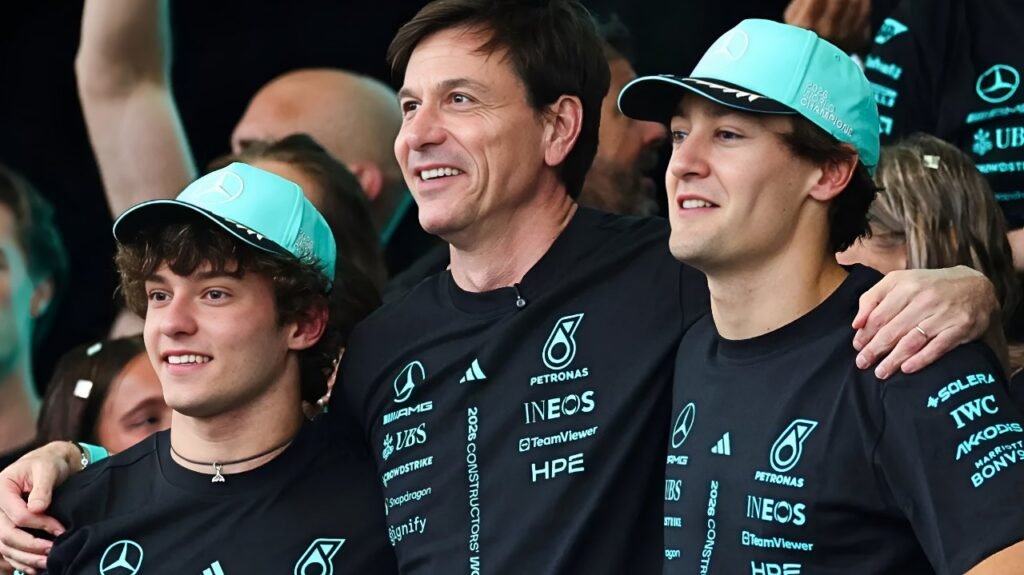
The contract length was the real obstacle. Mercedes is known to favour short agreements, and both George Russell and Kimi Antonelli were signed on one-year deals for 2026 that carry options for further seasons. A three-year commitment to a single driver would sit awkwardly with that approach, particularly when the team already has two drivers it trusts.
The links are not new. Speculation connecting Verstappen with Mercedes has returned repeatedly over several seasons, including reports of enormous salary proposals that were later dismissed by people close to the team. Verstappen himself has previously said that money alone would not be the deciding factor in where he races, which fits with the idea that he could accept a lower salary in exchange for the right long-term arrangement.
Why Mercedes Chose Continuity With Russell and Antonelli
Russell has said he expects to remain at Mercedes in 2027, and the option attached to his agreement is understood to have been taken up by both parties. Antonelli, meanwhile, has been one of the standout performers of the 2026 campaign, which strengthens the argument for building around a young Italian talent rather than reshaping the line-up.
Placing a driver of Verstappen’s profile and salary alongside a developing teammate would also change the internal balance of the team. Stability, in this reading, was the priority: keep a settled partnership, avoid a long financial commitment and retain flexibility for future seasons.
From a competitive standpoint, the argument for signing Verstappen is easy to make. He is among the most complete drivers of his generation, and a team seeking to defend a strong position under evolving regulations would value that proven ability. The argument against is equally clear: a long and expensive commitment to one driver reduces flexibility, and it could affect the development path of a younger teammate who is already delivering results.
Conflicting Accounts and Verification of the Rumour
Not every account agrees on the detail. One version suggests Verstappen requested a three-year term but that it was never formally placed on the table during discussions, which would change the meaning of the word rejection. Another account disputes that any rejection was delivered at all. These differences matter, because they show how much of the narrative rests on second-hand information from within a very guarded transfer market.
Against that backdrop, the contractual facts are clearer than the negotiating story. Verstappen’s Red Bull agreement runs to 2028, and it contains an exit clause linked to his championship position. That clause keeps the speculation alive, but it does not prove that talks reached an advanced stage.
What the Verstappen Transfer Saga Means for 2027
If the report is accurate, it highlights a clash of philosophies. Verstappen, already a four-time champion, appears to value long-term security and control over his future. Mercedes appears to value adaptability and a driver pairing it has developed on its own terms.
Red Bull’s situation adds context. The team has endured a difficult campaign by its own standards, and Verstappen has been outside the championship fight that defined his recent seasons. For a driver who holds an exit clause, results in the standings naturally raise questions about where his best opportunity lies. Mercedes, which has been ahead of Red Bull on pace this year, is widely seen as one of the most attractive alternatives.
Several developments will show whether this story has further to run. The first is how Verstappen’s contract situation develops ahead of 2027. The second is whether any statement emerges from either camp that confirms or denies the reported terms. The third is how the market for other top seats shifts in response, since a move by one leading driver rarely leaves the rest of the grid untouched.
For readers following the story, the most reliable conclusion is also the most measured one. The core claim, that Mercedes preferred stability over a costly three-year agreement with Verstappen, is consistent with the team’s known contract habits and with the form of its current drivers. The finer points, including whether a formal offer ever existed, remain unproven. Readers should weigh each new claim carefully against the contract facts that are already established.
ALSO READ: Ricciardo and Verstappen: Friendship Past F1
Until either side speaks on the record, the responsible reading is that Mercedes reportedly chose continuity with Russell and Antonelli over a high-profile signing, and that Verstappen’s future remains open. Whether that decision proves to be shrewd planning or a missed opportunity will only become clear once the 2027 season begins and the performances on track provide the answer.