Published by: AutodromeF1 Editorial Team
Maranello, Italy April 17 2026
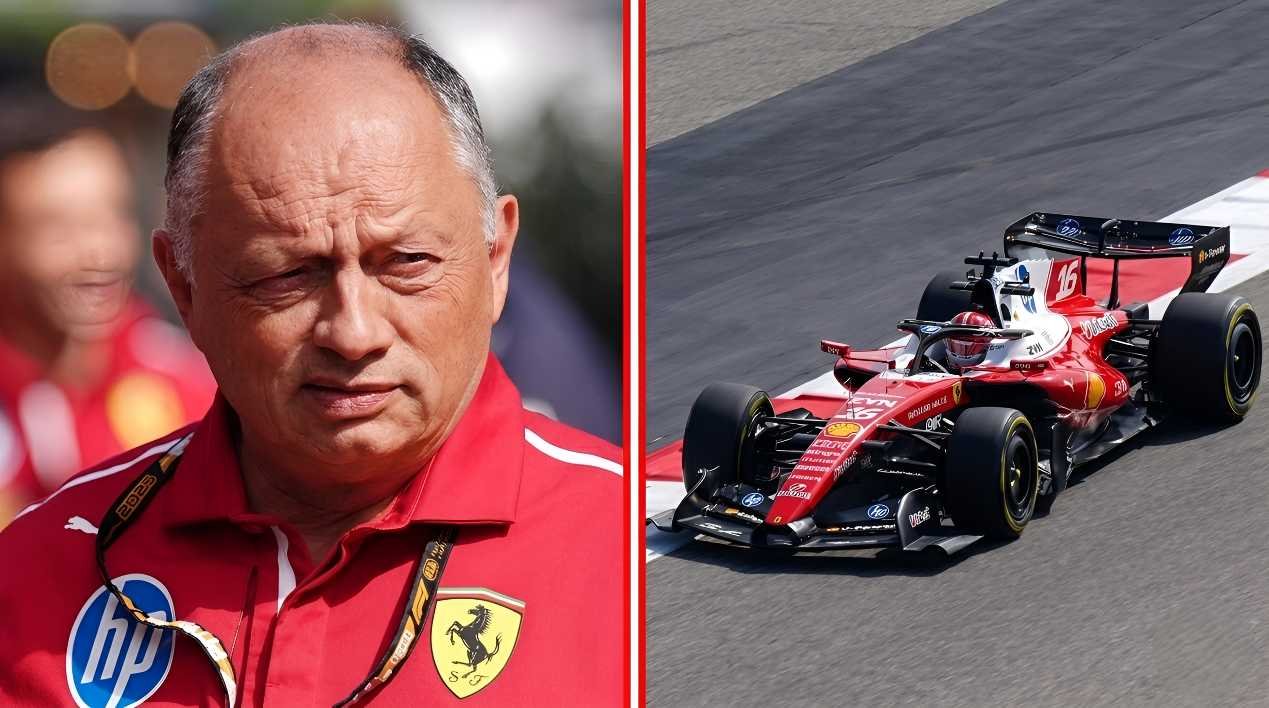
Ferrari is preparing to deploy its most comprehensive performance upgrade of the 2026 Formula 1 season at next month’s Miami Grand Prix, with internal sources confirming that the package will rework nearly 50% of the SF-26’s aerodynamic surfaces. The development marks a pivotal moment in the Scuderia’s campaign, coming after a compressed early-season calendar that saw the postponement of traditional Middle Eastern rounds in Bahrain and Saudi Arabia, forcing a strategic reset of the team’s production and validation schedule.
The Miami upgrade is not a routine step. It is, in the words of Team Principal Frédéric Vasseur, “a package and a half” — a deliberate acceleration of development aimed at closing a measurable performance deficit to early pace-setters Mercedes and McLaren. Validation work was completed during a private 100km filming day at Monza on April 22, where Ferrari correlated wind tunnel data with real-world airflow behavior on the new components before freight deadlines for the transatlantic leg.
Scope of the Miami Package: What’s Changing on the SF-26
Technical briefings circulated within the paddock and corroborated by three senior engineers familiar with the program indicate the upgrade touches six core areas of the car:
The scale is significant. In modern cost-cap Formula 1, teams rarely replace this much bodywork in a single step due to resource limits and CFD/wind tunnel time restrictions. Ferrari’s decision to concentrate changes into Miami reflects two factors: first, the schedule disruption from the canceled Bahrain and Saudi Arabia Grands Prix created a rare five-week development window between Round 3 and Round 4; second, data from the first three races identified that the SF-26’s deficit was not localized, but spread across the floor, front-end response, and thermal management.
Why Miami, and Why Now?
The 2026 calendar reshuffle has been a double-edged sword. While losing Bahrain and Jeddah removed two high-degradation, power-sensitive venues that would have exposed Ferrari’s current power unit deficit, it also compressed the early flyaways and gave factories uninterrupted time. Ferrari’s Gestione Sportiva used the gap to fast-track components originally slated for Imola in late May.
The Miami International Autodrome presents a specific technical challenge that aligns with the upgrade’s goals. The 5.412km circuit combines long straights, heavy braking zones, and a slow-speed stadium section that rewards downforce and traction. Last year, Ferrari struggled in Turns 11–16 with rear instability on throttle application. The new floor and wakeboard package is engineered to seal the diffuser more effectively at low ride heights, directly targeting that weakness.
Vasseur, speaking after the Monza shakedown, was measured but pointed: “We know where we are missing compared to the reference. This package is designed to give us more load with a more stable platform. It will not solve everything — we are still waiting for the PU step — but it should allow our drivers to attack rather than manage.”
The power unit reference is critical context. Ferrari’s 2026 engine homologation locked in January, and while reliability has been strong, peak output and electrical efficiency trail the Mercedes HPP package by an estimated 8–12kW in qualifying trim, according to paddock consensus. A hardware update is not permitted until the summer, making chassis and software gains the only short-term lever.
Risk and Validation: The Monza Filming Day
Under F1’s Sporting Regulations, teams are permitted two 100km filming days per season using current cars on demonstration tires. Ferrari allocated its first to April 22 at Monza, running both Charles Leclerc and Lewis Hamilton in the SF-26 fitted with the Miami-spec floor and front wing.
The choice of Monza — a low-downforce venue — was deliberate. If the new floor maintains flow attachment and pressure recovery at Monza’s high speeds, engineers can be confident it will perform at Miami’s medium-downforce level. Onboard GPS traces leaked from the test showed improved minimum speeds through Ascari, suggesting the floor is producing more consistent load when the car rolls and pitches.
Aerodynamic correlation remains Formula 1’s most complex discipline. A floor that over-delivers in CFD but porpoises on track can ruin a weekend. Ferrari’s recent history includes the 2023 Spanish GP upgrade that forced a mid-season concept reversal. To avoid repetition, the team has added 14 new pressure-tapping arrays on the SF-26’s underfloor for Miami FP1, allowing real-time comparison to tunnel maps.
The Competitive Landscape: Not Racing in Isolation
Ferrari’s push comes amid an aggressive development race. Mercedes is scheduled to bring a revised front suspension and lower-drag beam wing to Miami, while McLaren has signaled a new diffuser and floor-edge solution. Red Bull, after a muted start to 2026, has kept its cards close but is rumored to have a weight-saving chassis debuting in Monaco.
That means Ferrari’s “package and a half” must deliver at least 0.25s–0.35s of lap time to change the competitive order, based on average gaps from Australia, China, and Japan. Simulation suggests the target is achievable: the floor alone is modeled at 12–15 points of downforce, with the front wing and sidepods contributing balance and drag reduction.
However, performance is not plug-and-play. The SF-26 will require mechanical setup changes to exploit the new aero map. Ferrari has spent simulator time with both drivers working on ride-height and suspension stiffness ranges to keep the new floor in its peak window without triggering bouncing. Hamilton, in particular, has emphasized the need for a “benign rear” to carry speed into Miami’s Turn 17 hairpin — a corner that cost Ferrari 0.18s to Mercedes in 2025.
Strategic Implications for the 2026 Championship
Entering Round 4, Ferrari sits third in the Constructors’ Championship, 41 points behind Mercedes and 19 behind McLaren. Leclerc and Hamilton are P4 and P6 in the Drivers’ standings. The season is 24 rounds long, but with cost-cap ATR restrictions scaling down for successful teams after June 30, the early development race disproportionately shapes the year.
A successful Miami upgrade does three things for Ferrari:
Closes the qualifying deficit: The SF-26 has averaged 0.317s off pole across three races. Data suggests the new package targets 0.2s–0.3s, putting Ferrari in the front-row fight if realized.
Improves tire management: More stable rear downforce reduces sliding, which has been spiking rear tire surface temps on the SF-26. Miami’s high track temps will punish cars that can’t control rear degradation.
Buys time for the PU step: With engine gains locked until at least Round 9, Ferrari must keep the points gap manageable. A competitive Miami–Imola–Monaco swing is essential before Mercedes and McLaren can stretch the lead.
There are risks. Introducing six new elements simultaneously multiplies setup variables. FP1 in Miami will be critical, and with the Sprint format rumored for the 2026 Miami weekend, Ferrari would have only one practice session to validate before competitive running. A correlation miss could leave them on the back foot all weekend.
Beyond the Stopwatch: Operations and Perception
Ferrari’s messaging around the upgrade has been notably controlled. Unlike 2022 and 2023, when pre-race expectations were set high publicly, Vasseur and technical director Loïc Serra have stressed “verification” and “steps” rather than “game-changers.” Internally, the goal is to give the race team tools, not headlines.
The “special delivery” narrative seen in some Ferrari partner imagery this week — road cars under covers, Miami-themed livery teases — is marketing, not engineering. The race car itself will retain the standard SF-26 livery in Miami, per FIA regulations that limit special liveries to one per season. Ferrari used its allocation for Monza in 2025.
What to Watch in Miami: A Technical Checklist
When cars roll out for FP1 on Friday, May 8, analysts and rival teams will look for:
Floor edge detail: Are the new edge wings and strakes visible? Their complexity indicates how aggressively Ferrari is chasing seal performance.
Porpoising traces: Onboard cameras through the high-speed Turn 9–10 complex. Any vertical oscillation suggests the ride-height window is narrow.
Front wing flap angle: If Ferrari can run less front wing angle than before for the same balance, it confirms the floor is producing more rear load.
DRS delta: GPS speed traps will show if “Macarena” V2 has cut drag. A gain of 3–4 km/h on the back straight would be significant.
Tire behavior in S3: The stadium section will expose rear thermal deg. If Leclerc/Hamilton can do repeatable laps without snap oversteer, the upgrade has worked.
Conclusion: A Calculated Gamble at a Critical Juncture
Formula 1 development is risk management disguised as innovation. Ferrari’s Miami package is the largest single-step change to the SF-26 since launch, born from necessity after a calendar disruption and informed by clear data from the opening rounds. It does not pretend to erase a power unit deficit, nor does it guarantee victory on Ocean Drive.
What it does represent is technical clarity. Ferrari has identified its weaknesses, allocated resources under the cost cap to address them, and chosen the earliest viable race to deploy them. If correlation holds, the SF-26 will emerge from Miami as a genuine front-running threat. If not, the team faces a long European season trying to recover.
The 2026 title will not be won in Miami. But for Ferrari, the trajectory of the campaign may well be decided there.
Analysis based on technical briefings, regulatory documents, and trackside engineering data as of April 17, 2026. Performance figures are estimates from public sources and simulation consensus. Actual lap-time gains subject to on-track validation.


