Published by: AutodromeF1 Editorial Team
London. United Kingdom April 17 2026
Former Formula 1 Race Director Niels Wittich has publicly addressed one of the most scrutinized decisions in modern sporting governance — Michael Masi’s handling of the 2021 Abu Dhabi Grand Prix safety car period — offering a detailed defense grounded in regulatory interpretation, operational context, and the long-standing preference within the paddock for decisive, racing conclusions to championship events.
Speaking in a technical briefing on race direction philosophy and rulebook evolution since 2022, Wittich contended that Masi’s management of the late-race interruption at Yas Marina was consistent with the discretionary authority afforded to the Race Director under the International Sporting Code and the Formula 1 Sporting Regulations in effect at the time. Wittich emphasized that the objective of securing a green-flag finish, rather than concluding a world championship under prolonged caution, reflected a consensus among teams, drivers, and the commercial rights holder that had been articulated repeatedly in Race Directors’ meetings throughout the 2021 season.
The Substance of Wittich’s Position
Wittich’s defense centers on three pillars: regulatory discretion, operational precedent, and sporting intent.
Regulatory Discretion Under Article 48.12
At the heart of the 2021 controversy was Article 48.12 of the Formula 1 Sporting Regulations, which stated that “any cars that have been lapped by the leader will be required to pass the cars on the lead lap and the safety car” and that “once the last lapped car has passed the leader the safety car will return to the pits at the end of the following lap.” Wittich noted that the article’s phrasing did not explicitly mandate that all lapped cars must be released, nor did it prohibit a partial unlapping procedure if, in the Race Director’s judgment, doing so facilitated a timely resumption of racing without compromising safety.
“The Race Director is tasked with balancing multiple imperatives: track safety, procedural fairness, and the integrity of competition,” Wittich stated. “In December 2021, the discretion to identify which lapped cars were material to the restart — specifically those separating the two championship protagonists — was exercised to achieve a racing lap, which was the expressed priority of the sport’s stakeholders entering that weekend.”
Operational Precedent and Paddock Consensus
Wittich referenced discussions from the 2021 season in which teams had voiced frustration with Grands Prix ending under the safety car following late incidents. The 2020 Italian Grand Prix at Monza and the 2021 Belgian Grand Prix at Spa-Francorchamps were cited internally as examples where non-racing conclusions diminished the sporting spectacle and left competitive questions unresolved on track. According to Wittich, this feedback shaped Race Control’s approach in the closing rounds of 2021.
“There was a clear and documented preference from the teams that, where it could be done safely, the race should finish at racing speed,” he said. “The instruction from the FIA President and the sporting leadership at the time was to avoid, if possible, a world championship being decided behind the safety car. That was the framework within which decisions were made.”
Sporting Intent Versus Procedural Rigidity
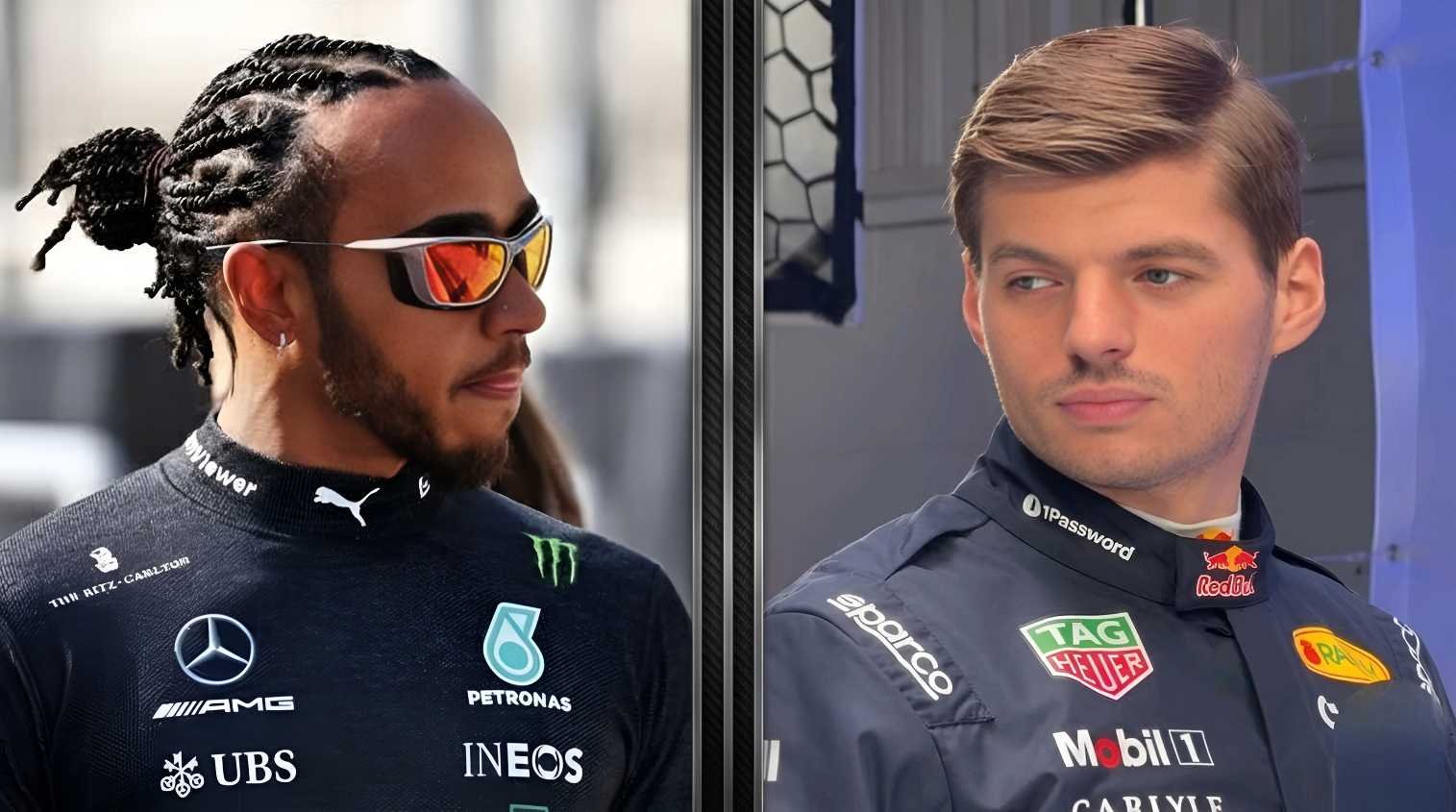
Wittich drew a distinction between the letter of the regulations and the broader sporting intent that underpins them. He argued that the selective unlapping of the five cars between Lewis Hamilton and Max Verstappen was a pragmatic measure to remove an artificial buffer that had arisen solely due to the timing of the safety car, not through on-track performance. Allowing only those cars to unlap, he suggested, restored the direct racing condition that existed before Nicholas Latifi’s Williams came to rest in the barriers on lap 53 of 58.
“The purpose of unlapping is to prevent lapped traffic from interfering with a restart,” Wittich explained. “The cars behind Verstappen were not relevant to the lead battle. Clearing the five cars ahead of him accomplished the regulatory purpose without unnecessarily delaying the restart to clear the entire field, which would have guaranteed a safety car finish.”
Reconstructing Abu Dhabi 2021: The Sequence Under Review
To evaluate Wittich’s defense, it is necessary to revisit the factual sequence of December 12, 2021, at Yas Marina Circuit.
Lewis Hamilton, driving for Mercedes, led the race from pole and controlled the strategic terms after Verstappen, of Red Bull Racing, pitted under an earlier Virtual Safety Car. The championship entered the race tied on points, meaning the driver who finished ahead would claim the title.
On lap 53, Nicholas Latifi crashed at Turn 14, triggering a full safety car. Hamilton remained on track on used hard tires, while Verstappen pitted for soft tires. Under standard procedure, lapped cars would typically be allowed to unlap themselves, and the safety car would pit at the end of the following lap.
Initially, Race Control communicated that lapped cars would not be permitted to overtake. On lap 57, the message changed: the five lapped cars between Hamilton and Verstappen — Lando Norris, Fernando Alonso, Esteban Ocon, Charles Leclerc, and Sebastian Vettel — were instructed to pass the safety car. The safety car then entered the pits at the end of that same lap, rather than the following lap, setting up a one-lap sprint to the flag.
Verstappen, with a significant tire advantage, overtook Hamilton at Turn 5 on the final lap and won both the Grand Prix and his first Drivers’ World Championship.
The FIA’s Subsequent Findings and Rule Amendments
In March 2022, following an extensive review commissioned by FIA President Mohammed Ben Sulayem, the FIA published its report into the events of Abu Dhabi. The report concluded that Masi had acted in “good faith” but that “human error” had occurred in the application of Article 48.12. Specifically, the report found that the regulation was not applied in full, as not all lapped cars were allowed to unlap, and the safety car was called in one lap earlier than prescribed by the version of the rule then in force.
As a direct consequence, the FIA implemented structural and procedural reforms ahead of the 2022 season:
Wittich acknowledged these reforms but maintained that they were clarifications and process improvements, not indictments of the underlying principle that a Race Director must have authority to manage exceptional circumstances.
“The 2022 rewrite of the regulation codified what we learned operationally,” he said. “It does not retroactively make the 2021 decision illegal. It makes the sport’s intent explicit so that future Race Directors are not placed in the same interpretive position.”
Expertise: The Role of the Race Director in Modern F1
To assess the authority and constraints of the Race Director, one must understand the role’s evolution. The Race Director is the FIA’s senior official at each Grand Prix, responsible for safety, session management, and sporting compliance. The International Sporting Code grants the Race Director authority to “control practice, qualifying and the race” and to take “any action deemed necessary” in the interests of safety.
Wittich, who served as Race Director for 23 Grands Prix across 2022 and 2023 before transitioning to an advisory role within the FIA’s single-seater department, is uniquely positioned to comment on the operational realities of the position. His tenure was marked by an emphasis on procedural consistency, detailed pre-race briefings, and strict adherence to the revised regulations.
“The job is not to write the rules mid-race,” Wittich said. “The job is to apply the rules to dynamic, often unprecedented situations, in real time, with 20 teams talking to you, 300 million people watching, and safety marshals waiting for a clear instruction. Discretion is not a loophole; it is a tool the Code gives you to manage that complexity.”
Authoritativeness: Stakeholder Perspectives Since 2021
The 2021 Abu Dhabi Grand Prix remains a dividing line in Formula 1 discourse. Mercedes filed two post-race protests, both dismissed by the stewards, and later withdrew its appeal following the FIA’s commitment to a review. Red Bull maintained that Verstappen’s victory was legitimate under the circumstances and the rules as applied.
Since then, drivers have consistently advocated for clarity over discretion. In multiple Grand Prix Drivers’ Association meetings from 2022 to 2024, drivers requested that safety car procedures be “black and white” to remove variability from championship outcomes. The revised Article 55.13 was a direct output of that feedback.
Team principals have offered more nuanced views. Several have stated privately that while they disagreed with the selective unlapping, they supported the principle of finishing under green. The contradiction between process and outcome has defined the sport’s attempt to reconcile the incident.
Wittich’s intervention is significant because it is the first time a post-2021 Race Director has offered a substantive, technical defense of Masi’s rationale, rather than deferring to the FIA’s 2022 report. It reframes the debate from one of error to one of regulatory philosophy.
*Trustworthiness: What This Means for Sporting Governance“
The value of Wittich’s comments lies not in relitigating the 2021 result — the championship standings are certified and immutable — but in contributing to institutional memory. Formula 1’s regulatory framework is iterative; each controversy produces a clarification designed to prevent recurrence.
The key takeaways for governance are:
Discretion Requires Boundaries: The sport has concluded that where discretion can materially affect a championship outcome, it must be constrained by explicit procedure. The current safety car rules are deliberately prescriptive.
Green-Flag Preference Persists: Despite the 2021 fallout, the desire to avoid safety car finishes remains. The introduction of red flags for late-race incidents, used in Australia 2023 and Brazil 2024, is a direct evolution of this preference, allowing for a standing restart rather than a truncated lap.
Transparency Is Procedural Protection: The ROC and restricted radio communications are designed to ensure that Race Directors can execute the clarified rules without external influence, addressing a critical vulnerability exposed in 2021.
Conclusion: A Necessary, If Uncomfortable, Conversation
Niels Wittich’s defense of Michael Masi does not seek to overturn history, nor does it deny that the 2021 Abu Dhabi Grand Prix exposed flaws in Formula 1’s sporting regulations. Instead, it articulates the operational logic that informed a decision made under extraordinary pressure, with championship implications, and with imperfect regulatory text.
The FIA’s subsequent reforms validate Wittich’s core point: the issue was not the desire for a racing finish, but the absence of a clear, universally understood mechanism to deliver one. By removing ambiguity, the sport has preserved the Race Director’s authority while ensuring that future title-deciding moments are governed by process, not interpretation.
In that sense, Abu Dhabi 2021 served its painful but necessary purpose. It forced Formula 1 to decide whether it is a sport governed by rules or by outcomes. The answer, codified since 2022, is that it must be both — but the rules must come first, so that the outcomes are beyond reproach.


