

Alpine and Racing Bulls Join the Top Ten as Ferrari Stumbles
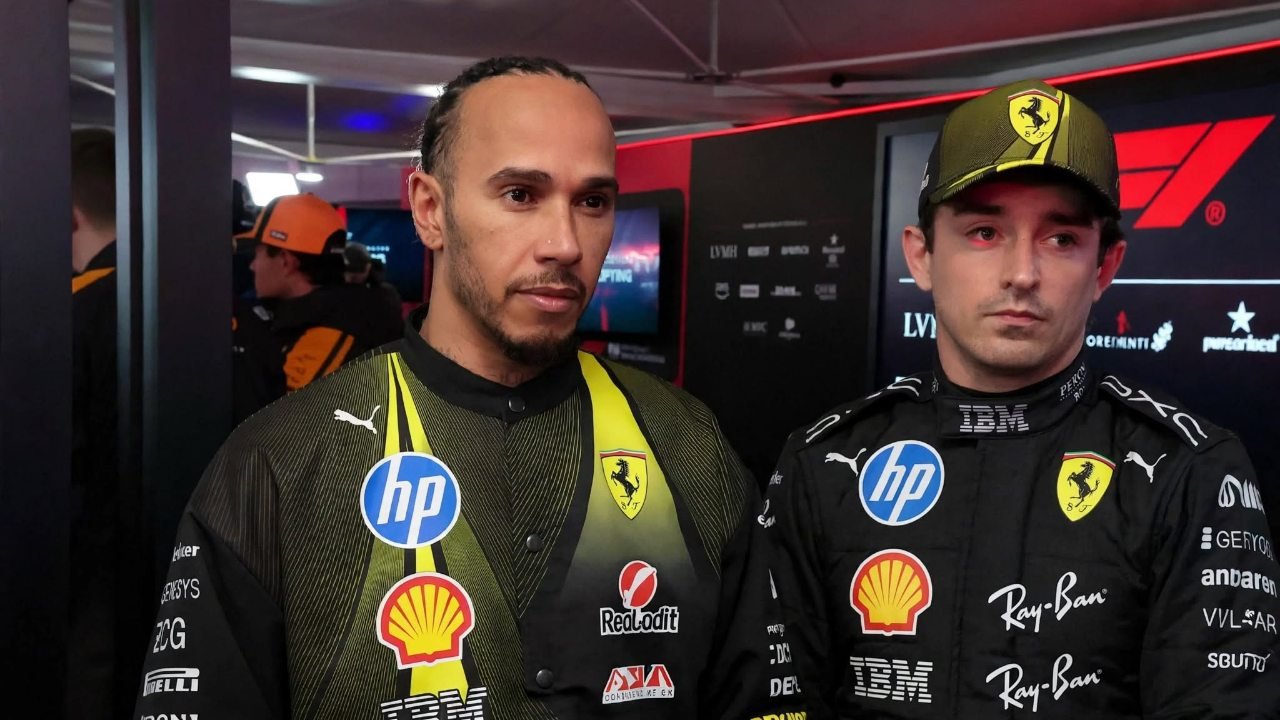
Scuderia Ferrari endured a deeply disappointing qualifying session in Las Vegas, with both Lewis Hamilton and Charles Leclerc eliminated in Q2 on the Strip Circuit. Alpine and Racing Bulls, by contrast, placed both of their cars in the top ten, claiming grid positions that the Italian team could not reach. The outcome made for an uncomfortable evening for Maranello and a rewarding one for two teams from the middle of the pack.
Ferrari’s Double Q2 Exit at the Las Vegas Strip Circuit
Ferrari’s weekend had already shown warning signs. Hamilton ran off the track several times in final practice, struggled under braking and later described a lack of grip in qualifying, while also reporting some damage. When qualifying arrived, neither Ferrari driver found the pace required to reach the final shootout, and the cold conditions combined with the long straights of the circuit proved difficult for the team.
Qualifying at this event follows the usual knockout format, with the slowest cars removed in Q1 and Q2 and only ten drivers contesting Q3. Leclerc was within 0.376 seconds of the pace in Q1, which carried him into Q2, but he could not find the improvement needed once the Q2 times tightened.
Leclerc classified eleventh after setting a best Q2 lap of 1:35.197, which left him just 0.111 seconds away from a place in Q3. Hamilton followed in twelfth with a 1:35.253, a shortfall of 0.167 seconds to the Q3 cut-off. The gaps were tiny, yet the consequence was severe: it was reportedly the first time since the 2024 Canadian Grand Prix that neither Ferrari driver reached Q3.
Why Hamilton and Leclerc Missed Q3
Leclerc’s elimination came down to a single mistake. He made an error in the middle sector of his final Q2 run, which prevented him from completing a clean lap when it mattered most. He ultimately missed the cut by about one tenth of a second, a margin that turned a promising run into a painful one.
Hamilton’s difficulties were more persistent. After struggling under braking in final practice, he reported a lack of grip once qualifying began, and he expressed shock that both Ferraris failed to progress. The seven-time world champion could not find the pace to climb out of the drop zone and finished twelfth, just 0.056 seconds slower than his team-mate.
For Ferrari, the contrast between the two drivers’ problems matters. Leclerc’s issue was tied to one lap, while Hamilton’s was linked to grip and confidence across the weekend. Different causes require different fixes, and the team’s engineers will need to separate a driver error from any wider car issue before the race begins.
The combined effect was a costly qualifying setback for a team of Ferrari’s stature. Reports indicate that penalties applied to other drivers will lift Leclerc to tenth and Hamilton to eleventh on the starting grid, but that modest gain still leaves both cars well behind the leaders, and race pace will have to make up the difference.
Racing Bulls and Alpine Seize the Opportunity
Racing Bulls delivered the strongest counterpoint to Ferrari’s session. Rookie Arvid Lindblad qualified sixth with a 1:34.668, finishing 0.775 seconds behind the fastest time, while Liam Lawson took eighth with a 1:35.090, which was 1.197 seconds off the pace. Placing both cars in Q3 is a meaningful achievement for the team, and it gave Lindblad a standout result for a rookie.
Alpine matched that achievement with two cars in the top ten. Pierre Gasly qualified ninth with a 1:35.105, which was 1.212 seconds from the benchmark, while Franco Colapinto completed the top ten with a 1:35.314, which was 1.421 seconds back. Both drivers advanced through Q2 while the Ferraris fell by the wayside, a result that underlines how quickly the order can change in a tightly matched session.
Taken together, the two teams occupied four of the ten places in the final segment of qualifying, a share that points to a competitive and closely matched midfield. Lindblad, Lawson, Gasly and Colapinto all produced laps when it counted, which is precisely what Ferrari could not do.
The margins explain why the session proved so unforgiving. Fewer than two tenths of a second separated both Ferraris from the Q3 cut-off, which shows how narrow the line is between advancing and elimination. In a field this compact, a single error or a lack of grip can decide who fights for pole position and who starts from the middle of the grid.
ALSO READ: Nike Becomes Official Apparel Partner of Formula 1
What Ferrari Must Fix Before the Race
Ferrari now faces a straightforward but demanding task. The team must understand why Hamilton lacked grip and braking confidence across the weekend, and it must ensure that Leclerc can convert his pace into a clean final lap when the pressure rises. Both drivers also face the task of rebuilding confidence after a session that exposed the team’s limitations on this circuit.
Starting from tenth and eleventh gives both drivers a platform to recover places, but the long straights and cold conditions that troubled the team in qualifying remain part of the challenge. Strategy, tyre management and clean execution in the opening laps will therefore be decisive if Ferrari hopes to salvage a strong result.
The outcome of qualifying will be remembered for the scale of Ferrari’s setback rather than the size of the margins. Hamilton and Leclerc were separated from the shootout by fractions of a second, while Alpine and Racing Bulls seized the opportunity with four strong laps. The race will show whether Ferrari can respond and whether the midfield teams can turn qualifying promise into points.