By AutodromeF1 Editorial Team
London. United Kingdom – April 21 2026
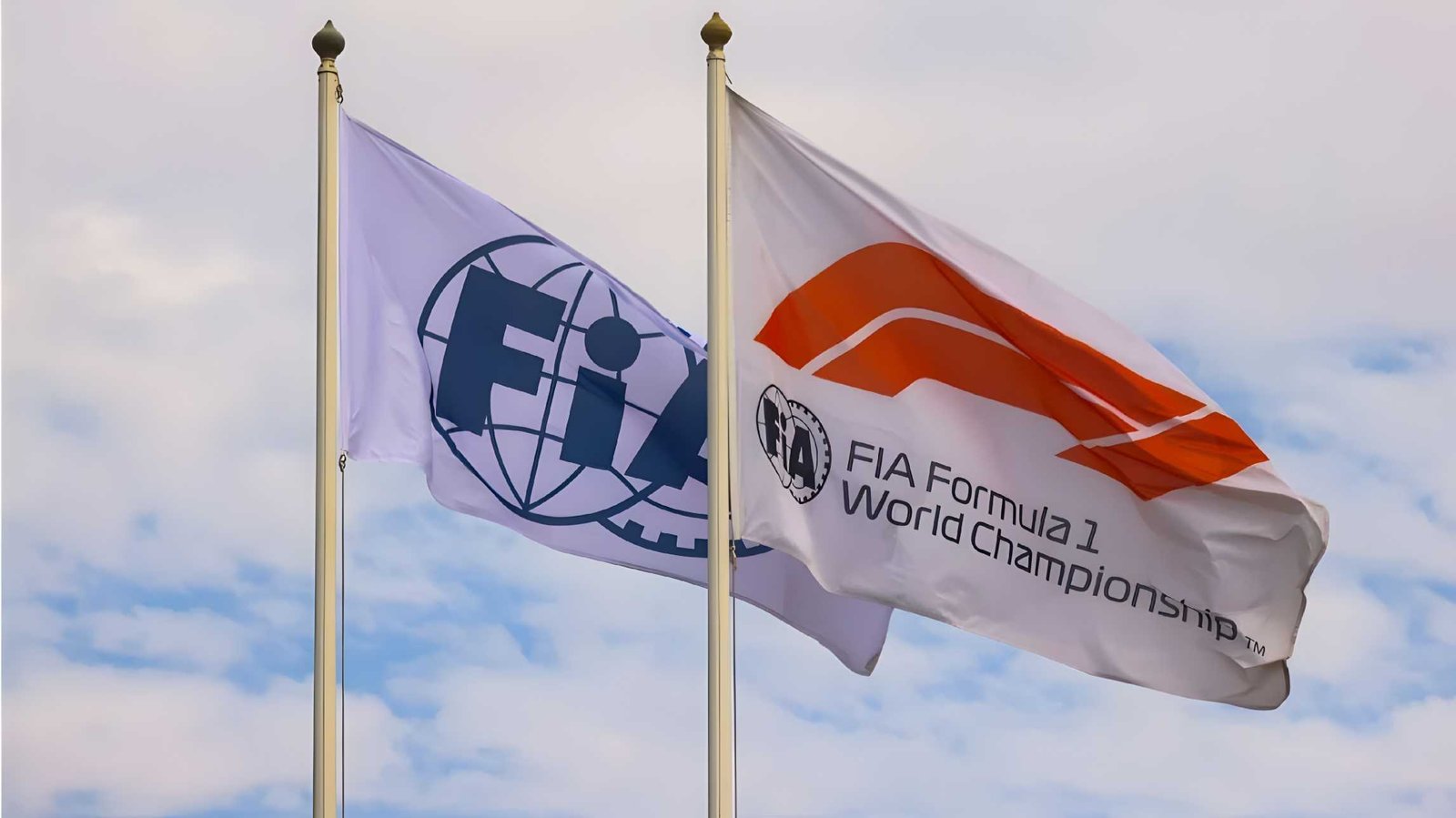
In a decisive move to safeguard the competitive integrity and safety of the sport’s new era, the FIA, Formula 1 Management (FOM), and key stakeholders have agreed to a series of urgent refinements to the 2026 Technical and Sporting Regulations. The consensus was reached during an intensive online summit held on April 19-20, 2026, involving Team Principals, CEOs of Power Unit Manufacturers, and governing officials.
The adjustments, which follow a rigorous review of the opening rounds in Australia, China, and Japan, are designed to mitigate excessive energy management demands and address alarming safety concerns regarding “closing speeds” between cars. These changes are slated for immediate implementation at the upcoming Miami Grand Prix, scheduled for May 1-3, 2026.
THE CATALYST FOR CHANGE: SAFETY AND “FLAT-OUT” RACING
The 2026 season introduced a radical shift in Power Unit philosophy, balancing internal combustion with a massive 350kW ERS (Energy Recovery System) output. However, the first three races of the championship revealed unintended consequences. Drivers and engineers reported that the necessity for “super-clipping”—heavy energy harvesting on straights—created dangerous speed deltas between cars on different energy cycles.
The most harrowing evidence of this flaw occurred at the Japanese Grand Prix at Suzuka. Haas driver Ollie Bearman was involved in a violent 50G impact at the Spoon Curve after encountering a significantly slower Alpine driven by Franco Colapinto, who was in a heavy recharge phase. Bearman’s subsequent comments regarding the “scary” 50kph speed differential underscored a growing consensus: the balance between sustainability and safety required immediate recalibration.
“The 2026 regulations were always intended to be a framework for the future, but as with any revolution, we must be humble enough to listen to the track data,” stated an FIA spokesperson. “The goal of these refinements is to return the emphasis to flat-out racing and reduce the cognitive and physical risks associated with extreme energy management.”
RESTRUCTURING QUALIFYING: THE PUSH FOR PERFORMANCE
Qualifying has long been the ultimate test of man and machine, but early 2026 sessions were increasingly dominated by strategic harvesting rather than pure pace. To rectify this, the FIA has introduced three primary technical levers:
Energy Recharge Thresholds
The maximum permitted energy recharge has been reduced from 8MJ to 7MJ. By lowering the ceiling of harvestable energy per lap, the regulations effectively discourage teams from spending vast portions of a qualifying lap in “recovery mode.” This change aims to force a more consistent power delivery across the entire lap, ensuring that qualifying remains a sprint, not a marathon of battery management.
Super-Clip Calibration
“Super-clipping”—the phenomenon where the MGU-K stops deploying or actively harvests energy at the end of a straight—will now be strictly limited. The duration of this state is now capped at 2 to 4 seconds per lap. To compensate for the shorter duration, the peak super-clip power has been increased from 250kW to 350kW. This ensures that while harvesting is more aggressive, it is far more brief, preventing the long, dangerous “derating” periods that previously caught following drivers off guard.
Circuit Adaptability
Recognizing that not all tracks are created equal, the FIA has increased the number of events where “alternative lower energy limits” can be applied. Previously capped at 8 races, the federation can now adjust energy parameters for up to 12 races per season. This allows for bespoke tuning of the ERS behavior at power-sensitive tracks like Monza or Spa-Francorchamps, where energy depletion is most prevalent.
RACE CONDITIONS: ELIMINATING THE “LUNGE” RISK
The racing refinements focus heavily on “performance consistency.” The objective is to prevent the “yo-yo” effect where cars lose significant speed mid-straight, leading to the closing speed issues seen at Suzuka.
Boost Mode Caps
One of the most significant changes is the capping of the Boost Mode at +150kW. While the system still allows for overtaking maneuvers, the cap limits the sudden, jarring performance differentials that occur when one car is in full deployment and the other is harvesting. If a car’s current power level at the moment of activation is already higher than the cap, it may maintain its current level but cannot exceed it.
Strategic MGU-K Deployment
To maintain the spectacle of overtaking without compromising safety, MGU-K deployment has been tiered:
- Key Acceleration Zones: From corner exit to the braking point (including primary DRS zones), the MGU-K will maintain its maximum 350kW output.
- Neutral Zones: In other parts of the lap where high-speed closing is a risk, deployment will be limited to 250kW.

May 2026.
This “zonal” approach ensures that drivers have the tools to pass on the straights while maintaining a more stable speed profile through high-speed sweeps where energy harvesting previously caused the most danger.
NEW TECHNOLOGY: LOW POWER DETECTION AND WET WEATHER SAFETY
Beyond energy management, the FIA is introducing hardware and software updates to improve visual awareness and race-start safety.
Race Start Detection
The Miami Grand Prix will serve as the testing ground for a new “Low Power Start Detection” system. This software-driven safety net is designed to identify cars experiencing technical failures or poor initial acceleration off the line. By flagging these cars instantly to the race director and following drivers, the FIA hopes to prevent the catastrophic “sitting duck” collisions that have plagued high-energy start procedures.
Advanced Visual Warning Systems
To alert following drivers of a car that is “clipping” or harvesting, a new visual warning system is being mandated. This includes flashing rear and lateral lights that activate automatically when a car’s energy deployment falls below a specific threshold. This provides an immediate, intuitive cue to the pursuing driver that the gap will close faster than usual.
Wet Weather Evolution
Following driver feedback regarding the lack of initial grip in wet conditions, tyre blanket temperatures for Intermediate tyres have been increased. Furthermore, to prevent “aquaplaning torque” (where sudden electric motor surges break traction in the wet), the Maximum ERS deployment will be reduced during sessions declared as “Wet.” This ensures more predictable car control and limits the “snap” oversteer often caused by high-torque electric motors on low-grip surfaces.
THE PATH FORWARD: MIAMI AND BEYOND
While the technical consensus has been reached, the final administrative step involves an e-vote by the FIA World Motor Sport Council (WMSC). Given the unanimous support from team principals and manufacturers, the vote is considered a formality.
The “Miami Experiment” will be crucial. The race start adjustments will be evaluated during the Friday and Saturday sessions before a final decision is made on their permanent integration for the remainder of the 2026 season.
Conclusion
The swiftness of these changes reflects a modern, agile FIA that is willing to intervene when safety and the quality of racing are at stake. By reducing the recharge limits and capping boost differentials, Formula 1 is attempting to course-correct its most ambitious technical revolution to date. As the paddock moves to the Florida coast for the Miami Grand Prix, all eyes will be on whether these “targeted refinements” can truly deliver the flat-out, wheel-to-wheel combat that fans and drivers alike have been demanding.
Summary of Key Data Changes (Effective May 2026)


