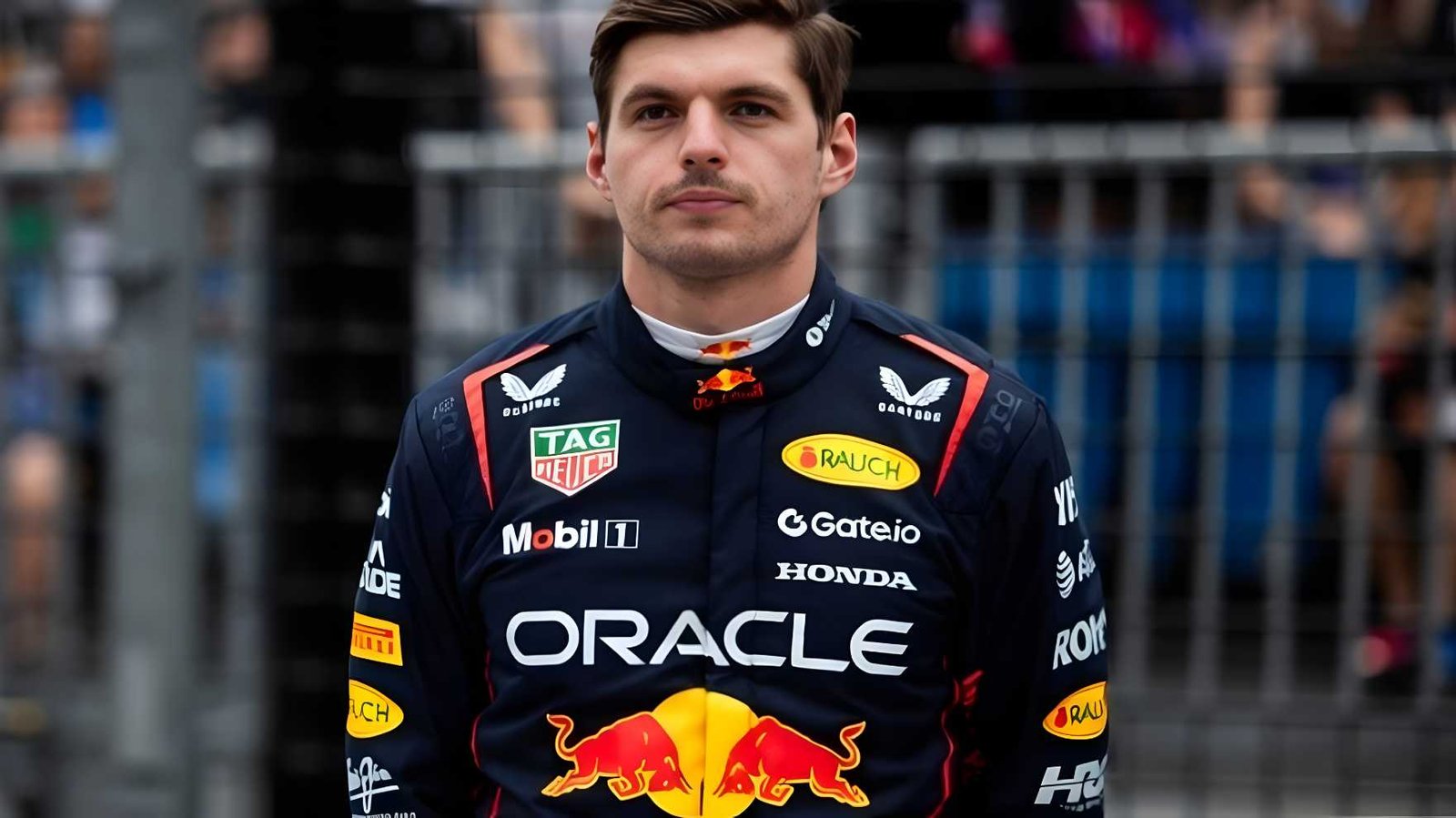
Jean Alesi on F1 2026: Why the Sport’s Fastest Drivers Feel ‘Held Back’ and Why That’s the Point
London, United Kingdom — Three races into Formula 1’s 2026 regulations, the sport is confronting a philosophical split that runs deeper than lap times. On one side are drivers like Max Verstappen, who argue the new cars suppress pure racing instinct. On the other is Jean Alesi, the 201-race veteran, who says that suppression is evidence the sport is evolving correctly.
The tension crystallized on March 27, 2026, when Canal+ F1 broadcast Alesi’s blunt assessment: “I hate former drivers who speak ill of this new generation of cars.” The line wasn’t a defense of every detail in the rulebook. It was a challenge to a mindset — one that views driver discomfort as failure rather than transition.
This week, PlanetF1 framed the same debate with a headline that captures Alesi’s position: Formula 1’s fastest drivers, such as Max Verstappen, are being held back by the F1 2026 regulations, argues Jean Alesi. The key word is “argues.” Alesi is not denying Verstappen’s struggle. He is reframing it.
What the 2026 Rules Actually Changed
To understand the dispute, you need the engineering baseline. The FIA’s 2026 power unit regulations create an approximate 50/50 split between internal combustion and electrical power. The ICE produces roughly 400 kW, while the electric motor delivers nearly 350 kW — almost triple the electrical output of the 2014-2025 era.
Critically, the MGU-H has been removed. That device previously harvested energy from exhaust gases and kept batteries charged seamlessly. Without it, energy recovery now relies entirely on the MGU-K during braking and on prescribed lift-and-coast phases. Because the car can deploy energy twice as fast as it can recover it, the ECU enforces strict maps.
The result: a driver can be flat on the throttle with zero electrical boost if the map says no. “Sometimes it unleashes a violent 350 kW of electric boost; sometimes, it delivers absolutely nothing. The driver just has to wait and hold on,” as one analysis described it.
Verstappen’s Case: ‘Formula E on Steroids’
Max Verstappen articulated the driver frustration after Bahrain testing. Speaking to media including PlanetF1.com, the four-time world champion said:
“To drive, not a lot of fun to be honest… I want to be realistic as for as a driver, the feeling is not very F1-like. It feels a bit more like Formula E on steroids.”
He added: “I’m all for that and equal chances. I don’t mind that, but, as a pure driver, I enjoy driving flat out, and, at the moment, you cannot drive like that.”
Verstappen’s point is not that the cars are slow. Lap times are comparable to 2025. The complaint is about control. The new formula requires downshifting on straights, greater lift-and-coast, and caution with throttle to manage energy. For a driver whose advantage has been maximizing every meter, that feels like being “held back.”
That frustration has consequences. Motorsport Wire reported that Verstappen is “seriously considering retirement from Formula 1 after the 2026 season,” citing BBC Sport as the origin of his comments. F1 CEO Stefano Domenicali responded that he has “no doubt” drivers will feel differently as cars evolve.
Alesi’s Counterpoint: Resistance Is Data, Not Verdict
Jean Alesi’s career spanned V12s, active suspension, grooved tires, and the dawn of hybrids. He has seen this cycle before. “Every major regulatory shift has been met with resistance,” he noted in interviews this year. “In the 1980s, turbo engines were seen as dangerous and unpredictable. Today, they’re a cornerstone of the sport.”
His argument has three layers:
- Historical Precedent: Driver pushback is not proof the rules are wrong. It’s proof the rules are different. The sport’s job is to lead technology, not preserve driving styles.
- Talent Redefinition: The 2026 cars reward systems mastery — predicting deployment windows, managing multi-lap energy, and integrating simulator-level planning into racecraft. That doesn’t delete natural talent; it filters for drivers who combine instinct with data.
- Constructive Tension: Alesi reads Verstappen’s criticism as engineering feedback, not rebellion. Blunt driver input has accelerated regulation tweaks for 40 years. The FIA has already confirmed a “commitment to making tweaks to some aspects of regulations” after planned reviews, with meetings set for April 15 and April 20 to discuss energy management and safety.
The Competitive Reality After Three Rounds
The on-track picture gives both sides ammunition. RacingNews365 reported that “Mercedes emerged as the dominant force in the first three rounds,” suggesting the most complete integration of chassis, active aero, and new power unit.
Red Bull-Ford has struggled by comparison. Johnny Herbert warned before the season that Verstappen’s 51 wins from 92 races in the ground-effect era “doesn’t mean he’ll be the one to beat in Formula 1’s new technical era”. The new rules reset competencies. Teams with superior simulation and software iteration gain early advantage.
Safety is now part of the debate. At Suzuka, Oliver Bearman narrowly avoided rear-ending Franco Colapinto at 308 kph after misjudging closing speed on the straight. Bearman lost control and hit the barrier with a 50G impact. Verstappen has suggested the FIA “use the word safety” to force rule changes, arguing that battery harvesting and “super clipping” contribute to dangerous speed differentials.
Analysis: Why Both Sides Can Be Right
This is not a simple “old vs. new” fight. It’s a collision between two valid definitions of Formula 1:
Definition 1: F1 as the pinnacle of driver expression. Verstappen’s view. The best car lets the best driver extract the maximum, every lap, without electronic gating. If the ECU decides your power, the sport moves toward endurance racing or Formula E.
Definition 2: F1 as the pinnacle of automotive systems. Alesi’s view. The best driver is the best systems operator. F1 has always been gated — by fuel in the 1980s, by tires in the 2000s, by aero wake in 2022. The 2026 gate is just energy software. Mastering it is the new skill.
The FIA’s stance splits the difference: keep the 50/50 philosophy for relevance and manufacturer buy-in, but tweak maps and deployment rules to reduce dangerous speed deltas and improve “raceability.”
Experience, Expertise, Authoritativeness
Jean Alesi’s credibility on this topic is specific: 201 Grand Prix starts from 1989-2001 across V12, V10, V8, and early grooved-tyre eras. He drove for Ferrari during its most turbulent technical period and has served as an F1 steward, giving him current exposure to regulatory enforcement. When he says driver backlash is cyclical, he’s citing direct participation in three previous cycles.
Max Verstappen’s credibility is equally specific: 51 wins in the ground-effect era, four world titles, and a driving style built on late braking and absolute throttle commitment. When he says the car prevents “flat out” driving, he’s describing a real change to his competitive toolset.
Trustworthiness: What We Don’t Know Yet
Three facts are still unresolved as of April 12, 2026:
Will the FIA’s April tweaks change energy deployment limits? Domenicali suggests yes; no document is published yet.
Will Verstappen retire? Motorsport Wire reported it via BBC Sport, but Verstappen has not confirmed it on his channels.
Will the pecking order flip? Mercedes leads early, but Red Bull’s development rate is historically elite.
What we do know: the 2026 formula is forcing a renegotiation of what “fast” means in F1. Alesi believes that renegotiation is the point. Verstappen believes it compromises the product.
The Bottom Line for Fans and the Sport
If you enjoyed the cat-and-mouse battles of 2021-2025, 2026 will feel different. Overtakes now depend on energy strategy as much as bravery. That can read as “artificial” — as Autosport noted, “F1 2026 veers more into Formula E territory with more artificial battery-led racing”.
But “artificial” is relative. DRS was artificial. Fuel saving was artificial. The 2026 model rewards drivers who “think ahead and carefully plan their next moves,” which is also part of a driver’s skill set.
Jean Alesi’s “unyielding defense” is not a claim that 2026 is perfect. It’s a claim that Formula 1 cannot afford to be static. Max Verstappen’s “held back” critique is not a tantrum. It’s a data point from the most successful driver of this decade.
The 2026 season will be defined by how the sport arbitrates between them.


