Published by: AutodromeF1 Editorial Team
A Watershed Moment at Milton Keynes
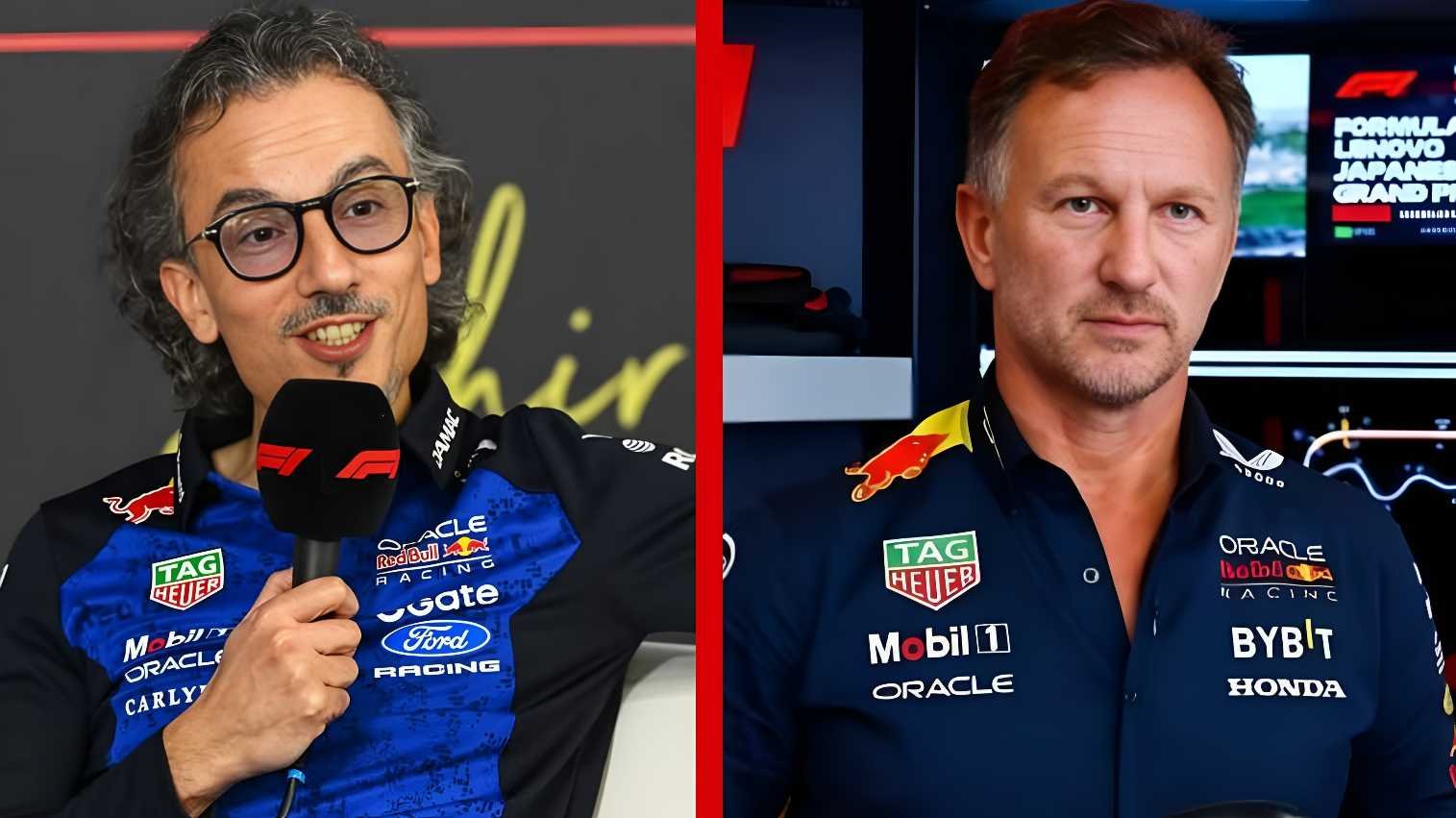
On Wednesday, July 9, 2025, Red Bull Racing executed the most consequential leadership transition in its 20-year Formula 1 history. The organization relieved Christian Horner of his duties as Chief Executive Officer and Team Principal with immediate effect, ending a tenure that began when Red Bull acquired Jaguar and entered F1 as a constructor in 2005. Laurent Mekies, then Team Principal of sister outfit Racing Bulls, was appointed as Horner’s successor and CEO of Red Bull Racing.
The move concluded an era that delivered eight Drivers’ World Championships, six Constructors’ Championships, and 124 Grand Prix victories under Horner’s stewardship. Yet it also signaled Red Bull’s intent to re-engineer its culture and competitive architecture ahead of Formula 1’s sweeping 2026 regulation overhaul — a challenge Mekies himself has called “probably the biggest challenge of regulation in its history”.
This report reconstructs the transition, evaluates Mekies’ leadership doctrine, assesses Red Bull’s 2025 performance baseline, and analyzes the strategic imperatives facing the team as it targets a return to championship contention in 2026.
The Transition: From Horner to Mekies — Chronology and Context
The Announcement and Immediate Aftermath
Red Bull’s statement was unambiguous: “Red Bull has released Christian Horner from his operational duties with effect from today (Wednesday 9 July 2025) and has appointed Laurent Mekies as CEO of Red Bull Racing”. The decision was delivered to Horner at the Milton Keynes campus, with the 51-year-old later telling staff that leading the team had been “the biggest privilege of his life”. Sky Sports commentator Martin Brundle reported that Horner said “no reason was given” for the change.
Oliver Mintzlaff, Red Bull’s CEO of Corporate Projects and Investments, publicly framed the departure as a recognition of service: “We would like to thank Christian Horner for his exceptional work over the last 20 years… With his tireless commitment, experience, expertise and innovative thinking, he has been instrumental in establishing Red Bull Racing as one of the most successful and attractive teams in Formula 1”.
Why July 2025? Competitive and Organizational Pressures
Horner’s contract had been due to run until 2030. However, Red Bull’s 2025 campaign exposed structural strain. At the time of the leadership change, Red Bull sat fourth in the Constructors’ Championship with 172 points, trailing leaders McLaren by 288 points. Four-time world champion Max Verstappen had secured only two wins from 12 races and lay third in the drivers’ standings, 69 points behind McLaren’s Oscar Piastri.
The preceding 18 months also saw high-profile technical departures, including Adrian Newey to Aston Martin and former Sporting Director Jonathan Wheatley to Sauber as team principal. Horner had faced an internal investigation into his conduct toward a female employee in 2024; he denied the allegations and was cleared. Cumulatively, these factors created the conditions for a mid-season reset.
The Mekies Appointment: From Faenza to Milton Keynes
Mekies, 48, brought a 24-year F1 résumé spanning engineering, governance, and team leadership. His career began at Arrows in 2001, followed by Minardi/Toro Rosso from 2006, the FIA as Safety Director in 2014 and Deputy Race Director in 2017, then Ferrari as Sporting Director in 2018 and Deputy Team Principal in 2021. He returned to the Red Bull ecosystem in 2024 as Team Principal of the rebranded Racing Bulls.
Upon accepting the Red Bull CEO role, Mekies emphasized continuity and respect: “It would be impossible to underestimate the size of the achievement this team has had under 20 years of Christian’s leadership… Christian is also the guy, with Helmut and Oliver that brought me back to the Red Bull family two years ago”. He confirmed Horner had been “nothing other than supportive, even in the extremely difficult context for him,” and that the two remained in contact after the change.[Marko][Mintzlaff]
As part of the reshuffle, Racing Bulls Racing Director Alan Permane was promoted to Team Principal of the Faenza-based squad.
Leadership Doctrine: Mekies on Style, Structure, and Talent
“Nobody Can Replace Christian” — The Philosophy of Empowerment
From his first public comments, Mekies rejected the notion of replication. Asked if Red Bull without Horner was akin to Manchester United losing Sir Alex Ferguson, he replied: “Nobody can replace Sir Alex and nobody can replace Christian. We are all different”.
Instead, Mekies articulated a model centered on distributed excellence: “I certainly would not try to do the job in a similar manner… Instead, he said he would seek to ‘empower’ more of his staff and rely on the existing strengths within the team”. He described Red Bull’s personnel as “the very best people in the world at what they do” and defined his role as ensuring “all the talented people here have what they need to perform at their best”.
This marks a deliberate shift from a centralizing leadership archetype to a systems-oriented approach. Martin Brundle contextualized Mekies’ profile within a broader F1 trend: “Look at the incredible job Andrea Stella is doing at McLaren, James Vowles at Williams — people with a technical background are in the driving seat”.
Results and Environment Over Personal Brand
Mekies has consistently decoupled performance from personality. In his first week at Milton Keynes, he told staff: “The focus will really be at making sure that all the talented people here have what they need to perform at their best because they are already the very best”. When addressing his move from Racing Bulls, he stressed collective momentum: “The spirit of the whole team is incredible, and I strongly believe that this is just the beginning”.
The operational brief is explicit: Mekies “would look after all Formula One operational duties as principal of the Milton Keynes-based team”. His mandate is therefore both executive — as CEO — and technical-executive, integrating factory output with trackside execution.
Horner’s Legacy: The Institutional Benchmark
Any assessment of Red Bull’s future begins with the scale of Horner’s record. Appointed in 2005 as the youngest team principal i
n F1 at the time, Horner oversaw the team’s transformation “from points scorers into World Champions”.
Competitive Achievements
Under Horner, Red Bull secured:
Eight Drivers’ World Championships
Six Constructors’ Championships
124 Grand Prix victories
Mintzlaff’s tribute underscored the institutional view: “With his tireless commitment, experience, expertise and innovative thinking, he has been instrumental in establishing Red Bull Racing as one of the most successful and attractive teams in Formula One”.
Mekies’ Public Acknowledgment
Mekies has repeatedly validated that legacy, stating: “It’s an honour to be part of this group of brilliant people that embody the Red Bull spirit. Together we will achieve great results, building on the incredible legacy left by Christian Horner during his two decades in charge”. He reiterated the point at the Belgian Grand Prix, his first race as principal, noting Horner had been “the first one to text, he was the first one to call” after the announcement.
This public alignment serves a dual purpose: it preserves institutional memory while giving Mekies license to evolve the operating model without appearing revisionist.
Recent Performance: The 2025 Baseline and 2026 Imperatives
Stabilization Amid Structural Drag
Red Bull’s 2025 season, to the point of the leadership change, was defined by relative underperformance versus the 2021-2024 dominant cycle. The team had won two of 12 races, and Verstappen’s 69-point deficit to Piastri reflected both car performance and operational execution gaps.
Yet Mekies inherited a factory that remained, by his assessment, elite in human capital. “I still look at these guys as most people outside of the team look at them… we see the very best people in the world at what they do”. The immediate task was therefore not a talent overhaul, but a recalibration of workflow, decision latency, and energy distribution across the organization.
The 2026 Regulation Inflection Point
Mekies identified 2026 as the strategic horizon: “Formula One is going to face probably the biggest challenge of regulation in its history… so it’s going to be an incredible challenge and we will need everyone”. Red Bull’s specific challenge is compounded by its vertical integration strategy: the team is building its own power unit for 2026 to compete directly with Mercedes, Honda, and Ferrari.
Success requires synchronizing chassis, aero, and PU development under new rules while maintaining 2025 competitiveness. Mekies’ Racing Bulls tenure provides relevant precedent. After a “tricky start to 2024” in the team’s RB identity, “signs of progress started to appear as the campaign went on,” leaving him “optimistic” about the organization’s trajectory. That experience in managing a technical rebuild under cost-cap constraints is directly transferable to Red Bull’s 2026 program.
Driver Equation and Organizational Stability
Verstappen’s future remained a market variable post-transition, with Mercedes and Aston Martin “keen to secure his services” despite a contract until 2028. Mekies’ empowerment model is, in part, a retention architecture: by reducing single-point dependency and increasing engineering agency, Red Bull aims to present a technical ecosystem that is resilient beyond any one individual.
The driver swap Mekies executed at Racing Bulls in early 2025 — moving Yuki Tsunoda to Red Bull after two races and returning Liam Lawson to Faenza — demonstrated willingness to make rapid personnel decisions to optimize performance. That decisiveness, combined with his stated respect for Horner’s “supportive” role during the handover, suggests a leadership style that is both consultative and unsentimental.
Institutional Analysis: What Changes, What Remains
Continuity of Objective, Evolution of Method
Red Bull’s corporate mandate has not changed: win championships. Mintzlaff’s statement that Horner “will forever remain an important part of our team history” enshrines the past while Mekies’ appointment authorizes procedural change.
Three pillars define the Mekies era based on his documented statements and actions:
Cultural Recalibration
Mekies’ first factory address avoided triumphalism. “It still feels unreal to be here and not to see him,” he said at Silverstone. By foregrounding that discontinuity, he created space for staff to process the change without disavowing past success. His subsequent message — “we see the very best people in the world at what they do” — re-anchored identity in competence rather than in a single leader.[Horner]
External Perception and Competitive Signaling
The appointment of a technical-operations executive with FIA and Ferrari governance experience signals to regulators, partners, and rivals that Red Bull intends to compete on process integrity as well as lap time. Brundle’s observation that Mekies “has done a great job at Racing Bulls and they have seen that within the Red Bull group” reflects paddock consensus that the promotion was merit-based, not merely internal.
Forward Outlook: Metrics for the Mekies Era
Evaluating Mekies’ tenure requires different metrics than Horner’s. Where Horner’s first decade was measured in titles accumulated, Mekies’ first 24 months will be measured in organizational velocity:
2026 Power Unit Readiness: Correlation between dyno targets and on-track deployment by Q1 2026. Red Bull is building its own PU, and any deficit to Mercedes/Honda/Ferrari will define the championship ceiling.
Talent Retention Index: Stability of senior technical staff through the 2025-2026 regulation cutover, particularly following Newey’s and Wheatley’s exits.
Operational Efficiency: Reduction in strategic errors and pitwall latency versus 2024-2025 baseline, reflecting Mekies’ empowerment model.
Driver Program Stability: Resolution of Verstappen’s long-term status and integration of Tsunoda or other academy assets, given Mekies’ prior management of that driver pairing.
Mekies himself set the expectation: “Together we will achieve great results, building on the incredible legacy left by Christian Horner”. The phrase “building on” is operative. It commits Red Bull to honoring institutional knowledge while demanding new competitive advantages — “the next small or big competitive advantage that we’ll need to add up if we want to be back to fighting for wins and championships”.
Conclusion: The Burden of Succession
Laurent Mekies did not inherit a crisis team; he inherited a championship organization in technical recession. His appointment on July 9, 2025, closed the Horner epoch and opened a mandate defined less by charisma than by systems engineering.
Horner’s “tireless commitment, experience, expertise and innovative thinking” built Red Bull Racing into a six-time Constructors’ Champion. Mekies’ task is to prove that the structure can outlive the architect. His early actions — affirming Horner’s legacy, committing to empowerment, and aligning the factory around the 2026 regulation set — constitute a coherent doctrine.
Whether that doctrine returns Red Bull to dominance will be determined not in press releases, but in the correlation data of the RB22 and the durability of the power unit now under construction in Milton Keynes. The Mekies era has begun. The stopwatch is running.
Methodology & Sourcing Note: This analysis is based on official statements from Red Bull Racing, Reuters reporting, and Formula1.com publications dated July 2025, along with post-transition interviews with Laurent Mekies through July 2025. All performance statistics and quotes are drawn from contemporaneous primary sources.


