By AutodromeF1 Editorial Team
London. United Kingdom – April 24 2026
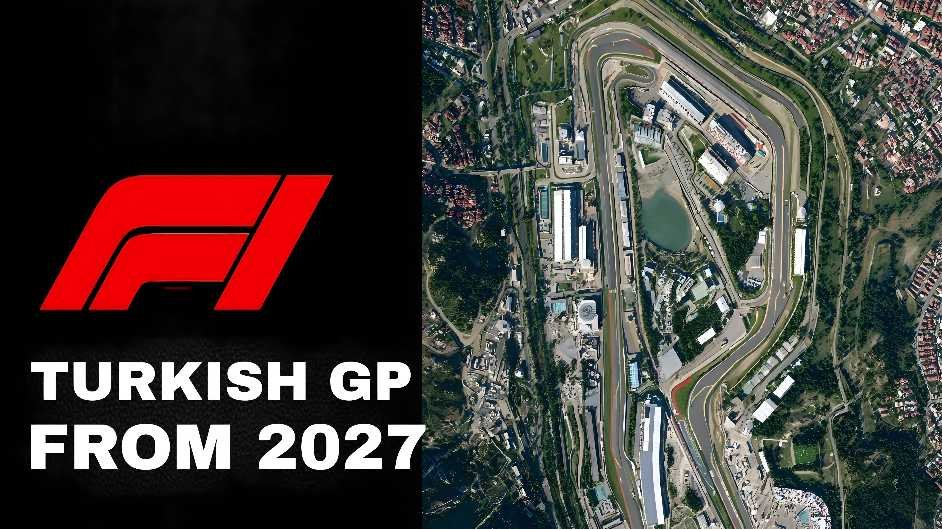
Turkish GP Returns to Istanbul Park for F1 2027 Season after Formula 1 confirmed the race will rejoin the calendar under a new five-year deal through 2031.
In a landmark announcement that reshapes the future trajectory of the FIA Formula One World Championship, Formula 1, the Turkish Presidency, and the Fédération Internationale de l’Automobile (FIA) confirmed today that the Turkish Grand Prix will return to the sport’s calendar beginning in 2027. The agreement guarantees Istanbul Park a minimum five-year tenure, extending through the 2031 season.
The confirmation was delivered Friday afternoon in Istanbul during a joint briefing attended by Turkish President Recep Tayyip Erdoğan, Formula 1 President and Chief Executive Officer Stefano Domenicali, and FIA President Mohammed Ben Sulayem. The event formalizes a multi-year commitment that concludes a three-season campaign to reinstate one of the most technically demanding circuits on the modern F1 landscape.
The Agreement: Structure, Stakeholders, and Strategic Intent
While full contractual terms remain confidential, the Turkish Presidency stated that Istanbul Park will host Formula 1 for “at least five years” starting 2027. Earlier industry reports indicated advanced negotiations for a five-year deal, with modernization requirements tied to FOM’s circuit standards.
The operational foundation for the return was laid in 2024 when Can Bilim Egitim Kurumlari A.S., a firm part-owned by Lale Cander, chairman of F1 tyre supplier Pirelli’s Turkish branch, secured 30-year operating rights to Istanbul Park for approximately $117.8 million. That agreement mandated the operator to bring Formula 1 back under a long-term arrangement by 2026. The 2027 start date indicates the project required additional lead time for infrastructure upgrades and commercial alignment.
Stefano Domenicali
characterized Istanbul’s reintroduction as a strategic expansion into a “dynamic market,” emphasizing the city’s role as a “cultural gateway between Europe and Asia”. FIA President Mohammed Ben Sulayem echoed that assessment, stating Turkey’s return “underlines our shared commitment to expanding the championship in dynamic markets”. The language reflects Formula 1’s broader calendar strategy: balancing heritage European venues with high-growth regions. Turkey currently represents more than 19 million Formula 1 fans and 7.5 million social media followers, positioning it among the sport’s largest emerging markets.
Istanbul Park: Engineering Heritage and Competitive Legacy
Opened in 2005 and designed by Hermann Tilke, Istanbul Park quickly earned reverence from drivers and engineers for its elevation changes, high-speed direction shifts, and the quadruple-apex left-hander known as Turn 8. The 5.338 km, 14-turn circuit hosted Formula 1 from 2005 to 2011 before returning as a pandemic-era substitute in 2020 and 2021.
The track’s legacy is anchored by two defining moments. In 2006, Felipe Massa secured the first of three consecutive Turkish GP victories, establishing the circuit as a Ferrari stronghold. More consequentially, the 2020 Turkish Grand Prix saw Lewis Hamilton clinch his seventh World Drivers’ Championship in treacherous wet conditions, equalling Michael Schumacher’s record. That race underscored Istanbul Park’s capacity to produce unscripted drama, a quality Formula 1 management has publicly prioritized as calendar decisions increasingly emphasize “non-stop action”.
Fans and media have consistently ranked Istanbul Park among the most missed venues since its last appearance. In recent polling of preferred circuits for calendar return, the track was cited alongside Kyalami, Nürburgring, and Sepang as a driver and spectator favorite. The circuit’s technical profile rewards aerodynamic efficiency, tire management, and driver commitment—attributes that align with the ground-effect era regulations introduced in 2022.
The Path Back: From 2021 Departure to 2027 Reinstatement
Istanbul Park’s absence since 2021 was not due to lack of sporting merit but commercial and logistical complexity. Following the 2020 and 2021 stand-in events, momentum for a permanent return slowed in 2022. Securing a slot required tens of millions of dollars in hosting fees, with competing bids from state-backed venues such as Qatar raising the financial threshold.
Negotiations regained traction in late 2025 and early 2026. By February 2026, Domenicali publicly confirmed Istanbul Park was “close to a return to the calendar in rotation with an existing race,” while reiterating the season would remain capped at 24 Grands Prix. Reports from motorsport media throughout 2026 noted a five-year contract had been offered in the summer of 2025, contingent on modernization to meet FOM standards.
The April 24 announcement resolves that contingency. The Turkish government’s direct involvement signals the race is now positioned as a national infrastructure and tourism project, not merely a private promotional venture. Official social channels from Formula 1 branded the news as “BREAKING,” with graphics featuring the Bosphorus Bridge and Istanbul Park’s layout to emphasize cultural and sporting significance.
Calendar Implications: Rotation, Expansion, and Market Dynamics
Formula 1’s 2027 calendar is undergoing a structural evolution. The Portuguese Grand Prix at Portimão is confirmed for 2027-2028, replacing the Dutch Grand Prix at Zandvoort after its final race in 2026. The Spanish Grand Prix transitions from Barcelona to a new street circuit in Madrid’s Barajas district, “Madring,” while Barcelona itself shifts to a rotational slot appearing only in 2028, 2030, and 2032.
Istanbul Park’s entry therefore does not expand the calendar beyond 24 events but instead reflects FOM’s rotational model. Domenicali’s February remarks indicate Turkey may alternate with another European venue to preserve the 24-race ceiling. Speculation within the paddock and fan communities has identified Belgium’s Spa-Francorchamps as a candidate for rotation, though no official pairing has been announced.
The broader context is one of demand outpacing supply. Formula 1 has active discussions with multiple nations in Africa and Asia, with a Bangkok street circuit expected in future seasons. In that environment, Istanbul Park’s return represents a recalibration: reintroducing a proven, high-downforce permanent circuit while other additions emphasize urban street venues.
Economic and Technical Modernization Requirements
Rejoining the calendar requires Istanbul Park to satisfy FOM’s current Grade 1 circuit homologation and commercial standards. The 2024 operating agreement explicitly tasked the new rights holders with securing Formula 1’s return, implying capital expenditure on paddock facilities, pit infrastructure, hospitality, and safety systems.
Previous reports noted the venue must “undergo modernization to meet FOM’s standards” before a permanent place could be secured. Those upgrades likely include energy recovery infrastructure, expanded team facilities, media center capacity, and fan zone development consistent with Liberty Media’s event model. The involvement of Pirelli’s Turkish leadership in the operating company suggests tire and logistics expertise will be embedded in the project.
From a sporting perspective, Istanbul Park’s surface and drainage were defining variables in 2020-2021. Any resurfacing program will need to balance the low-grip characteristics that created racing variance with the durability demands of 18-inch tyres and heavier 2026 power units.
Stakeholder Perspective and Community Response
The announcement generated immediate and substantial digital engagement. Formula 1’s official Instagram post confirming the five-year deal amassed over 106,000 likes within hours, with fan comments dominated by national pride and anticipation. Sentiment analysis of community discourse showed “overwhelmingly positive” reaction, centered on celebration of the circuit’s return and recognition of Istanbul Park as a “world-class circuit”.
Broadcast partners also framed the return as a major development. Sky Sport’s German-language coverage noted the announcement came from the Turkish presidential office but emphasized the FIA had not yet independently confirmed all operational details. BeIN SPORTS distributed Arabic-language graphics highlighting the five-year minimum term.
Within the paddock, the return is viewed as a technical benchmark. Turn 8 remains one of the highest sustained lateral-load corners in motorsport, demanding peak performance from aerodynamics and driver physiology. Its reintroduction provides engineers a reference point for high-speed cornering that has been absent since 2021.
Historical Context and Future Outlook
Turkey’s relationship with Formula 1 spans three distinct eras: the initial 2005-2011 tenure, the pandemic-era 2020-2021 revival, and now the 2027-2031 commitment. Each phase reflects broader shifts in the sport’s governance and commercial model. The first era coincided with Bernie Ecclestone’s global expansion; the second with COVID-19 contingency planning; the third with Liberty Media’s market-driven calendar curation.
The 2027 return positions Istanbul Park as a bridge between Formula 1’s heritage circuits and its next regulatory cycle. The 2026 season introduces new power unit regulations and 100% sustainable fuels. Istanbul Park will therefore debut in the new era, offering data on how the 2026 cars interact with high-energy, multi-apex sequences.
For Turkey, the Grand Prix represents a strategic soft-power and tourism instrument. The race’s placement on the calendar—likely in the European summer segment—will determine its climate and logistical profile. Given Istanbul’s geographic position, it also serves as a logistical pivot between European and Middle Eastern rounds.
Conclusion: A Calculated Return to a Driver’s Circuit
The reinstatement of the Turkish Grand Prix is neither nostalgia nor coincidence. It is the outcome of aligned government backing, private-sector investment, and Formula 1’s assessment of sporting value versus market growth.
Istanbul Park delivers three assets Formula 1 currently prioritizes: proven racing spectacle, a substantial and engaged fanbase, and a location that extends the championship’s cultural and commercial reach. The five-year horizon provides planning stability for teams, sponsors, and the promoter while preserving FOM’s flexibility to adjust the calendar beyond 2031.
As of April 24, 2026, the Turkish Grand Prix is no longer speculation. It is a contracted calendar fixture. The next phase is execution: modernization, ticketing, and integration into the 2027 operational roadmap. For drivers, it means the return of Turn 8. For fans, it means the restoration of a race that, in the words of the FIA President, reflects a “shared commitment to expanding the championship in dynamic markets”. The countdown to lights out in Istanbul has officially begun.


