By AutodromeF1 Editorial Team
MIAMI, FL — April 28, 2026
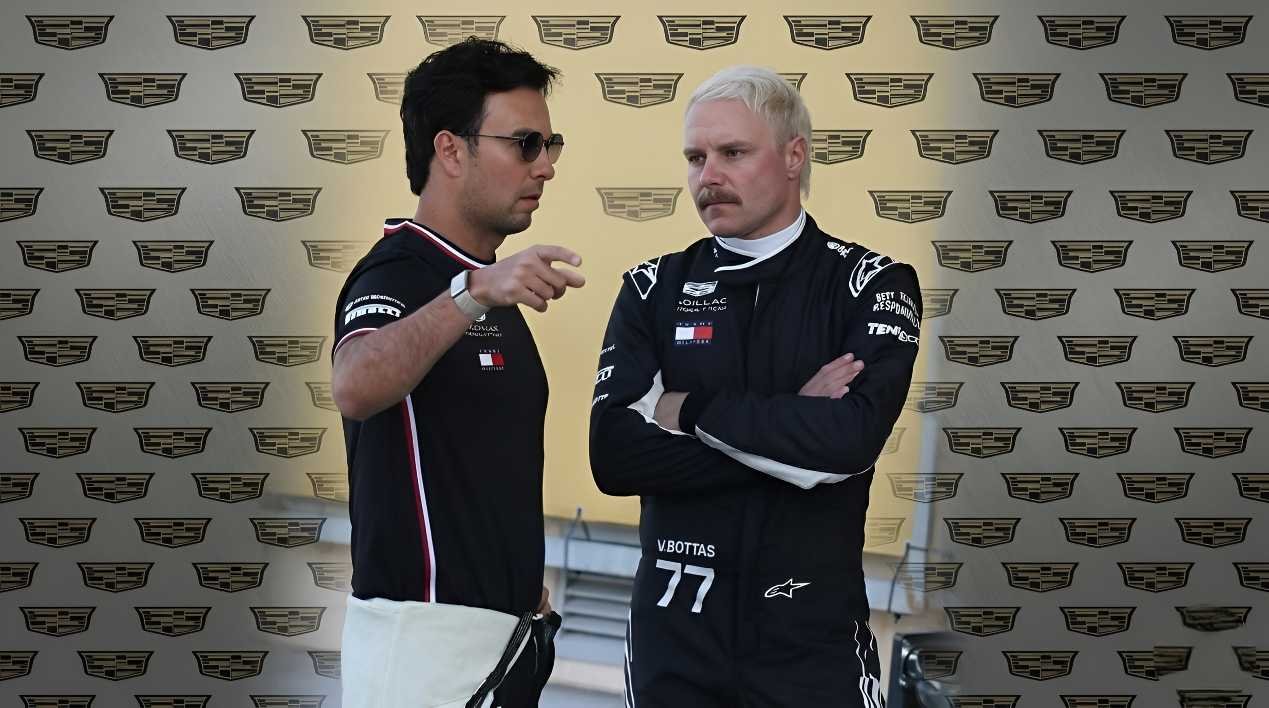
After three rounds of measured progress in its inaugural Formula 1 campaign, Cadillac F1 arrives at the Crypto.com Miami Grand Prix with the weight of expectation and the promise of transformation. The American works team has confirmed a comprehensive aerodynamic and mechanical upgrade package for its CF-26 chassis, set to debut this weekend at Hard Rock Stadium. With drivers Sergio Perez and Valtteri Bottas publicly setting a performance target of up to one second per lap, the Miami GP represents both a technical inflection point and a symbolic homecoming for General Motors’ flagship motorsport program.
The upgrade, developed through the April break between the Japanese and Miami Grands Prix, is the most significant in-season development deployed by Cadillac since its grid entry was approved. It addresses foundational limitations in rear-end stability and high-speed downforce efficiency that have so far left the team adrift of the Formula 1 midfield, despite encouraging reliability in Suzuka where both cars saw the chequered flag.
Anatomy of the Upgrade: From Concept to Circuit
Cadillac F1 Technical Director Luke Smith detailed the scope of the Miami package during the team’s Thursday media session, emphasizing that the changes go beyond iterative refinement.
Key Technical Revisions:
The package was validated across two separate sessions in GM’s Charlotte-based wind tunnel and on the team’s Driver-in-the-Loop simulator in Warren, Michigan. Smith confirmed that correlation from Suzuka’s limited updates — which helped Perez and Bottas finish P17 and P19 — gave engineers confidence to push a larger step for Miami.
“The Japan spec was a toe in the water,” Smith explained. “What we bring to Miami is a new platform. We identified that our deficit was not peak downforce, but usable downforce through yaw and ride height changes. The car was too nervous for the drivers to commit. This package is about giving them a stable base to attack.”
The April break, mandated by the revised 2026 calendar after the cancellation of the Chinese Grand Prix, afforded Cadillac an additional 10 days of development compared to a standard two-week turnaround. The team utilized the time to manufacture new-spec floors and re-homologate crash structures to accommodate the reshaped sidepod packaging.
Driver Perspective: Optimism Tempered by Reality
For 36-year-old Sergio Perez and 36-year-old Valtteri Bottas, Miami is more than round four. Both veterans joined Cadillac on multi-year deals to lead the project, bringing a combined 25 Grand Prix victories and 650+ starts. Their feedback has been central to the development direction.
Sergio Perez, Car #11:
“We are not here to be P17. The ambition from GM, from TWG Motorsports, is to fight. In Japan we saw that when the car is calmer, we can race. The gap to Williams and Alpine in sector one at Suzuka was three tenths, not nine tenths. If this upgrade delivers what the simulator says — seven to ten tenths — then suddenly we are in that midfield conversation. Miami is our biggest test because it’s our home race. The fans, the board, everyone is watching. We need to show the project is on the right path.”
Perez has repeatedly cited traction and rear locking as his primary limitations through the opening flyaways. The Bahrain and Saudi Arabia circuits exposed the CF-26’s weakness in slow-corner rotation, while Suzuka’s Esses highlighted instability in rapid direction change.
Valtteri Bottas, Car #77:
“The fundamentals are good. The power unit from Ferrari is strong, the chassis is not overweight, and mechanically the car is predictable. We’re missing load at the rear, especially when DRS is open or in crosswinds. The team has been very aggressive since day one. What I feel in the sim with this package is a car I can lean on. Are we going to be fighting McLaren? No. But if we can start Q1 thinking about Q2, that changes the whole energy.”
Bottas’ experience with multiple regulatory cycles at Mercedes and Alfa Romeo has made him a key reference for Cadillac’s engineering group. He noted that the Miami package is “the first time the car feels like it was designed for 2026, not adapted to 2026.”
The 2026 Context: A Field in Flux
Cadillac’s debut coincides with the first year of Formula 1’s new power unit and chassis regulations. The 2026 ruleset, emphasizing 50% electrical power, active aerodynamics, and sustainable fuels, was intended to reset the competitive order. Three races in, that reset has only partially materialized.
Current Constructors’ Landscape:
Red Bull Racing – Still the benchmark in race pace despite reduced advantage
McLaren – Leading both championships after an aggressive development curve
Ferrari – Miami brings a new floor and rear wing aimed at curing high-speed understeer
Mercedes – Consistent podium threat with George Russell
Aston Martin – Fighting with Alpine and Williams for P5
Cadillac sits 10th, the only team yet to score. However, the field spread has compressed. In 2024, the gap from P1 to P20 in Jeddah qualifying was 1.9s. In Jeddah 2026, that gap was 1.3s. The midfield is volatile, with Williams, Alpine, Haas, and RB separated by tenths.
That compression is why Cadillac’s one-second target is significant. Team Principal Graeme Lowdon was blunt: “If you find a second in 2026, you don’t move up one place. You move up five. The risk is that everyone else finds eight tenths. McLaren and Ferrari are also bringing big packages to Miami. Our job is to out-develop teams with 20 years more data than us.”
The American Equation: Pressure and Potential
The Miami Grand Prix is Cadillac’s first of three home races in 2026, followed by Austin and Las Vegas. The commercial implications are substantial. GM’s board approved the F1 program with a clear mandate: demonstrate American engineering credibility on a global stage.
Commercial Director Dan Towriss confirmed that hospitality for Miami sold out in January, with 60% of guests being first-time F1 attendees brought by Cadillac’s dealer network. “This weekend is our Super Bowl,” Towriss said. “The upgrade needs to perform because the narrative of ‘start-up team learning the ropes’ only lasts so long in America. We have to show progress.”
The team has leveraged its U.S. base aggressively. Unlike Haas, Cadillac operates a full-scale design office in Fishers, Indiana, and builds its chassis in the U.K. The integration of GM’s Defense and Motorsports computational resources has given the aero group access to computing power typically reserved for aerospace.
Risk Analysis: Why One Second is Not Guaranteed
While driver optimism is high, senior engineers urge caution. Three factors could blunt the upgrade’s impact:
Correlation Risk: Miami’s street surface is far smoother and hotter than Suzuka. If the new floor is ride-height sensitive, the team may have to run higher than optimum, sacrificing peak load.
Setup Window: New aero maps require recalibrated suspension and differential settings. With only three practice sessions, finding the optimal balance is not trivial.
Competitor Response: Alpine confirmed a new front wing and floor for Miami. Williams has a revised beam wing. The midfield target is moving.
Chief Race Engineer Pete Crolla summarized it: “We’ve made the car faster in the tunnel. The job now is to make it faster on track. That means no reliability issues, clean sessions, and drivers who can adapt quickly. If we do that, points are not impossible.”
What Success Looks Like in Miami
Cadillac has avoided setting a specific results target, but internally the goals are defined:
Qualifying: Both cars escaping Q1 for the first time. Current best is Bottas’ P18 in Bahrain.
Race Pace: Race stint average within 0.5s of the lower midfield, down from 1.1s in Japan.
Reliability: Third consecutive double finish to prove operational stability.
Strategic Execution: No penalties, no botched stops, and clean blue-flag management if lapped.
A Q2 appearance or P12-P14 finish would be viewed as validation. Anything higher would be considered a breakthrough. A double Q1 exit or DNF would raise difficult questions heading into the European season.
The Road Beyond Miami
The Miami spec is not the end of Cadillac’s development race. The next major package is scheduled for Silverstone in July, aligned with a new front suspension to address mechanical grip. Work is already underway on a 2027 chassis, with GM having committed to building its own power unit for 2028.
For Perez and Bottas, 2026 is about building culture as much as lap time. “We are writing the first chapters,” Bottas said. “Every process, every upgrade, every debrief — it sets the standard for the 2000 people who will work at this team in five years. Miami is step one of that.”
The Verdict: Calculated Gamble on American Soil
Cadillac F1’s Miami upgrade is the most scrutinized package on the grid this weekend, not because it will decide the championship, but because it will define perception. In Formula 1, credibility is won in tenths and lost in seasons.
The team has done everything a new entrant should: hired experience, invested in infrastructure, and set aggressive but data-driven targets. The CF-26’s limitations are not from lack of effort, but from the immutable reality of F1’s learning curve.
If the Miami package delivers seven tenths or more and allows Perez or Bottas to race in the midfield, Cadillac will leave Florida having passed its first major exam. If not, the questions will grow louder before the European leg.
Either way, for the first time since 2015, an American manufacturer will roll out of the garage at a U.S. Grand Prix with its own car, its own stakes, and its own chance to change the story.
The lights go out Sunday at 3:00 PM ET. For Cadillac F1, the stopwatch starts now.


