
Ex-Haas chief questions if Hamilton can lead Ferrari’s team.

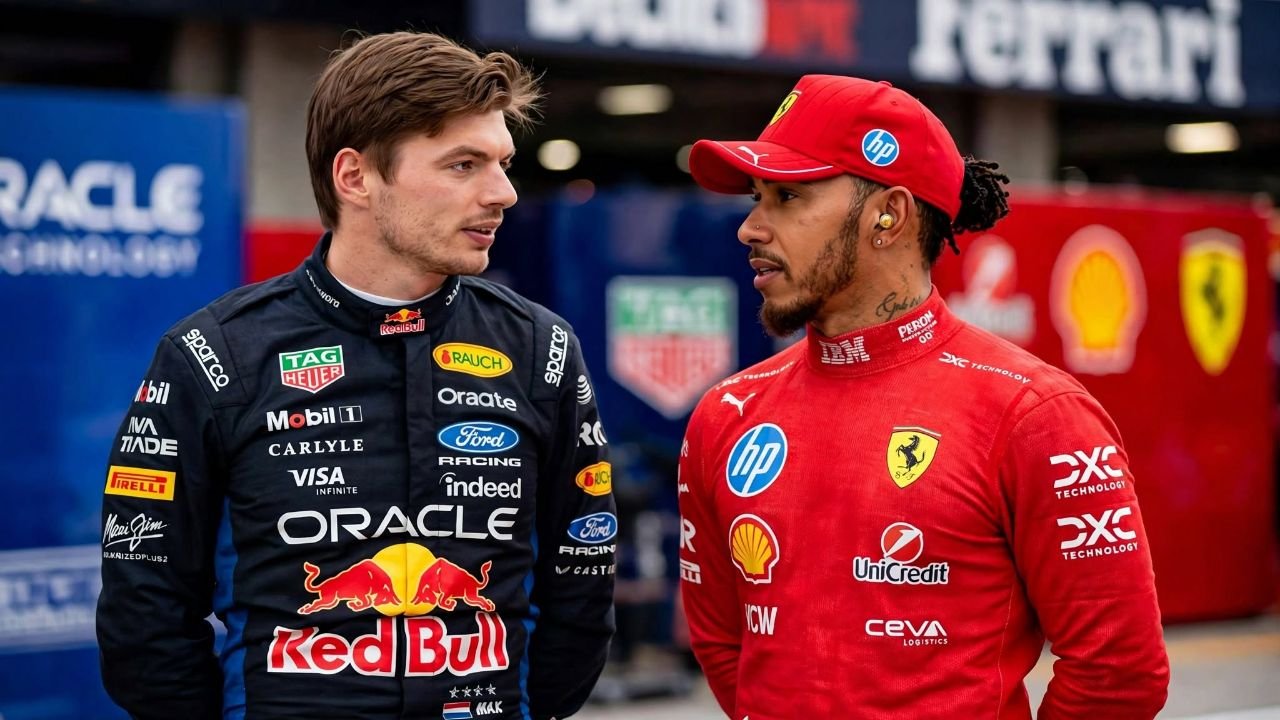
Former Haas team principal Guenther Steiner has questioned whether Lewis Hamilton is the right driver to lead Ferrari back to consistent title contention. He pointed instead to Max Verstappen’s uncompromising approach as a potentially more effective fit for Maranello. The comments, made on The Red Flags Podcast, have reopened a familiar paddock debate about whether Ferrari performs best when one dominant driver takes clear control of the team.
Steiner’s Case for a Dominant Ferrari Leader
Steiner explained that Ferrari tends to operate at its highest level when a strong driver assumes command, with the era of Michael Schumacher offering the clearest historical example. He then applied that thinking directly to Hamilton, asking whether the seven-time world champion is the person who can make the team win.
“But is he the guy who can make the team win?” Steiner asked. “When strong drivers took over, they made it a success, but Fernando Alonso tried. Did he succeed? No. Do you think Lewis is the right guy to make this happen?”
When asked whether Verstappen would be better suited to that role, Steiner replied: “You know how Max is. He wouldn’t stop. He’s relentless. That could be the solution.”
The reference to Alonso is significant. The two-time world champion arrived at Ferrari with a reputation for fierce determination, yet his time at the team ended without a drivers’ title. The underlying argument is that talent and willpower alone have not always been enough, and that a driver must also be able to bend the entire organisation toward a single objective.
Hamilton’s Ferrari Journey So Far
The comments arrive at a delicate moment for Ferrari. Hamilton joined the Scuderia in 2025 after 12 seasons at Mercedes, where he collected six of his seven world championships. After a challenging first year in red, he scored his maiden victory for the team at the 2026 Barcelona-Catalunya Grand Prix. He currently sits fourth in the drivers’ standings with three rounds remaining.
Recent races have intensified scrutiny of the relationship between Hamilton and teammate Charles Leclerc. On-track incidents, particularly at the Mexico City Grand Prix, prompted open discussion about team hierarchy and operational priorities. In Brazil, Hamilton recovered from 20th on the grid to finish ninth after a late spin in changeable conditions, while Mercedes sealed the constructors’ championship.
Ferrari’s last constructors’ title came in 2008, a gap that gives added weight to any discussion about who should carry the team’s ambitions.
For Hamilton, the timing of the debate is notable. His maiden Ferrari victory at Barcelona-Catalunya showed that he can win in red, but the broader questions of hierarchy and operational priorities have resurfaced. Seven world titles give him a record few in the sport can match, and the discussion now centres on whether that experience can be translated into collective momentum at Maranello.
Pragmatic Counterpoint From the Podcast Co-Host
Steiner’s co-host, Brian Muller, offered a more pragmatic view of the situation. “Well, they’re not getting Max anytime soon,” Muller said. “So, what they have is Lewis, and if they’re not ready to drop things when you have a seven-time world champion who’s ready to make Ferrari great again, and you’re not ready to jump on that when it’s time, then you’ve got bigger problems.”
The exchange highlights two competing viewpoints. One suggests Ferrari may need the most relentless personality in the paddock, while the other holds that the team must fully commit to the champion it already has.
Muller’s comment rests on a practical reality. In his view, Ferrari will not land Verstappen anytime soon, which leaves Hamilton as the driver around whom the team must build. In that context, the conversation becomes less about replacing a driver and more about how effectively Ferrari can organise itself behind the talent it has.
ALSO READ: Zak Brown Explains How McLaren Rebuilt Its Culture
Ralf Schumacher and Verstappen’s Leadership Profile
The remarks also follow earlier criticism from Ralf Schumacher, who suggested Hamilton had never been required to lead a team in the organisational sense during his time under Toto Wolff or Ron Dennis. That view sits alongside Steiner’s argument that leadership, rather than raw speed alone, may be the missing ingredient at Ferrari.
Verstappen’s record at Red Bull is defined by an intensity that shapes the entire organisation around performance and continuous improvement. Steiner’s assessment frames that same quality, the refusal to accept second-best and the constant pressure applied to every department, as the element Ferrari may still be missing after years of near-misses and the challenge of balancing two highly competitive drivers.
Whether the current pairing can deliver the sustained success the Scuderia seeks remains the immediate question. With three rounds remaining, Ferrari has limited time to change the narrative this season, and the pressure on both drivers and management is likely to remain high.
Steiner’s intervention ultimately restates a familiar paddock debate. Ferrari’s most dominant periods have often coincided with a single, forceful driver figure capable of driving the entire operation forward without compromise. Whether Hamilton can become that figure, or whether the team must find a different formula, will shape how this chapter of Ferrari’s history is judged.
For readers and analysts, the central lesson is that Steiner’s comments are an opinion rather than a prediction. They reflect a long-standing belief about how Ferrari functions best, not an announcement about driver contracts or team plans. Even so, the debate shows how closely the sport scrutinises leadership at its most famous team, especially when results fall short of expectations. The remaining rounds will therefore be watched closely for any sign of how Ferrari intends to resolve those questions before the current season ends.