
Brundle reveals how Aston Martin’s owner feels after Brazil.

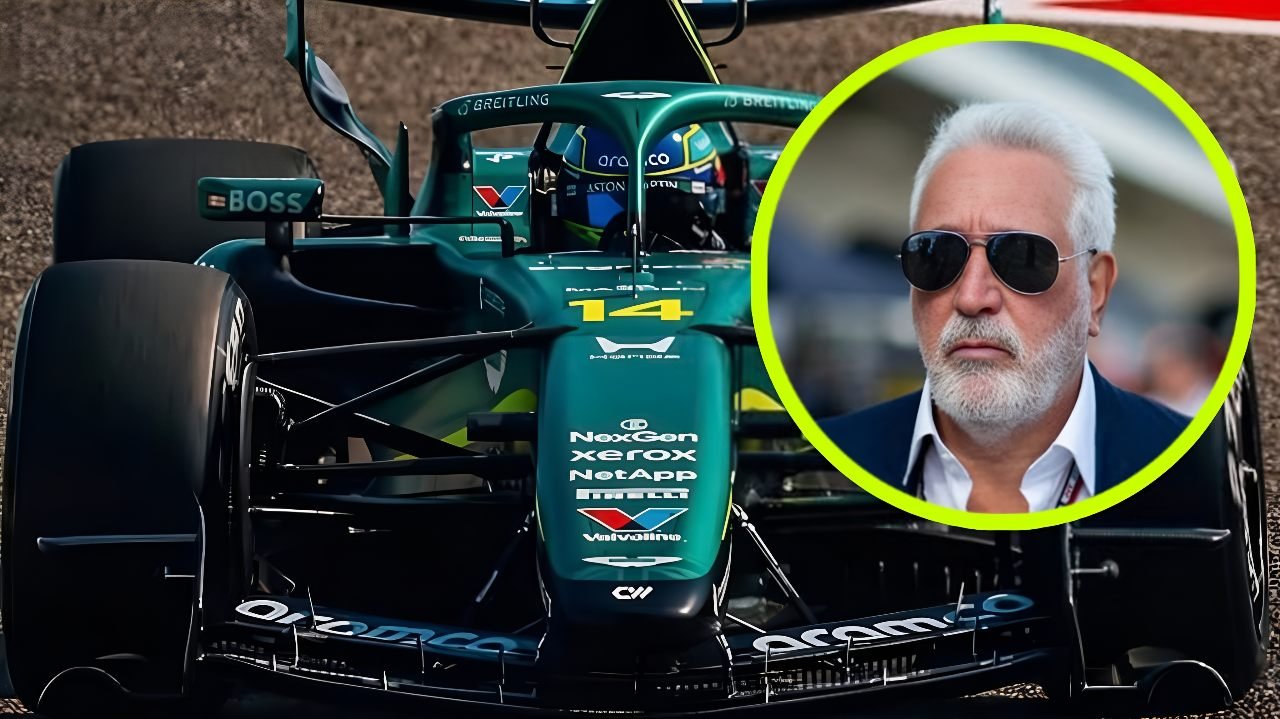
Lawrence Stroll is reportedly at his wit’s end over Aston Martin’s persistent reliability problems, according to Martin Brundle. The Aston Martin owner is said to be deeply frustrated by a run of non-finishes that continued at the Brazilian Grand Prix. The latest blow came when Lance Stroll retired at Interlagos, reportedly his 13th retirement of the 2026 season. With one triple-header still to run, the team’s search for answers has become the defining story of its year.
This report examines what was said, what the manufacturer has confirmed, and what the results mean for the team’s position. The details below are drawn from the published statements of the individuals involved.
Brundle Describes an Owner Out of Answers
The comments came in the immediate aftermath of the Brazilian Grand Prix, where Lance Stroll’s retirement added to a season in which finishing races has been a recurring struggle.
Speaking after the race, Brundle explained that he had spoken with the team owner about the situation. In his words: “We were talking to Lawrence Stroll, the boss, about it. He’s at his wit’s end. He doesn’t know what to do about these endless reliability issues and non-finishes in the team.”
Brundle then turned to the questions facing the squad ahead of next season. “What are they going to do for next year? Have they got different ideas, different people to sort the problem out? The battery pack, the ERS, the energy recovery system and just the power deficit they’ve got. That’s the problem Aston Martin have at the moment: Where do they go from here?”
The ERS captures energy and stores it in the battery pack before deploying it to the power unit, so a fault in the battery or its control hardware can quickly cost a driver both performance and the ability to finish a race. That context explains why Brundle linked the team’s difficulties to both reliability and a power deficit.
The language Brundle used is significant. Phrases such as endless reliability issues point to a pattern, not a single misfortune, and the questions he posed about different ideas and different people suggest that the scale of the response is an open matter for the team. Nothing in the reported comments confirms what changes, if any, will follow.
Honda Cannot Yet Explain the Battery Failure
Honda’s chief engineer, Shintaro Orihara, confirmed that the root cause of the battery and ERS problems that affected Lance Stroll at Interlagos remains unknown. He said the investigation could take a few weeks as the manufacturer examines both the data and the hardware in greater depth.
An unexplained fault carries real consequences for planning. Until the source is identified, engineers cannot confirm whether the failure was an isolated event or part of a wider weakness, and that uncertainty makes any fix for next season harder to commit to with confidence. The wait for answers will therefore continue well beyond the chequered flag in Brazil.
Reliability and performance are closely linked in the current generation of power units. Brundle specifically named the power deficit alongside the battery fault, which indicates that the challenge is twofold: keeping cars running and finding speed once they do.
Fans and analysts alike will watch the outcome of the investigation closely, since its findings are likely to influence both the team and its engine partner. Transparent communication about the cause will be vital for restoring confidence.
Krack Balances Pace Gains Against Lost Results
Mike Krack, Aston Martin’s chief trackside officer, acknowledged the reliability struggles while pointing to improved competitiveness in difficult conditions. He said the team showed stronger relative pace over the weekend and beat some faster cars.
Krack also highlighted that the recent triple-header produced multiple retirements, with reports citing five lost results from a possible six. Reliability remains the team’s top priority.
The contrast is notable. Competitive speed offers encouragement, yet it counts for little when cars do not reach the finish. For a team seeking progress, converting pace into points depends on durability first.
Krack’s remarks indicate that the team saw encouraging signs on track, even though the results did not reflect them. Beating faster cars is a meaningful marker for a team currently placed tenth, and it supports the argument that the underlying package has potential.
ALSO READ: Steiner: Verstappen Could Be Ferrari’s Real Answer
Constructors’ Standings Leave Little Margin
Aston Martin sit tenth in the Constructors’ Championship with seven points, five behind Williams. One triple-header remains in the 2026 season, which gives the team a limited window to close the gap.
The gap to Williams is only five points, a margin that can be erased in a single race weekend. That makes the final triple-header important, because a clean run of finishes could change the team’s position in the standings.
In Formula 1, consistency is the foundation of every championship campaign. A car that finishes races collects points, and a team that collects points earns the revenue and credibility needed to keep developing. Aston Martin’s run shows how quickly that cycle can reverse when reliability falters. Every retirement carries a cost beyond points.
For Aston Martin, the priorities are therefore straightforward. The team must secure finishes, wait for Honda’s investigation to produce clear findings, and decide how to respond before next season begins. Each of these steps depends on the others, and none can be rushed without risking further failures.
Lawrence Stroll’s frustration, as relayed by Brundle, captures the mood around a team that has endured too many retirements. Whether the winter brings new ideas or new personnel remains the central question, and the answer will shape how the team is judged in 2027.