

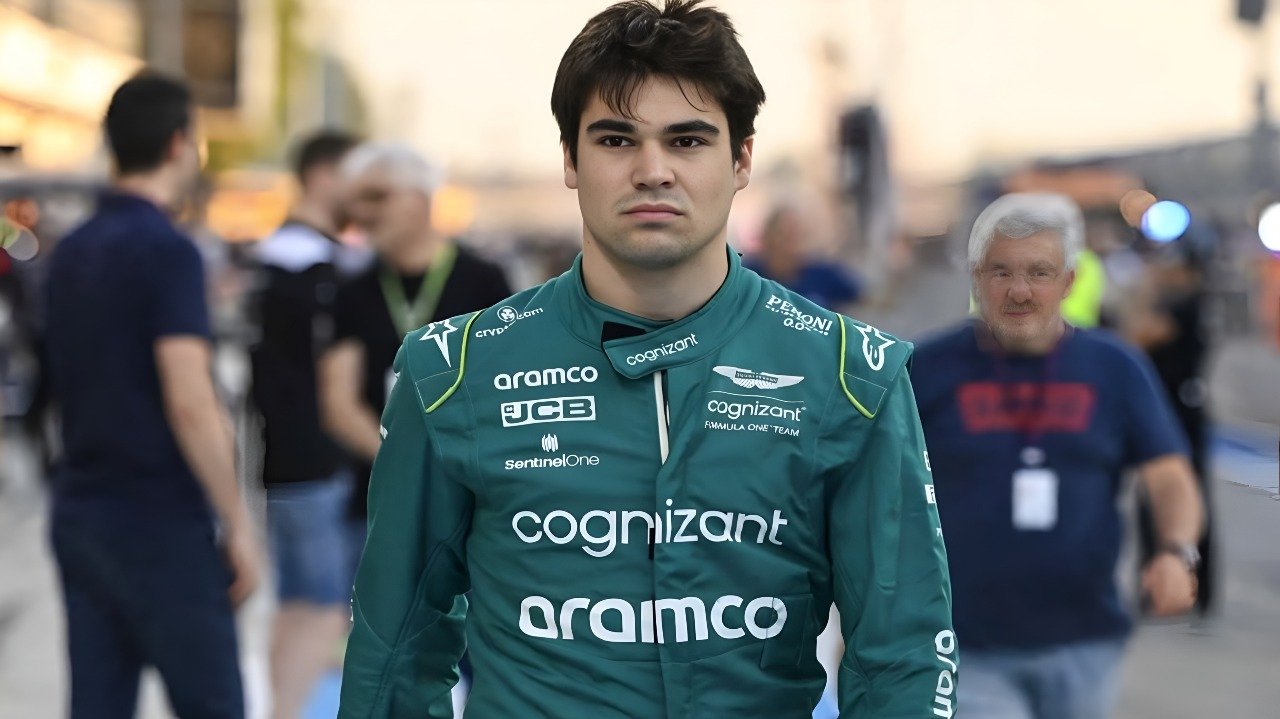
What Stroll Said Over the Radio
During the first session, Stroll spoke with his engineer, Gary Gannon, about the way the car was behaving. According to reports of the exchange, he asked why there had been no vibration in Las Vegas, yet the car was shaking heavily in Qatar, and he demanded an explanation. He then questioned the team’s grasp of its own machinery, asking what the group was doing if it could not understand these issues.
The language was strong, and the message never reached the television broadcast. Even so, the substance is straightforward. A driver reported a symptom that had appeared at several circuits earlier in the year, was absent in Las Vegas, and returned in Qatar. He expected the technical side of the team to account for that pattern. No public explanation followed.
That inconsistency is the heart of the complaint. A fault that is constant can be measured, isolated and fixed. A fault that comes and goes with the circuit is far harder to diagnose, because the usual variables (track surface, corner speeds, engine loads and temperatures) all change at once. Stroll’s frustration, then, is not only about physical discomfort. It is about the absence of a clear cause.
A Season Shaped by Vibration
Vibration has defined Aston Martin’s 2026 campaign from its earliest days. During pre-season testing in Bahrain, the team completed the fewest laps of all eleven teams, and Stroll described the car as falling apart under that level of vibration. Ahead of the season opener in Australia, he compared the sensation to electrocuting yourself on a chair, adding that it was bad for the engine and for the person inside the car.
The concern was serious enough that Adrian Newey, who leads the team, publicly raised the possibility of nerve damage to drivers and warned that running would have to be heavily restricted until the vibration was reduced at its source. Honda, the team’s new works power unit partner, said that it and Aston Martin had been working around the clock on battery-related vibration problems.
The results reflected the struggle. In Australia, Fernando Alonso retired after 21 laps, while Stroll was classified as not completing the race after 43 laps. In China, Stroll stopped on lap ten after losing power, and Honda said it was investigating the root cause while describing vibration as a key area to address. In those early rounds, the team had not completed a full grand prix distance.
Against that background, the absence of vibration in Las Vegas, as Stroll described it, was a rare piece of encouraging news. Its reappearance in Qatar removes that comfort and reopens a question the team had hoped to close.
A Difficult Friday at Lusail
The wider picture on track was no better. Kimi Antonelli led a Mercedes one-two in both sessions, while Aston Martin sat at the foot of the timing sheets. In the opening session, Stroll was last, roughly three seconds off the leading time. Jak Crawford, driving Alonso’s car, was 19th and about 3.1 seconds behind. Alonso had been absent from the circuit on Thursday with a viral infection, and he handed his seat to Crawford for the first session under a rookie programme that had already been planned.
The second session was interrupted by two red flags. Stroll again finished 20th, 3.571 seconds behind Antonelli, and he went off the track in both sessions. The team’s two cars ended up 19th and 20th.
The more significant issue was durability. Lusail is demanding on components, and the Aston Martin did not appear robust enough for it. With so much downtime, the team could not complete meaningful long runs, which makes any judgment about race pace unreliable. Aston Martin chose to end its day early and use the time to repair damage, and Mike Krack predicted an evening spent bonding carbon parts back together with glue.
That outcome was a disappointment for a team that had arrived with slightly higher hopes than it held in Las Vegas. The circuit is very different from those of recent rounds, with plenty of high-speed corners, and the early evidence suggests the car has more to understand than the team expected.
Stroll’s Back Problem
After the second session, Stroll told reporters that he had “tweaked” his lower back and was battling the problem. He described the day as difficult, noting that Qatar is a different track from Las Vegas and that he was trying to put the car into a good working window for it. Reports indicated that he would monitor the issue overnight.
Sustained vibration and heavy cornering loads both place stress on a driver’s body, and it is natural to wonder whether either played a part. However, the precise cause was not confirmed in the reports reviewed for this article, so it would be premature to link the injury directly to the car’s vibration or to the circuit’s loads.
Why Vibration Can Change From One Circuit to Another
The following is general engineering context rather than a diagnosis of Aston Martin’s car. Vibration in a racing car typically appears when forces from the engine, driveline, tyres or aerodynamics coincide with the natural frequencies of a component or structure. Whether that coincidence occurs depends on the engine speeds used, the gear selected, the load applied and the surface beneath the car.
Because each circuit asks for a different mix of these conditions, a problem can seem to disappear at one venue and return at another without anything on the car having changed. Reports earlier in the year indicated that Honda had found vibration levels acceptable when the power unit was tested on its own, yet stronger once it was installed in the chassis. That pattern suggests the interaction between engine and car, rather than either part alone, deserves close attention.
Qatar’s mixture of fast corners, sustained loads and a demanding surface may simply have pushed the car into a different operating range from the one it saw in Las Vegas. That is a plausible reading, but only the team’s data can confirm it, and the team has not yet offered a public explanation.
What This Means for Aston Martin
The consequences fall into three areas.
First, the technical challenge. If vibration can disappear and return depending on the venue, then it has not been solved; it has merely been avoided for a weekend. A durable fix requires understanding exactly which conditions trigger it, and that is the question Stroll put to his engineer.
Second, driver welfare and morale. Stroll’s radio message was blunt, but it reflects a broader concern about how long a driver can be asked to work with a car he does not trust. Earlier warnings from the team’s own leadership about the physical effects of vibration give that concern added weight. A driver who is also managing a sore back faces a heavier burden.
Third, the working relationship with Honda. This is the first season of the partnership, and shared problems of this kind test it. Both sides have said they are working together, and the coming weeks will show whether that cooperation can produce a lasting solution.
ALSO READ: Russell Draws Line Between Verstappen and Hamilton
The Outlook for the Weekend
Aston Martin faces a short list of priorities in the remaining sessions: repair and strengthen the car, gather useful data, and protect Stroll’s condition. Neither car is expected to challenge for points on pure pace from this starting position, so progress is likely to be measured in understanding rather than in positions.
For observers, the key signals to watch are simple. Does the vibration persist through the rest of the weekend? Does Stroll’s back allow him to drive at full effort? And does the team offer a clear explanation of why the problem vanished in Las Vegas? Clear answers to those questions would be more valuable than any single result.
Key Facts at a Glance
- Driver: Lance Stroll, 28, Aston Martin, Qatar Grand Prix weekend at Lusail.
- Incident: an untelevised radio exchange with engineer Gary Gannon during the first practice session on Friday.
- Complaint: strong vibration in Qatar that was absent in Las Vegas the previous week.
- Practice results: Stroll finished 20th in the second session, 3.571 seconds behind Antonelli, and was last in the first.
- Physical issue: Stroll said he tweaked his lower back in the second session.
- Context: vibration has affected the AMR26 since pre-season testing in Bahrain, and Honda has called it a key area to address.