

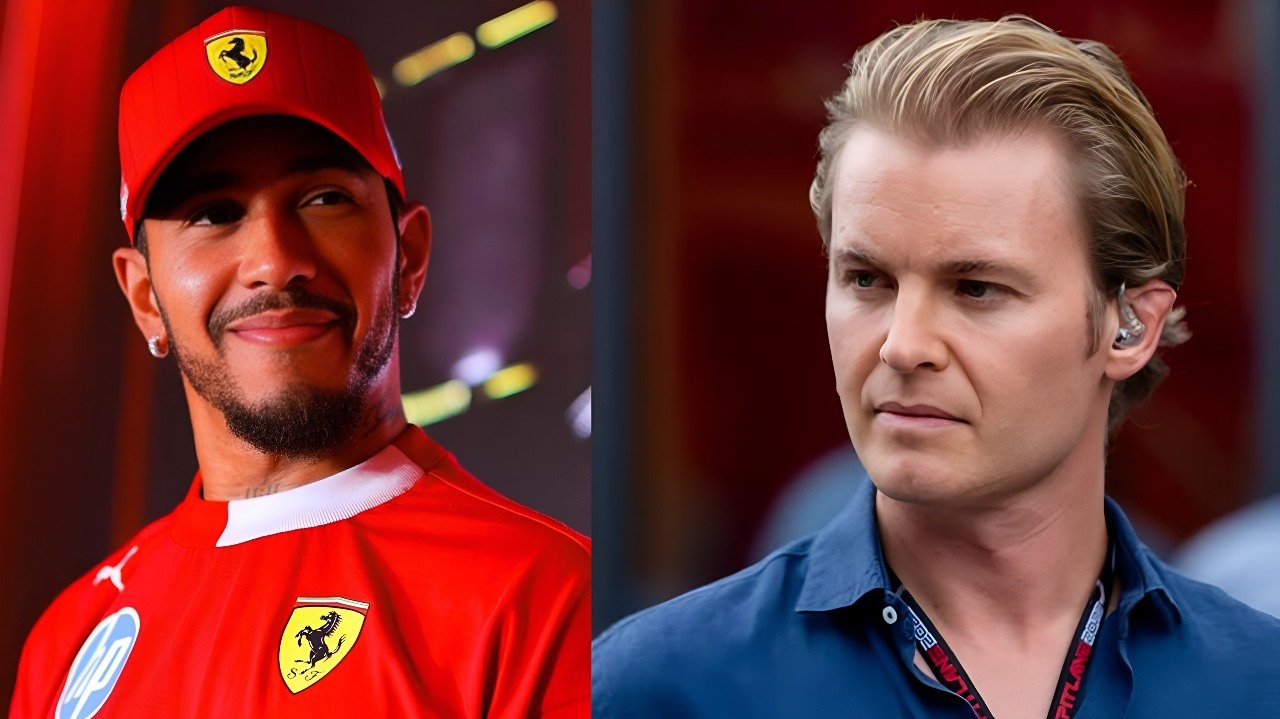
Ten years after the 2016 title fight, the champion reflects.
Few questions in sport are as uncomfortable as this one: can a friendship survive a fight for the world championship? Formula 1 has produced many bitter teammate rivalries, but fewer drivers have spoken openly about what those battles cost them personally. Nico Rosberg has now done exactly that, and his answer is honest, measured and quietly sad. It also arrives at a sensitive moment for Lewis Hamilton, who is once again dealing with tension alongside a teammate.
A Candid Admission, Nearly a Decade On
Rosberg made his comments in an interview with a German news agency, close to the tenth anniversary of the 2016 season finale in Abu Dhabi. Now 41, the same age as Hamilton, he described their present relationship in simple terms: “We’re neutral. When we see each other, we talk.”
The word neutral is important. It does not describe hostility, and it does not describe warmth. It describes two people who share a past that neither can ignore and neither can restore. Rosberg went further, saying the two will never be friends again, because too much has happened between them.
Asked directly whether he regrets how the friendship ended, he answered that he does. He explained that they were best friends and that few people can claim to have experienced what they experienced together. He described it as a shared fate. He also admitted that looking back on the old days would be enjoyable, but that “it’s not going to happen.”
Where the Friendship Began
To understand the weight of those words, it helps to remember how far back the relationship goes. Rosberg and Hamilton were teammates in karting, racing for Team MBM in the Formula A championship. Two young drivers chasing the same dream formed the kind of bond that early struggle tends to create.
Their careers then separated. In 2002 Hamilton moved to Formula Renault while Rosberg chose Formula BMW. From the following season Rosberg stayed one year ahead of Hamilton through the junior categories, reaching Formula 1 with Williams in 2006, a year before Hamilton made his debut with McLaren.
For years they were rivals on different teams, and the friendship held. That changed in 2013, when Hamilton joined Mercedes, replacing Michael Schumacher, and the two old friends found themselves in the same garage for the first time since their karting days.
What Happened Between 2014 and Abu Dhabi
The turning point was not a single incident. Rosberg has said the friendship broke down as soon as the two were fighting for the world championship, and not before. Once a title was on the line, the relationship that had survived years of competition on separate teams could not survive competition within one.
Hamilton won the championship in 2014 and 2015, so Rosberg spent two seasons chasing a friend who held the prize he wanted most. In 2016 he finally took it, finishing five points clear of Hamilton after the Abu Dhabi finale, one of the tightest conclusions to a season in the modern era.
What followed surprised the paddock. Rosberg retired five days later, having achieved the one goal he had set himself. He left at the peak of his career, and the decision has been discussed ever since as one of the sport’s most striking exits.
How Rosberg’s View Has Changed
The latest comments stand out because they differ from earlier ones. In 2017 Rosberg explained that anger runs deeper when the person who crosses a line is someone you know well. That observation captures why teammate disputes between friends are so difficult: the hurt is personal as well as professional.
In 2022, asked about regrets from his Mercedes years, he took a different position, saying he regretted nothing about the battle and describing it as a sensational time of which he was proud. He has also said he hoped that, with time, the two could get along better, and he has spoken of a cordial relationship that improved partly because of his daughters.
These positions do not necessarily contradict one another. A person can be proud of an achievement while mourning what it cost. The distance of a decade appears to have allowed Rosberg to hold both ideas at once: the title was worth winning, and something valuable was lost along the way.
The Case That Ambition Must Come First
Rosberg’s story supports a view that many in motorsport share, and it is worth setting out as its supporters would.
First, elite competition demands total commitment. A driver who holds back from a rival out of loyalty is, in effect, giving away points. Rosberg has been clear that he made his choices deliberately, and he has not disowned the intensity of his approach.
Second, the friendship may have been unsustainable regardless. When two people want the same single prize, and only one can have it, a close personal bond creates pressure from both sides. Supporters of this view argue that the breakdown reflects the logic of the situation and not a failure of character on either side.
Third, the result justified the effort. Rosberg achieved a world title and then chose to retire, which suggests he judged the cost acceptable at the time. Many champions have made similar trade-offs, and the sport tends to treat the outcome as evidence that the sacrifice was worthwhile.
Finally, honesty is arguably better than pretence. Rosberg has avoided claiming a warmth that does not exist. A neutral, civil relationship that both sides can maintain may be healthier than a forced friendship that neither believes.
The Case That Friendship Deserves Protection
The opposing view deserves equal weight, and Rosberg’s own regret gives it force.
Supporters of this position argue that no title is worth permanently losing a person who understood your life better than almost anyone. Rosberg himself says he and Hamilton share a rare experience, and that kind of understanding cannot be rebuilt from scratch with anyone else.
They also argue that rivalry and respect are not incompatible. Many competitors fight fiercely on track and remain on good terms off it. From this perspective, the problem is not the competition but the way it was allowed to spill over into personal feeling, and that is something a team, or the drivers themselves, might have managed differently.
There is also the question of what time can repair. Rosberg’s earlier hope that the relationship might improve suggests he did not see the damage as permanent. His latest comments are more final, and critics of the “ambition first” view point to that shift as evidence that the loss grows heavier with age.
Finally, it is fair to note that Hamilton’s perspective is not represented in these remarks. A friendship involves two people, and a fuller picture would require both accounts. Rosberg’s reflections are one side of a story that belongs to both men.
ALSO READ: Leclerc, Hamilton Seek Peace After Las Vegas Clash
Why It Resonates at Ferrari
The timing gives the story extra relevance. Hamilton is currently involved in another tense situation with a teammate at Ferrari, and Rosberg’s remarks have naturally been read against that background. The circumstances are different, because the two drivers at Ferrari do not share a childhood friendship, but the structural problem is the same.
Formula 1 teams give both drivers identical machinery, which makes the teammate the only fair benchmark. Success is measured most directly against the person in the next garage, and where trust exists, that comparison can quickly become personal. It is also why teammate disputes attract such attention: they reveal how the sport turns closeness into competition.
The Wider Lesson
Rosberg’s remarks are best read as a reflection from a driver who achieved his goal and is honest about the price. They are not an accusation, and they are not an appeal for sympathy. His tone is civil and restrained, and that restraint may be the most revealing detail of all.
The debate over whether ambition or friendship should win will continue, and each famous rivalry will be used as evidence by one side or the other. What this story shows is that the trade-off is real. A championship can be won, a career can be completed, and a friendship can still be lost along the way.
A decade later, the question is no longer who won in Abu Dhabi. It is what winning cost, and Rosberg has now answered that for himself.