

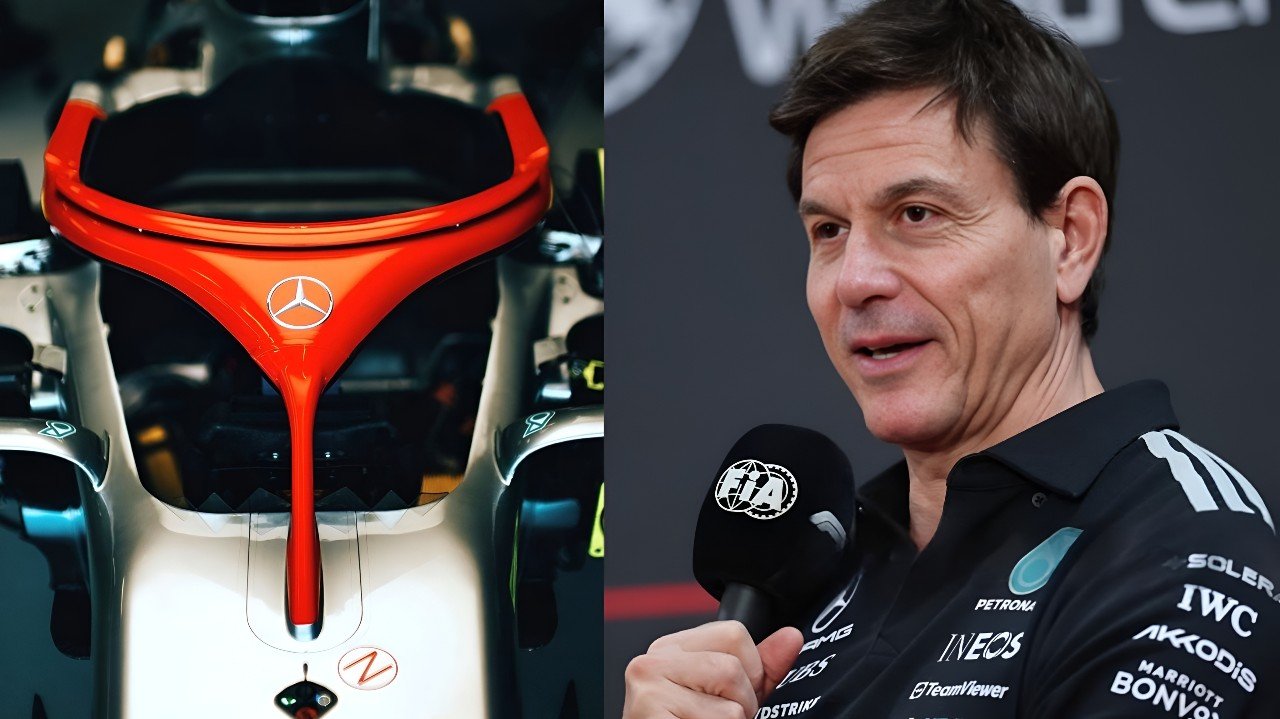
How Toto Wolff went from wanting the halo gone to gratitude.
Toto Wolff once said he would remove the halo if someone handed him a chainsaw. By the end of 2020, the Mercedes team principal said he was glad nobody had. That reversal captures how one of Formula 1’s most debated safety devices won over even a prominent sceptic.
Toto Wolff’s Chainsaw Comment on the Halo
In 2018, when the halo arrived as a mandatory feature on every Formula 1 car, Wolff gave his verdict in blunt terms: “If you give me a chainsaw, I would take it off.” He was referring to the titanium bar that sits above the cockpit and wraps around the driver’s head. The remark reflected a widely shared view at the time that the device was ungainly and changed the look of open-wheel cars.
Wolff’s position carried weight. As the head of the Mercedes team, he is among the most recognisable voices in the paddock, so his words were closely followed by fans and rival teams alike. The comment became a much-quoted line in the halo debate.
What the Halo Is and Why It Was Introduced
The halo is a titanium structure mounted above the cockpit, designed to deflect large objects away from a driver’s head. Formula 1 introduced it for the 2018 season after years of concern about exposed heads in open-wheel racing. It adds weight and alters the visual profile of the car, which explains much of the early criticism, but its purpose is narrow and clear: to protect the driver in the most dangerous kinds of impact.
Since its introduction, the halo has been credited with protecting four drivers: Charles Leclerc, Romain Grosjean, Lewis Hamilton and Zhou Guanyu. Each incident was different, but all four drivers survived. For Wolff, one of those incidents in particular reshaped the argument.
Bahrain 2020 and the Turning Point for Wolff
At the 2020 Bahrain Grand Prix, Romain Grosjean struck the barrier at 192 km/h. His car split in two and caught fire, and the halo pushed the steel rail away from his head. Grosjean escaped after about 27 seconds. The images were among the most alarming in modern Formula 1, and they gave the safety device a real-world demonstration of its purpose.
By the end of that year, Wolff said he was happy nobody had given him the chainsaw. The statement closed a loop that began in 2018. The man who had spoken of removing the device now acknowledged what it had delivered when it mattered most.
Why Wolff’s Change of Mind Matters for F1 Safety
A reversal from a figure of Wolff’s standing matters because it reflects how safety decisions are judged in Formula 1: by evidence rather than taste. The halo was criticised before it was proven. Once it was tested by real accidents, the debate shifted from how it looked to what it did. Wolff’s change of position follows that same path, and it shows that a strong opinion can be revised when the facts change.
It also matters for the sport’s wider culture. Safety measures in motorsport have often met resistance on grounds of tradition or appearance. The halo episode offers a clear example of the argument being settled by outcomes. A device once described in unflattering terms is now regarded as a standard part of the car.
Lessons From Wolff’s Halo Reversal
The first lesson is that scepticism and safety can coexist. Wolff’s early comment did not stop the device from being adopted, and his later remark did not require him to deny what he had said. He simply updated his view once the evidence arrived. That kind of honesty carries credibility in a paddock where public positions are often closely guarded.
The second lesson is that appearance is a poor measure of value in safety engineering. The halo changed the look of the cars, and that was a frequent complaint in 2018. The incidents since then show that the cost in styling was small compared with the protection gained. For a team principal responsible for the welfare of drivers, that comparison is hard to argue with.
The third lesson concerns the people behind the numbers. Leclerc, Grosjean, Hamilton and Zhou each survived incidents that could have ended very differently. Wolff’s words about the chainsaw are memorable, but the lasting point is that the device did its job.
ALSO READ: Tsolov Studies Max Verstappen to Shape His F1 Path
The halo story also illustrates the discipline needed to report Formula 1 accurately. The 2018 chainsaw remark and the end-of-2020 comment are two points on a timeline, and both belong in any fair account of Wolff’s journey. Presenting only one would misrepresent his position. Together they describe a measured shift rather than a sudden conversion.
For readers, the key facts are straightforward. Wolff said in 2018 that he would remove the halo if given a chainsaw. The device has since protected Leclerc, Grosjean, Hamilton and Zhou. By the end of 2020, Wolff said he was happy nobody gave him the chainsaw. Those statements are consistent with the record of events and with the purpose of the halo.
Toto Wolff’s journey from chainsaw remark to relief is more than a personal reversal. It marks the moment a sceptical voice at the top of the sport publicly accepted that a divisive design had earned its place in the paddock. The halo is now part of the identity of modern Formula 1, and Wolff’s words remain a reminder that safety, not appearance, is the standard by which such devices should be judged. Drivers, teams and supporters alike can take the same message forward: judge safety innovations by what they do when it matters.