By AutodromeF1 Editorial Team
London. United Kingdom – April 26 2026
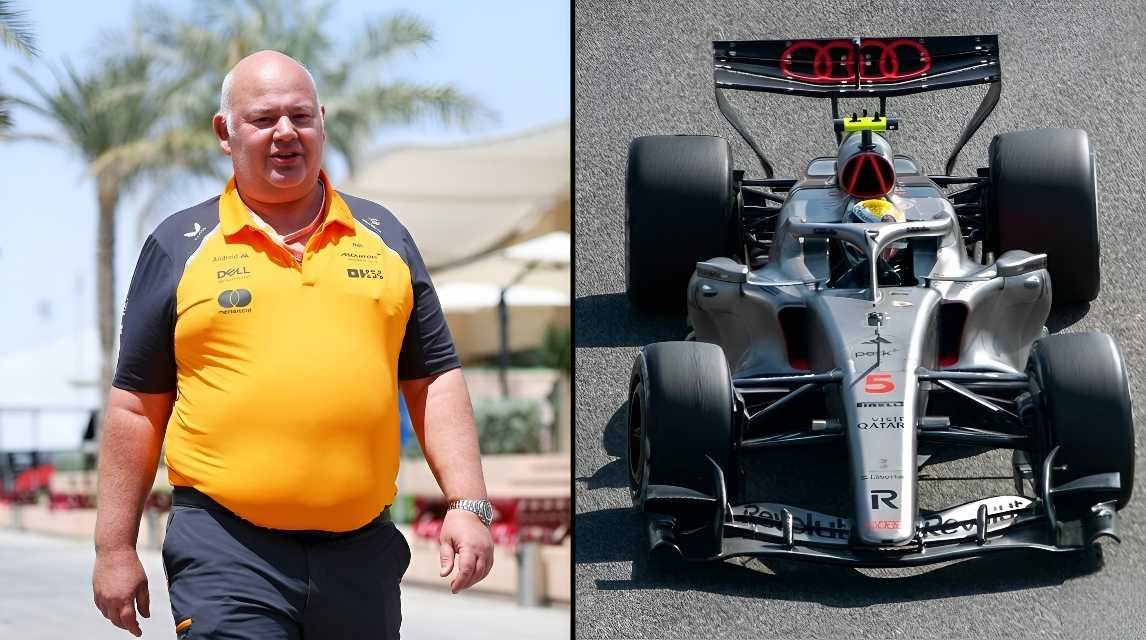
In a sport where tenths of a second define dynasties, Audi has just declared war on convention. During the second day of Bahrain pre-season testing, the German marque unveiled what may be the most audacious aerodynamic statement of the 2026 regulation cycle: a sidepod architecture that abandons the evolutionary path followed by every rival since 2022.
While the Barcelona shakedown car ran with a conventional, wide-mouth horizontal inlet, the Bahrain-spec machine arrived with a narrow, vertical inlet stretched forward along the chassis spine. It is a design that immediately drew comparisons to Mercedes’ ill-fated 2022 “zeropod” concept. Yet a closer inspection reveals Audi is not repeating history. It is attempting to rewrite it.
This is the first comprehensive technical breakdown of Audi’s sidepod philosophy, the regulatory context that enables it, the engineering trade-offs behind the concept, and why senior figures across the paddock believe it could become either the masterstroke or the cautionary tale of 2026.
The Visual Shock: From Shakedown to Bahrain
When Audi’s C46 rolled out at Circuit de Barcelona-Catalunya in February, the bodywork was deliberately conservative. The sidepod inlet was a wide, horizontal slot tucked under a generous overbite. It was a baseline. A placeholder.
Three weeks later in Sakhir, the covers came off. The inlet had been rotated 90 degrees and narrowed dramatically. The new geometry begins further forward on the chassis, almost at the front bulkhead of the side impact structure, and runs vertically. The front face of the sidepod tapers outward as it moves rearward, creating a pronounced ramped undercut beneath the inlet.
The midriff section incorporates what engineers are calling a “pelican underbelly”. This is a deeply sculpted concave section that hangs below the main sidepod shoulder. It serves a dual purpose. First, it creates protected volume for cooling radiators and electronics. Second, it generates a powerful outwash structure that feeds the floor edge and rear corner.
Along the upper surface, Audi has carved a subtle but critical channel. This feature starts behind the halo and deepens as it runs toward the rear. Its job is to capture high-energy airflow spilling off the front suspension and cockpit area, then accelerate it down toward the coke-bottle region and diffuser roof.
The immediate paddock reaction was disbelief. After four seasons of ground-effect development, the grid had converged on wide, undercut sidepods with heavy outwash. Audi looked at that consensus and went the other way.
The Engineering Logic: Why Vertical Inlets Make Sense in 2026
To understand Audi’s choice, you need to understand the 2026 chassis regulations. The FIA’s new ruleset retains ground-effect floors but introduces three changes that matter for sidepods:
Revised Side Impact Protection Spars (SIPS): The 2026 spars are longer and positioned higher. This restricts how narrow teams can go at the front of the sidepod. Any inlet that sits inboard must work around this structural hardpoint.
Tighter Cooling Exit Regulations: The size and location of rear cooling exits is now more prescribed. Efficiency at the inlet becomes more valuable because you cannot simply open up the back of the car to compensate for poor internal flow.
Increased Electrical Component Volume: With MGU-K power rising to nearly 50% of total output, the radiators, inverters, and control electronics packages are larger. Packaging them low and wide, as most teams do, creates a long airflow path to the rear.
Audi’s technical director, James Key, explained the philosophy to select media in Bahrain: “The 2026 SIPS layout punishes you if you try to bring a wide inlet too far forward. You either create a long duct that loses energy, or you compromise crash structure. By going vertical and forward, we shorten the path from inlet to radiator. The trade is that you have to manage the external flow more aggressively.”
That external flow management is where the ramped undercut and pelican underbelly come in. By tapering the front section outward, Audi is deliberately spilling air around the sidepod rather than trying to force it all inside. That spillage is then organized by the undercut to energize the floor edge vortices. In effect, the sidepod becomes a vortex generator as much as an intake.
This is the key difference from Mercedes’ 2022 zeropods. The W13 starved the floor edge of energized flow because its sidepods were too narrow and too vertical without any outboard deflection. Audi’s design flares out. It does not just get out of the way of airflow. It weaponizes the air it displaces.
The “Zeropod” Ghost: Similarities, Differences, and Lessons Learned
The comparison is inevitable. Mercedes’ 2022 car remains the defining example of a sidepod concept that looked brilliant in CFD but failed on track. The W13 suffered from porpoising, poor rear-end stability, and a narrow operating window.
However, three structural differences separate Audi’s 2026 attempt from Mercedes’ 2022 failure:
Former Mercedes aerodynamicist now working for a rival team told us on background: “The W13 mistake was not the vertical inlet. It was thinking you could ignore the floor edge. Audi has clearly studied that failure. Their undercut is doing a lot of work. This is zeropod thinking with 2024-2025 floor knowledge.”
Expert Analysis: The Paddock Reacts
Rob Marshall, Chief Designer, McLaren: “I’ll be honest, when I saw it in the pit lane I stopped walking. It is particularly interesting because no one else has gone that route. The integration with the SIPS is clever. Whether it works depends on how stable that floor edge vortex is through yaw. If they can keep it attached, there is lap time there.”
Craig Scarborough, F1 Technical Analyst: “This is the most aggressive change of direction we have seen since 2022. The channel on the top surface is subtle but important. It suggests they are trying to re-energize the airflow going to the beam wing and diffuser. That is a very high-risk, high-reward approach. If the channel stalls in dirty air, you lose rear downforce instantly.”
Giorgio Piola, Motorsport Illustrator: “From a packaging view, the pelican underbelly is the masterstroke. They have created volume for coolers without extending the wheelbase. Most teams use the sidepod shoulder for that. Audi has dropped it lower. That helps center of gravity, but it makes the undercut even more critical. The tolerance for error is millimeters.”
Anonymous Senior Engineer, Red Bull Racing: “We looked at vertical inlets in late 2023. The problem was always getting enough mass flow without separation at the lip. Audi must have found something in the cornering condition. Straight-line running in testing is easy. Watch what happens when the car rolls and yaws in Sector 2 here. That is the test.”
The Risk Matrix: What Could Go Wrong
Audi’s concept is not just bold. It is brittle. The performance is contingent on several aerodynamic structures remaining stable across the full performance envelope:
Inlet Lip Separation: A narrow vertical inlet is sensitive to crossflow. If the car yaws 3-4 degrees in a corner, the windward side of the inlet can separate. That stalls the internal duct, causing a sudden loss of cooling and rear downforce.
Undercut Vortex Burst: The ramped undercut relies on a vortex running along the floor edge. If that vortex bursts due to ride height changes or dirty air, the diffuser loses sealing. The C46 could become peaky, fast in clean air but unpredictable in traffic.
Cooling Margin: By shortening the duct, Audi has less internal volume for heat exchangers. On hot races like Qatar or Singapore, the car may need to open bodywork exits, negating the aero benefit.
Development Ceiling: Evolutionary sidepod concepts have four years of correlation data. Audi is starting from zero. If the concept has a fundamental flaw, there may be no quick fix without a B-spec chassis.
The team is aware. During long runs in Bahrain, Audi ran extensive flo-vis on the sidepod undercut and used kiel probes behind the inlet. They are data gathering, not performance running. The true pace remains hidden.
The Reward Scenario: Why It Might Work
If Audi has solved the stability problem, the benefits are substantial:
Shorter Airflow Path: Less distance from inlet to radiator means less total pressure loss. CFD estimates suggest a 1.5 to 2 percent improvement in cooling efficiency. That translates to smaller radiators, less weight, and tighter rear packaging.
Cleaner Coke-Bottle: By moving the sidepod’s mass forward and inboard, Audi can carve more aggressive undercuts at the rear. This improves airflow to the diffuser and beam wing, increasing rear downforce without drag penalty.
Floor Edge Energy: The outward taper actively pushes air around the floor, strengthening the edge vortex. In the ground-effect era, sealing the floor is everything. A more energetic edge means the car can run higher ride heights without losing performance. That is crucial for reducing porpoising and plank wear.
Development Runway: If the concept is valid, rivals cannot copy it quickly. The SIPS integration and cooling layout are chassis-level decisions. A team would need a new monocoque to replicate it. That gives Audi a potential six to nine month advantage.
Simulations shared by two rival teams suggest that, if working as intended, the Audi sidepod could be worth 0.15 to 0.25 seconds per lap on aero alone before weight and center of gravity benefits.
The 2026 Context: Why Now Is the Time to Gamble
Audi is not entering F1 as a backmarker. It is taking over the Sauber operation with full works status, a new power unit, and a mandate from the board to win. The 2026 reset is the best opportunity for a new entrant to leapfrog the establishment.
Red Bull, Mercedes, and Ferrari have all converged on similar sidepod philosophies. The development gains in that direction are now asymptotic. To beat them, you cannot follow them. You need a discontinuity.
This sidepod is Audi’s discontinuity. It is a statement that they are not here to participate. They are here to disrupt.
The risk is calculated. Sauber finished P8 in 2025. If the concept fails, Audi drops to P9 or P10 for one year. If it succeeds, they could jump into the P4-P5 fight immediately. For a manufacturer investing over 600 million euros, that risk-reward profile is acceptable.
What to Watch in the First Five Races
The Bahrain test was not conclusive. Here are the markers that will tell us if Audi’s gamble is paying off:
Australia FP2 Long Runs: Melbourne’s mix of medium-speed corners and long straights will test inlet stability. Watch for sudden drops in sector times or drivers backing off mid-corner.
Suzuka Sector 1: The Esses are the ultimate test of yaw stability. If the C46 can keep the floor loaded through that sequence, the concept is robust.
Miami Cooling Data: A hot, humid race with walls. If Audi runs with minimal cooling louvers open, their internal efficiency claims are real.
Spain Upgrade Package: Barcelona is the traditional upgrade race. If Audi brings more parts that double down on the vertical inlet, they are confident. If they revert to a wider inlet, the concept is in trouble.
Driver Feedback: Nico Hülkenberg and Gabriel Bortoleto’s radio messages will be telling. Listen for comments about rear instability on corner entry or sudden aero shifts in traffic. That would indicate vortex burst.
The Verdict: Calculated Revolution or Elegant Mistake
Audi has done what few teams dare to do in modern F1. They have looked at a converged design trend and rejected it entirely. The inverted inlet sidepod is not a gimmick. It is a comprehensive aerodynamic system that touches every part of the car’s airflow architecture.
It draws on the lessons of Mercedes’ 2022 failure without repeating them. It exploits the specific opportunities of the 2026 regulations. And it leverages Audi’s strength in simulation and cooling system design from Le Mans and Formula E.
But F1 is not won in CFD. It is won in dirty air, on the limit, with 19 other cars trying to break your airflow. The pelican underbelly has to stay attached at 300 kph. The inlet lip has to survive turbulence behind an Alpine. The channel on the top surface has to work when the car is sliding.
If it all holds together, Audi will have redefined the ground-effect era in its fifth year. They will have proven that innovation is still possible after regulatory convergence.
If it fails, the C46 will join the W13 in the museum of beautiful ideas that could not survive contact with reality.
Either way, Formula 1 is more interesting today than it was yesterday. And that is exactly what Audi intended.
Author Note: This analysis is based on trackside observation at Bahrain International Circuit, technical briefings, and consultation with three current F1 aerodynamicists who requested anonymity due to team restrictions. Audi Sport did not provide official comment beyond published FIA documents. All performance estimates are derived from public data and should be considered informed speculation, not confirmed figures.


