

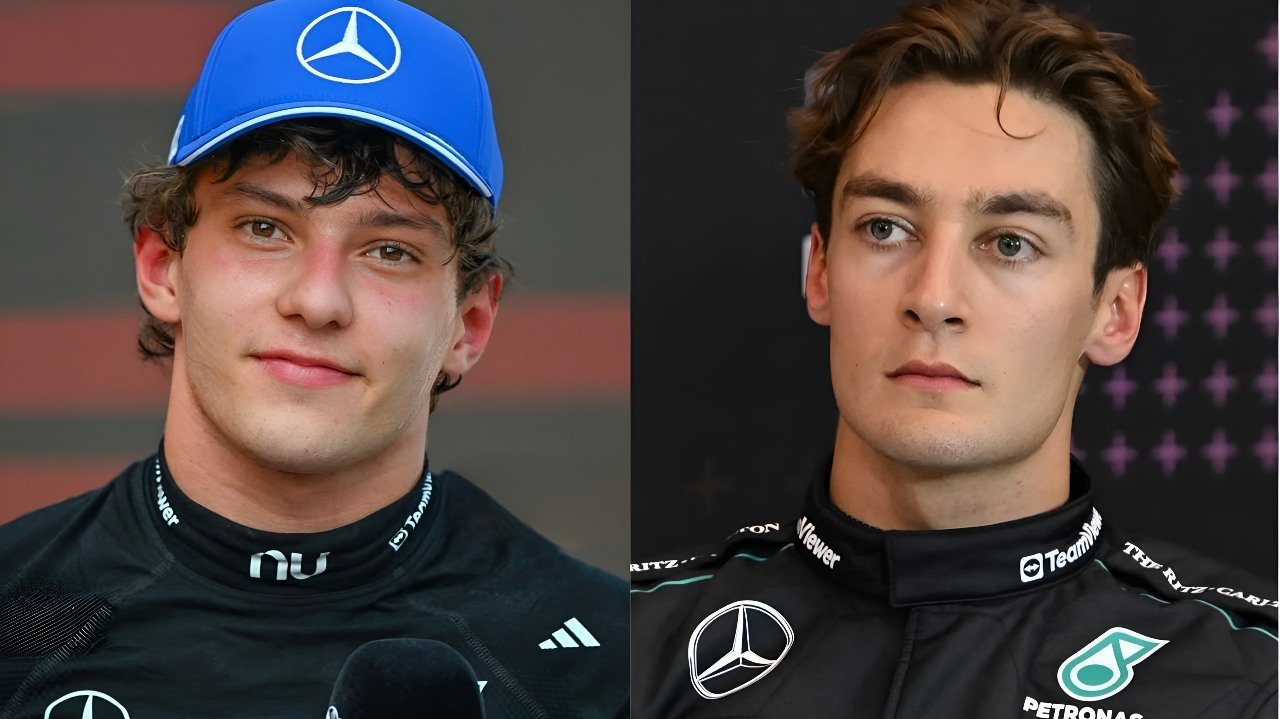
Mercedes pay gap for 2027 explained after the title triumph
Kimi Antonelli has made history as the youngest Formula 1 world champion, yet reports suggest his 2027 base salary at Mercedes will remain roughly one third of teammate George Russell’s. The contrast highlights how contract timing, rather than results alone, shapes pay in Formula 1. All figures in this report are estimates, because driver contracts are private and teams rarely confirm the numbers.
Antonelli’s Championship Season at Mercedes
The 20-year-old Italian, whose full name is Andrea Kimi Antonelli, sealed the 2026 Drivers’ Championship with races still remaining on the calendar. He achieved the feat in only his second full season in the sport, which underlines how quickly he has developed. Throughout the campaign he comfortably outperformed Russell on track, which naturally raises questions about how the two drivers are rewarded.
For Mercedes, the title carries commercial and sporting significance beyond the trophy itself. A champion at the age of 20 gives the team a long-term figure around whom it can build, and it strengthens the argument that investing in youth can deliver results at the highest level, a message that resonates beyond the paddock. That success, however, now sits alongside a contract that was negotiated before anyone knew how quickly he would rise.
George Russell’s Reported Contract Terms
Both drivers are contracted with Mercedes through 2027. Russell’s agreement carries a widely reported base salary of around 34 million dollars for the 2026 and 2027 seasons, which reflects his standing as the team’s senior driver. Antonelli’s original multi-year agreement, signed when he was promoted, locked in a considerably lower base figure, a common arrangement for young drivers entering the sport.
Understanding this structure is important for readers following Formula 1 finances. Driver salaries are rarely published, so the figures that circulate come from estimates, industry reporting and comparison databases rather than official team statements. Russell’s reported 34 million dollar base therefore should be treated as an informed estimate, not a confirmed number, and the same caution applies to every figure quoted for Antonelli.
Estimated Gap in the 2027 Base Salary
Current estimates place Antonelli’s base salary in the range of two to 3.4 million dollars, although some reports go as high as five million. Following the championship, Mercedes is expected to increase that figure for 2027. One report frames the expected offer as about one third of Russell’s salary, while other projections cluster around 10 to 12 million dollars in base pay. Even the higher projections leave a substantial gap between the two teammates.
Base salary does not tell the whole story. Performance bonuses for race wins, pole positions and the championship have already lifted Antonelli’s total 2026 earnings into the low-to-mid teens of millions in several estimates. This means the practical gap between the two drivers in the current season is narrower than the headline base figures suggest. Nevertheless, the difference in guaranteed income remains significant.
Bonus structures, sponsorship arrangements and incentive clauses can further change the final total considerably, and none of those details are publicly confirmed. For that reason, the one third comparison is best understood as a snapshot of expected base terms and not a complete measure of what each driver will earn.
Readers comparing these numbers should keep the sourcing in mind. The 2026 bonus estimates, the base ranges for 2027 and the one third framing come from separate reports, and they do not always agree with one another. Where figures differ, the most reliable approach is to look at the overall pattern, which consistently shows Antonelli earning far less in base terms than Russell.
Why Mercedes Secured Antonelli Cheaply
The disparity reflects typical junior-driver contract timing. Mercedes secured Antonelli at a young age and at relatively modest cost, while Russell negotiated from a stronger senior position. Mercedes team boss Toto Wolff has said nobody needs to worry about Antonelli financially and that a world champion should also be rewarded, while noting that the driver already has a deal for next year.
This pattern is familiar across the paddock. Teams often sign promising drivers early on long, modest contracts, and the drivers later become more valuable than their agreements reflect. When that happens, the usual outcome is a renegotiation or an extension that resets the terms to match the driver’s new status, which is exactly what is widely anticipated here.
ALAO READ: Why Mekies Calls Verstappen Red Bull’s Best Sensor
Outlook for 2028 and Beyond
A larger long-term increase is widely expected from 2028 onward if Antonelli continues performing at this level. Such an agreement would likely reflect both his championship status and his age, which gives Mercedes the prospect of a multi-year partnership with a driver still at the start of his career. Whether the team opts for an early extension or waits until the current deal runs its course has not been confirmed.
For Russell, the situation is different but equally notable. He remains the higher-paid driver under a contract that runs through the same period, and his reported base is expected to stay well above that of his teammate in 2027. Both drivers remain under contract through 2027, so the pay gap is likely to be one of the talking points of the coming season.
In summary, the reported gap between Antonelli and Russell is the product of contract timing instead of current performance. Antonelli has proven himself on the track as the sport’s youngest world champion, yet his base pay for 2027 is still expected to trail that of his teammate by a wide margin. Until Mercedes confirms new terms, all figures should be read as estimates, and the clearest picture will emerge only if a formal extension is announced.