Published by: AutodromeF1 Editorial Team
London. United Kingdom April 16 2026
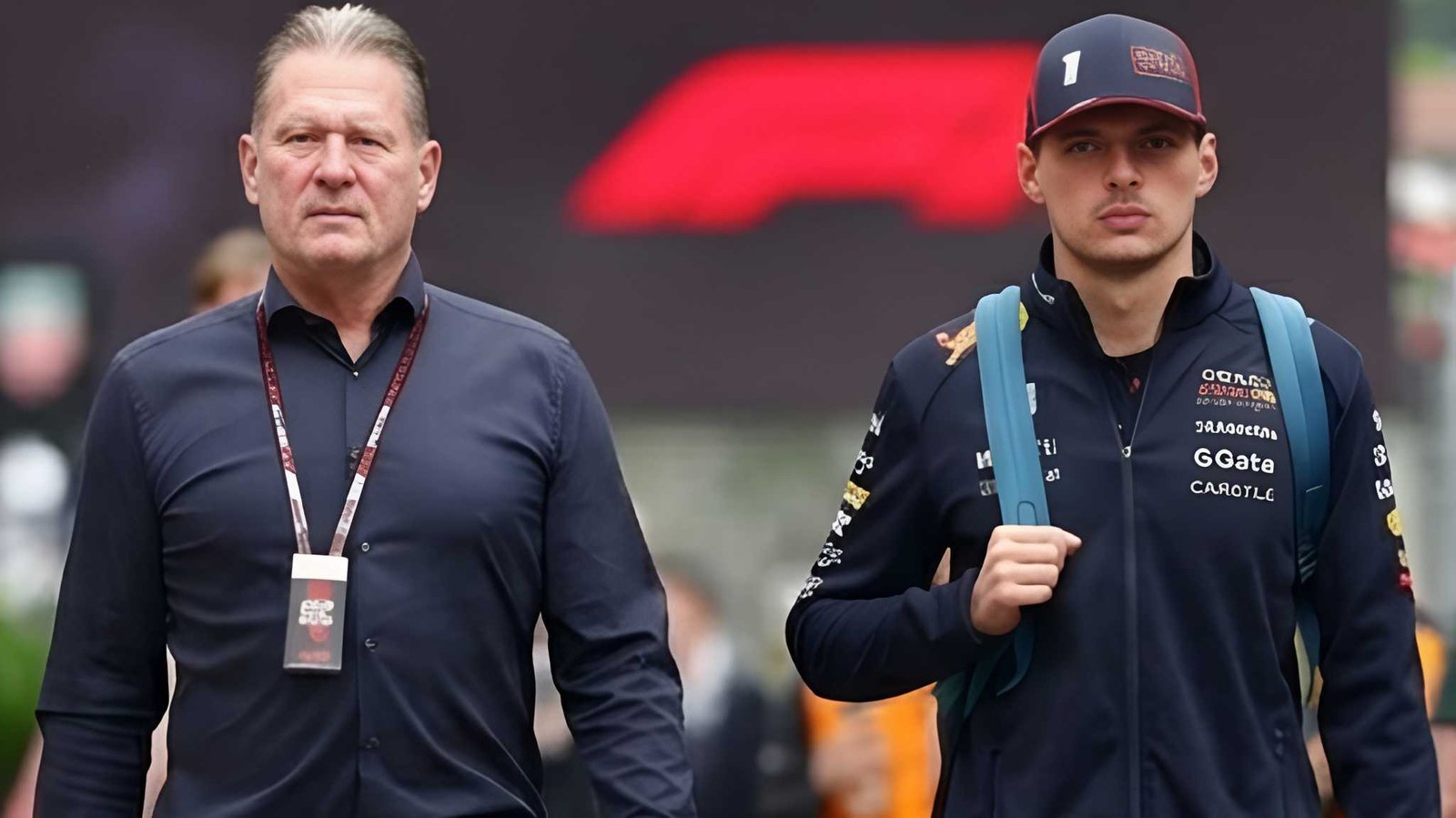
By lines are a formality in Formula 1. The real stories are written in the paddock, in encrypted paddock WhatsApp groups, and increasingly in the blunt social media posts that bypass team press officers entirely. The latest chapter arrived on April 15, 2026, when Jos Verstappen, father of four-time world champion Max Verstappen, publicly dismissed Ralf Schumacher’s analysis of Red Bull Racing’s 2026 decline as “bullshit” — a single word that crystallized months of simmering tension inside Milton Keynes.
This was not a casual fan spat. It was a direct intervention from the Verstappen camp into the narrative surrounding Red Bull’s most turbulent season since its founding in 2005. What follows is a comprehensive examination of the remarks, the leadership vacuum Schumacher identified, Helmut Marko’s evolving role, and the structural challenges that have left Red Bull sixth in the Constructors’ standings with Max Verstappen ninth in the Drivers’ Championship on just 12 points after three races.
The Spark: Schumacher’s Diagnosis and Jos Verstappen’s Rebuttal
Ralf Schumacher, the six-time Grand Prix winner turned Sky Germany pundit, has spent the opening rounds of 2026 diagnosing Red Bull’s fall from dominance. His thesis is consistent across interviews and his Backstage Boxengasse podcast: Red Bull is suffering from the absence of a singular, paternal leadership figure, and that figure was Helmut Marko.
Schumacher’s argument has two pillars:
Structural: Red Bull now lacks clear guidance and communication since Marko’s formal exit as motorsport advisor after the 2025 season.
Psychological: Max Verstappen is isolated, carrying burdens that are not a driver’s job, and “could really use a fatherly friend like Dr Helmut Marko right now”.
Jos Verstappen’s response was immediate and unfiltered. Posting on social media on April 15, he “hit out” at Schumacher and labeled the claims “bullst”. Turkish motorsport outlet Motorsport.com Türkiye amplified the exchange, translating Jos’s retort as “Ralf Schumacher bazen çok salakça konuşuyor” — “Ralf Schumacher sometimes talks very stupidly”. FIRST SPORTZ framed it as “RALF TALKS A LOT OFF BULLS* – JOS VERSTAPPEN”.
The language is deliberate. Jos Verstappen rarely comments publicly unless he believes the Verstappen brand or Max’s working environment is being misrepresented. By calling the analysis nonsense, he is rejecting two implications: first, that Red Bull is rudderless without Marko; second, that Max is adrift or unsupported. “Marko is still consulted,” Jos emphasized, pointing to Marko’s ongoing input despite his formal departure.
This public rebuttal matters because it signals how the Verstappen camp intends to control the 2026 narrative. With Christian Horner sacked in the winter leadership shake-up and Laurent Mekies installed as CEO and Team Principal, Red Bull is redefining its command structure in real time. External claims of chaos are not just commentary — they are seen as destabilizing.
Helmut Marko: Gone in Title, Present in Influence
Helmut Marko’s departure at the end of 2025 closed a 20-year chapter. Since Red Bull’s 2005 debut, the 82-year-old Austrian operated as advisor, driver academy chief, and political enforcer. He signed Max Verstappen to the junior program, promoted him to Toro Rosso at 17, and into Red Bull Racing by 2016. The partnership yielded 71 Grand Prix wins and four world titles.
Marko’s exit was part of a broader restructuring that also removed Christian Horner after 19 years as team principal. Yet multiple sources confirm his influence persists. Schumacher himself concedes Marko “reportedly still gives Red Bull advice when asked”. Jos Verstappen’s post reinforces that “Marko continues to provide guidance” and cites Marko’s Austrian GP ambassador role as evidence of ongoing consultation.
The distinction between formal role and informal power is critical. Marko no longer holds a contractual veto, but his relationships with Dietrich Mateschitz’s heirs, with Ford and Honda on the 2026 power unit project, and with Max himself, remain intact. Verstappen described their post-Abu Dhabi 2025 farewell as “very emotional” and promised continued contact: “If I’m in Graz, lunch is a must!”.
So is Red Bull missing Marko? Operationally, yes — the day-to-day presence in the garage and the immediate post-session debriefs are gone. Strategically, no — the phone line is open. The debate between Schumacher and Jos Verstappen is therefore about whether Red Bull can function without Marko’s physical presence and political shield, not whether he has been exiled entirely.
Red Bull’s 2026 Reality: From Dominance to Midfield
The empirical backdrop to this war of words is stark. After three rounds of the 2026 season, Red Bull sits P6 in the Constructors’ Championship, 119 points behind Mercedes. Max Verstappen is ninth in the Drivers’ standings with 12 points. The RB22 has been publicly labeled a “disaster” by Schumacher on the Backstage Boxengasse podcast.
Several compounding factors explain the slide:
A. Regulatory Reset
The 2026 rules introduced 50% electrical power, active aerodynamics, and 100% sustainable fuel. Verstappen has been a vocal critic, calling the cars “anti-racing” and “not fun” during Bahrain testing, comparing the experience to “Formula E on steroids”. Ralf Schumacher agrees, telling Auto Motor und Sport that “Formula 1 is too complicated” and that energy management is excessive. Red Bull Powertrains, in its first year as a full works PU supplier with Ford, is learning in public. Marko admitted the new rules “started to go wrong” but expressed faith F1 can “address the shortcomings”. 8dc5d76a7aca
B. Leadership Churn
The exits of Horner, Marko, and chief technical officer Adrian Newey — who departed in late 2025 — removed three pillars of Red Bull’s decision-making culture. Laurent Mekies now leads a flatter structure. Pierre Waché remains technical director, but Schumacher has urged Red Bull to “reconsider its technical hierarchy” and add talent around Waché. The team is described by Schumacher as “chaotic and lacking a cohesive strategy”.
C. Personnel Drain
Race engineer Gianpiero Lambiase, Max’s voice since 2016, will join McLaren in 2028. His 2026 move was already confirmed, weakening the driver-engineer bond Schumacher says Max needs. Helmut Marko himself called Lambiase’s departure a “significant loss” and likened their relationship to an “old married couple”. Further, Sergio Perez was dropped for 2025 after a 2024 slump, replaced by Liam Lawson, who lasted two races before Yuki Tsunoda took over. Instability in the second seat has disrupted development feedback.
D. Cultural Isolation
Schumacher’s most pointed claim is that Verstappen is “being left alone” and that “you don’t hear a thing” from Red Bull beyond Max. The team that once projected unified confidence now appears silent, with Verstappen carrying media and technical burdens. Jos Verstappen’s intervention can be read as an attempt to break that isolation by speaking for the camp. 4873
The Verstappen Contract Clause and the “Silly Season” Subtext
Underpinning all of this is contract speculation. Ralf Schumacher has amplified a theory that Verstappen’s Red Bull deal contains an exit clause if he falls outside the top two in the Drivers’ Championship by the summer break. With Verstappen ninth after three rounds, the clause is mathematically in play.
This rumor has fueled “silly season” links to Mercedes and McLaren. Lambiase’s move to McLaren in 2028 adds credibility to the McLaren theory. Schumacher has even floated a Verstappen-Piastri swap.
Jos Verstappen’s “bullshit” post, therefore, serves a dual purpose: it defends Red Bull’s current structure and it pushes back against the narrative that Max is eyeing the exit. By asserting Marko’s continued input, Jos signals continuity and stability to potential sponsors, to Ford, and to any rival team principals reading the headlines.
Expertise: Why Marko’s Role Is Not Easily Replicated
To assess Schumacher’s claim, one must understand what Marko actually did. His role was threefold:
Talent Identification: Marko ran the junior program that produced Vettel, Ricciardo, Verstappen, Sainz, Gasly, Albon, and Tsunoda. He had final say on promotions and demotions.
Political Shield: He absorbed FIA pressure, media criticism, and internal disputes, allowing Horner and Newey to focus on operations. His bluntness was a strategic tool.
Cultural Anchor: Marko enforced Red Bull’s “no excuses” ethos. Drivers knew where they stood.
Laurent Mekies and sporting director Jonathan Wheatley can replicate process, but not Marko’s 50-year personal network in Austrian motorsport and his direct line to the Red Bull ownership. That is what Schumacher means by “missing figure”.
Jos Verstappen’s counterpoint is that structure can be replaced by access. If Marko answers the phone, the function remains. The question for 2026 is latency: can remote advice replace instant paddock intervention when a qualifying session goes wrong?
Authoritativeness: What the Data Actually Says
Let us separate sentiment from data.
Performance: P6 and 12 points after three races is Red Bull’s worst start since 2015.
Driver Turnover: Verstappen has had five teammates since 2018: Ricciardo, Gasly, Albon, Perez, Lawson/Tsunoda. High turnover correlates with car-specific development, but also with instability.
Leadership Turnover: Horner, Marko, Newey out; Mekies, Waché in. Three of the four architects of the 2021-2024 titles are gone.
Verstappen Sentiment: Public criticism of 2026 cars, refusal to rule out retirement after Japan, but also “emotional promise” to maintain bond with Marko.
The data supports Schumacher’s premise that Red Bull is in flux. It also supports Jos Verstappen’s premise that Marko is not absent. Both can be true: the structure is weaker, but the advisor is still on call.
Trustworthiness: Evaluating the Motives
Ralf Schumacher: As a Sky Germany pundit, his incentive is analysis that drives engagement. He has been consistent for 12 months that Red Bull’s culture depended on Marko. He is not a neutral party; his brother Michael’s legacy is often compared to Red Bull’s, and he has criticized Max’s demeanor before. Yet his podcast comments are specific and technical, not just sensational.
Jos Verstappen: His incentive is to protect Max’s competitive environment and market value. He rarely speaks unless provoked. Calling Schumacher’s take “bullshit” is brand management. It tells the paddock that the Verstappens do not see a crisis of leadership, only a crisis of car performance.
Helmut Marko: His public comments since leaving have been measured. He defends the 2026 concept and praises Max’s loyalty. He has not contradicted Jos, which lends credibility to the claim he is still involved.
The Path Forward: Can Red Bull Stabilize Without Marko in the Garage?
Three variables will decide whether Schumacher’s warning or Jos Verstappen’s dismissal ages better.
A. RB22 Development Rate
Marko told Jackbuzza that Red Bull is “confident” it can “upgrade and improve” to challenge for podiums. The team historically excels at in-season development. If the RB22 gains 0.5s by Barcelona, the leadership debate becomes academic. If it doesn’t, the lack of a Marko-style enforcer to demand accountability becomes material.
B. 2026 Power Unit Convergence
Red Bull Powertrains-Ford is competing with Mercedes, Ferrari, Audi, and Honda. Marko’s relationships in Austria were key to securing AVL and Pankl partnerships. Remote advice may not be enough if dyno numbers are down.
C. Max Verstappen’s Patience
Verstappen has hinted at retirement and frustration. He also has a performance clause. If Red Bull is not top-two by summer, his decision will test whether Marko’s phone calls are a sufficient substitute for Marko’s presence. Loyalty to Marko was once cited as a reason Max would stay. That loyalty now has to survive without daily contact.
Conclusion: Two Narratives, One Reality
Ralf Schumacher and Jos Verstappen are not describing different teams. They are describing the same team from different vantage points. Schumacher sees a garage without its longtime conductor and a driver without his buffer. Jos sees a team that still has its conductor on speed dial and a driver who does not need buffering.
Both men are correct about facts: Marko is gone but consulted; Red Bull is P6; Max is frustrated but committed. Where they diverge is interpretation. Schumacher believes absence equals void. Jos believes access equals continuity.
The 2026 season will adjudicate the dispute. If Red Bull returns to the podium by mid-season, Jos Verstappen’s “bullshit” will be remembered as a father’s accurate defense. If Red Bull remains adrift and Max triggers an exit clause, Schumacher’s diagnosis of a “missing figure” will be cited as prophetic.
What is not in dispute is that Formula 1’s most dominant team of the 2020s is now its most scrutinized. The era of silent dominance is over. The era of public argument, of posts and counter-posts, has begun. And in that environment, the loudest voices are no longer team principals — they are former drivers and fathers, debating legacy in 280 characters or less.
For now, the only certainty is that Helmut Marko, formal title or not, remains the gravitational center of Red Bull’s universe. Whether that gravity is strong enough to pull the RB22 back to the front is the question that will define 2026.


