

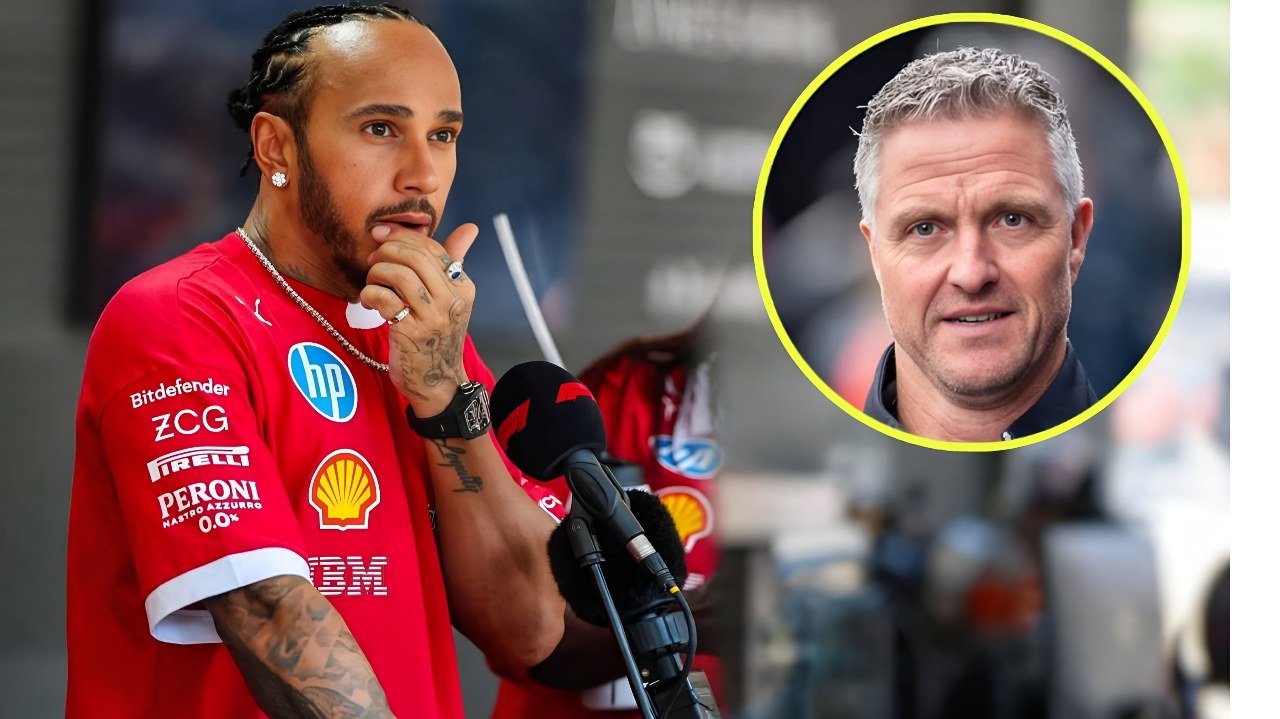
Stewards blamed Leclerc, but the debate over Vegas continues
Former Formula 1 driver Ralf Schumacher has claimed that Lewis Hamilton made no effort to avoid contact with Charles Leclerc during the Las Vegas Grand Prix. He believes the collision between the two Ferrari team-mates was deliberate, a view that stands in sharp contrast to the official verdict. Stewards placed full responsibility on Leclerc, and Ferrari team principal Frédéric Vasseur publicly agreed. The episode has reopened a difficult conversation about harmony inside Maranello.
What Ralf Schumacher Said About the Turn 7 Contact
Speaking as a television analyst, Schumacher first acknowledged that the primary cause of the incident lay with Leclerc, because the Monegasque was the driver who initiated the overtaking move. He then went further. In his assessment, Hamilton did not back off and behaved as though he had not noticed Leclerc at all. Schumacher said he believed this was intentional, reasoning that Hamilton’s own race was already effectively over at that stage.
The German also placed the moment within a wider psychological contest. He argued that Hamilton is outclassing Leclerc and is determined to assert himself as the team’s number one driver. According to Schumacher, Hamilton wants to teach his team-mate a lesson and to break him mentally. He compared the dynamic with the tension Hamilton experienced alongside Nico Rosberg at Mercedes, noting that Rosberg still speaks about those mind games today.
It is important to separate analysis from established fact. Schumacher’s comments are a personal interpretation of the incident, not a finding by race officials, who assigned the blame entirely to Leclerc. Drivers, former racers and pundits regularly read intent into split-second decisions at high speed, yet only the stewards’ ruling carries formal weight.
How the Stewards Judged the Las Vegas Collision
The incident occurred at Turn 7 with 12 laps remaining, as the Ferrari pair fought over sixth place in a frantic race. Both drivers had been eliminated in the second qualifying session, so the team was already trying to recover lost ground. Hamilton was spun around and dropped to tenth in the order.
The stewards imposed a 10-second time penalty on Leclerc, which was added to his race time and dropped him to tenth in the final classification. Hamilton ultimately finished seventh. In their report, the officials said Leclerc began his move from a considerable distance behind and had not earned the right to the corner by the apex. They concluded that he was wholly to blame.
Ferrari’s Reaction and Leclerc’s Response
Vasseur described the collision as “completely unacceptable” and said it carried the same message as the earlier Mexico City clash. He stressed that the drivers must think about the team, the people working in Maranello, and all of the stakeholders, including sponsors. According to the team principal, Leclerc had been instructed not to attempt the overtake, and the decision cost the team dearly.
The latest clash followed an earlier collision in Mexico City that cost Ferrari a likely win. Vasseur spoke to both drivers afterwards, and the group held a further discussion in Brazil. He admitted he was more than upset, because the message had been clear. A first-lap incident at Monza in September, when Hamilton was forced onto the gravel, had already prompted Hamilton to call for rules of engagement.
Leclerc did not apologise in his immediate television interview, saying instead that he felt embarrassed for the team, yet he accepted the stewards’ decision. In a later team statement he acknowledged that his mistake contributed to the poor result, apologised to everyone in Maranello, and promised to review what he could have done differently.
ALSO READ: Sainz Questions How Rivals Fund So Many F1 Updates
Hamilton’s View and the Road to Qatar
Hamilton offered a candid assessment after the race. He said that every time the two Ferraris battle, the team simply loses ground, and he urged them to work together, stay in the tow and chase the cars ahead. He conceded that he and Leclerc were not on the same frame of mind, and that the result cost the team a lot of points.
Asked whether Ferrari should introduce clearer rules, Hamilton replied that the decision belongs to the team. He said he had done all he could and had said everything and more. Hamilton also described a difficult weekend, citing limitations on the straights and a tough qualifying session, yet he felt strong in the race and believed a podium was possible given the pace.
Hamilton added that his priority was to finish ahead of the McLarens, Ferrari’s direct rivals in the constructors’ championship. He described a separate 10-second penalty, issued for avoiding a collision with one of those cars, as harsh. His account portrays a driver still chasing results, which offers readers a counterpoint to Schumacher’s reading of the same race.
Schumacher closed his remarks with a warning about how the situation could unfold. He said it is now for Ferrari to decide how it handles the matter and to clarify who its number one driver is. If the team cannot get a grip on the situation, he argued, someone will eventually have to leave. Those are the opinions of a former driver rather than any statement of Ferrari policy.
Formula 1 now moves to the Middle East for the Qatar Grand Prix, where Ferrari’s drivers will again share a track under intense scrutiny. With the team still chasing points in the constructors’ championship, the pressure on both men to cooperate is considerable. Whether Schumacher’s theory gains support or fades, the stewards’ verdict, Vasseur’s warning and Hamilton’s call for unity all point to the same unresolved question: how Ferrari intends to manage two competitive drivers in one garage.