

Ex-Haas Boss Says Verstappen Is Mentally Superior to Russell
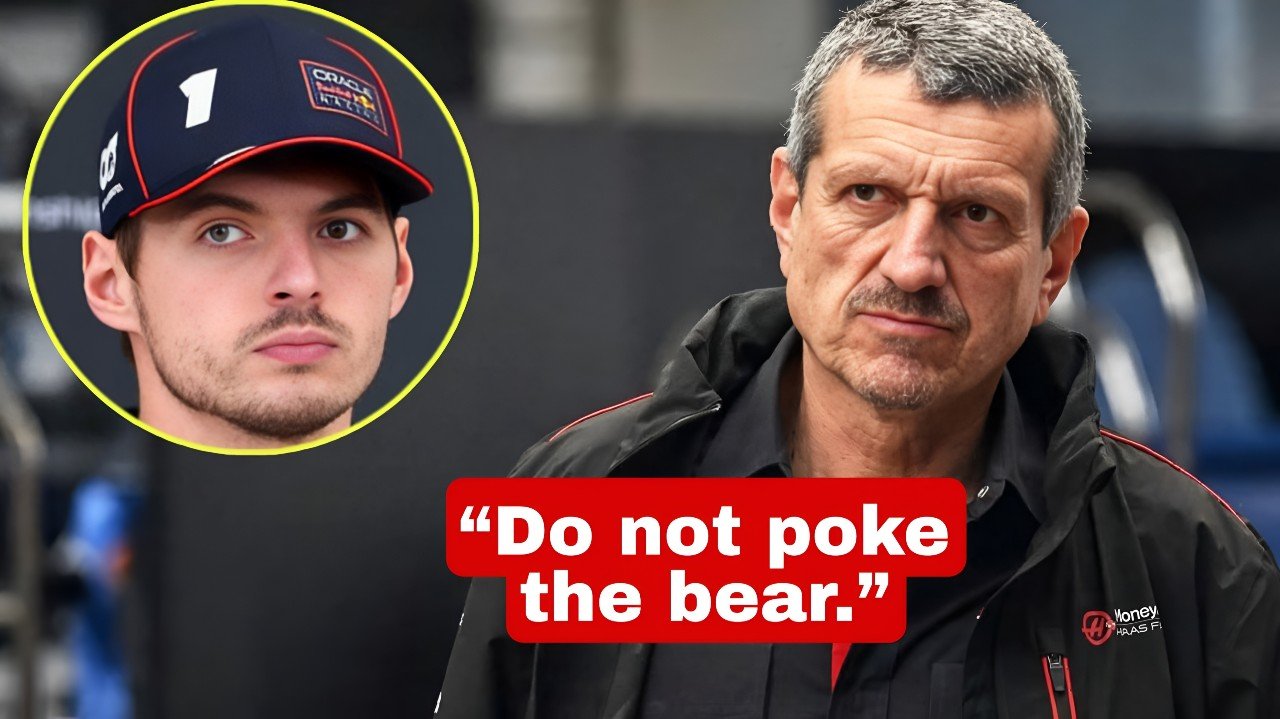
Guenther Steiner has told George Russell to stop provoking Max Verstappen after their Las Vegas Grand Prix clash, warning him: “Do not poke the bear.” The former Haas team principal believes the Red Bull driver holds a clear mental edge, and that the Mercedes driver is fighting a battle he cannot win. The warning landed in the middle of a tense weekend in Nevada, where a practice incident had already set the tone between two of the grid’s most competitive personalities.
Steiner Explains Why Russell Should Stay Quiet
Speaking on a podcast, Steiner said he has no problem with the two drivers disliking each other. What he questioned was why Russell chose to challenge Verstappen in public. He described Russell as a driver he respects, but argued that the public criticism does him no favours.
Steiner’s message to Russell was blunt and unambiguous: “I respect George as a race car driver, but in the end, Max is just mentally superior. On how to manage mental things, he’s so superior to you, do not poke the bear, in my opinion. There is no need for it, because you don’t do yourself any favours. Get over it. Try to win races instead of picking a battle with the best driver out there, the strongest mental guy out there, because guess what? You’re going to lose.”
He went further, saying Verstappen “will beat the s*** out of you anyway, driving-wise and in a fight of words.” Steiner also expressed surprise that nobody at Mercedes is advising Russell that “sometimes less is more,” suggesting the driver should say nothing and concentrate on his own job.
What Russell Said About Verstappen in Las Vegas
Russell had criticised Verstappen following their practice incident. He said the Red Bull driver walks around “like they’re bigger and better than everyone else” and added that “somebody’s got to stand up to that guy.” The comments were direct, and they set up a storyline that carried into race day.
Race Day Brought a Costly Lesson for Russell
In the race itself, Verstappen took the victory. Russell, meanwhile, locked up and hit the wall late in the race while fighting for second place with his Mercedes teammate Kimi Antonelli. The error dropped him down the order, and he finished ninth.
Afterwards, Verstappen dismissed Russell’s earlier comments, saying the Mercedes driver is “so far below my level.” The remark echoed the theme of Steiner’s warning, because the Red Bull driver answered the criticism with a win on track and one short, cutting line.
ALSO READ: Russell’s Unrelayed Radio Pact Offer to Verstappen
Why Mental Strength Matters in Formula 1 Rivalries
Steiner’s argument rests on a principle familiar to anyone who has followed Formula 1 for long: public feuds rarely favour the driver who starts them. Every comment made in a media session becomes a headline, and every headline raises the pressure on the next session on track. When a driver challenges a rival publicly and then makes a mistake, the contrast between the words and the result is magnified.
That is exactly the position Russell found himself in after Las Vegas. His criticism of Verstappen was forceful, yet the late lock-up and contact with the wall cost him a strong finish while he was racing for second. Whether or not the incident was connected to the pressure of the build-up, the outcome gave Verstappen’s supporters an easy talking point.
Steiner’s background gives his words weight. As the former team principal of Haas, he spent years managing drivers, engineers and egos inside the paddock, and he has a reputation for speaking plainly. His comments should be read as an informed opinion rather than an official position, but they highlight how much value the sport places on composure.
There is also a team dimension. Russell and Antonelli were fighting for second place when the incident occurred, which means Mercedes was dealing with a disappointing result alongside a continuing war of words. Steiner’s question about why nobody at the team is urging restraint points to a broader debate over how much freedom drivers should have to speak out.
For readers and fans, the episode is a reminder that Formula 1 is decided by more than lap times. Pace, strategy and reliability matter, but so do reputation, nerve and the ability to handle scrutiny. Verstappen’s short reply and his victory delivered his message efficiently, while Russell’s words are now being weighed against a ninth-place finish.
It remains to be seen whether Russell will heed Steiner’s advice. Drivers at the front of the grid often choose to speak openly, and Russell has made clear that he believes Verstappen’s attitude deserves a response. Yet Steiner’s message is that results, not statements, are what ultimately change the balance of power between rivals.
The Las Vegas episode therefore offers a clear case study in how a rivalry can escalate through words before it is settled on track. Russell’s criticism, Verstappen’s response and Steiner’s warning have each added a layer to the story, and the paddock will be watching closely to see how both drivers approach their next meeting.
In the end, the facts of the weekend are simple. Russell spoke out, Steiner told him to stop, and Verstappen won the race while Russell finished ninth after a late mistake. Whether that sequence proves Steiner right is a matter of opinion, but it has certainly given the sport another memorable chapter in a rivalry that shows no sign of cooling. Fans will no doubt continue to debate which driver holds the psychological upper hand, and the next race weekend will provide another opportunity to judge for themselves.