By AutodromeF1 Editorial Team
London. United Kingdom – April 25 2026
How two veteran race winners are shaping the sport’s 11th team amid a radical technical overhaul
Introduction: A New Chapter Begins in Miami
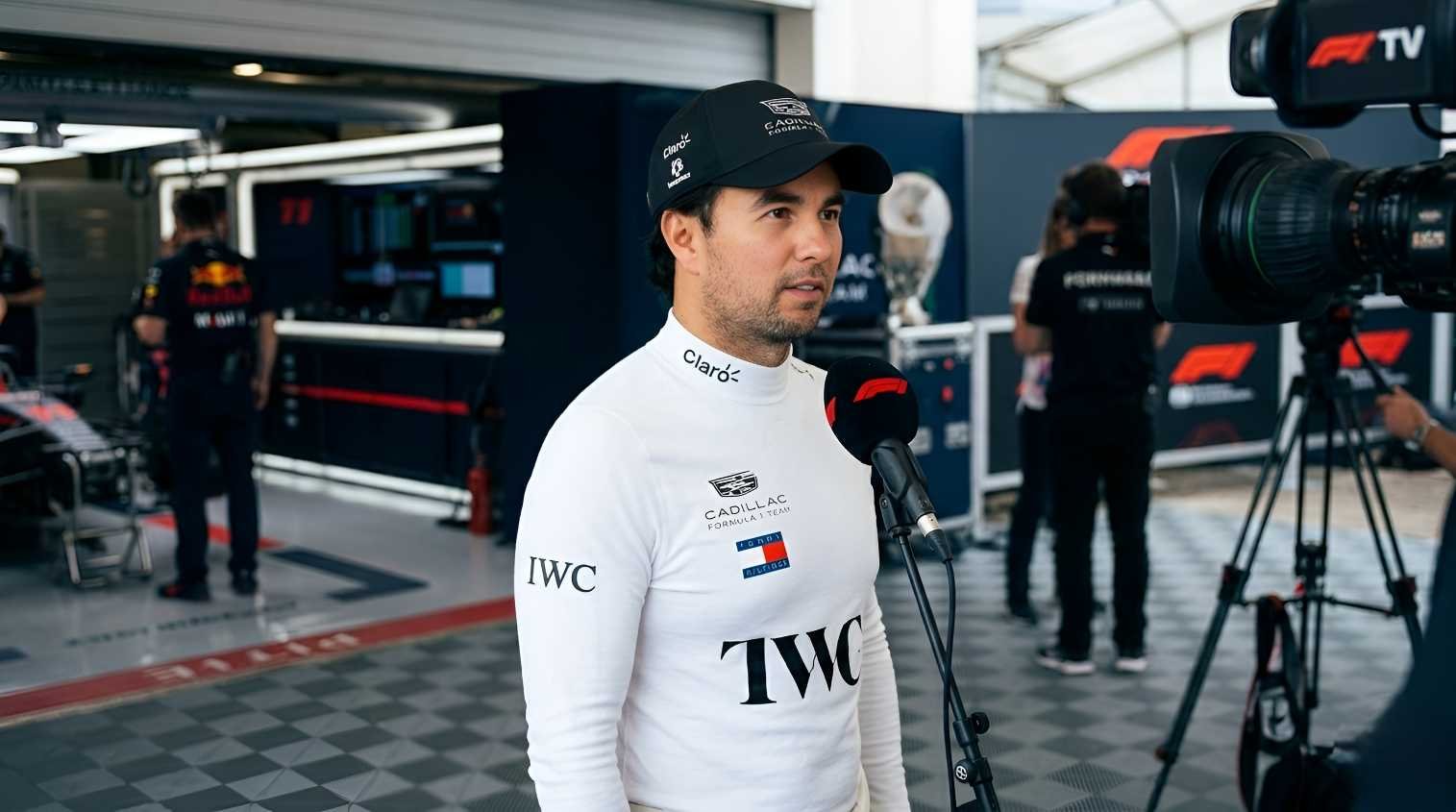
Formula 1’s landscape shifted on August 26, 2025, when Cadillac confirmed what months of paddock speculation had suggested: Sergio Pérez and Valtteri Bottas will lead the American manufacturer’s debut as the championship’s 11th team in 2026. The announcement, made during the Miami Grand Prix weekend, ended Pérez’s brief sabbatical following his departure from Red Bull and marked Bottas’s return to a full-time race seat after serving as Mercedes reserve driver.
For General Motors, the decision to field the grid’s most experienced driver pairing was deliberate. Team Principal Graeme Lowdon described the signings as “a bold signal of intent,” emphasizing that Pérez and Bottas “know what it takes to succeed in Formula 1” and, critically, “understand what it means to help build a team.” The move paired 16 Grand Prix victories and 527 combined starts with a start-up organization determined to be competitive from day one.
Pérez himself framed the opportunity in unequivocal terms: “Joining the Cadillac Formula 1 Team is an incredibly exciting new chapter in my career. From our first conversations, I could sense the passion and determination behind this project.”
The Cadillac Project: Structure, Power, and Philosophy
Cadillac’s entry is a joint venture between General Motors and TWG Motorsports, with former Marussia Sporting Director Graeme Lowdon appointed Team Principal and Mario Andretti serving on the board of directors. The team secured formal FIA approval for 2026 and unveiled its branding at a red-carpet event in Miami, underscoring GM’s commitment to making Cadillac a global motorsport standard-bearer.
Power unit strategy reflects a phased approach. For 2026, Cadillac will run Ferrari customer engines and gearboxes while GM develops its own power unit for introduction in 2029. The technical leadership also signed American IndyCar star Colton Herta as test driver, balancing veteran race experience with a development pathway for U.S. talent.
CEO Dan Towriss articulated the rationale behind prioritizing proven winners: “We believe their experience, their leadership and their technical acumen really are what we need.” The team evaluated younger candidates, including Mick Schumacher, but concluded that Pérez and Bottas offered the most complete package for a nascent operation.
2026 Season: Early Benchmarks for an 11th Team
Cadillac entered 2026 facing the structural challenges that have historically confronted new entrants: limited data, immature processes, and the reliability demands of modern hybrid power units. Yet three rounds into the season, the team has delivered measurable results.
Valtteri Bottas confirmed the squad’s progress: “Cadillac always faced a tough ask to enter F1 under their own steam and be competitive from the word go, but they have impressed many with what they have achieved so far in 2026.” He has finished two of the first three races, while Pérez has completed all three, a record that compares favorably with established teams that have suffered early-season attrition.
The significance of those finishes extends beyond statistics. In Bottas’s assessment, “getting two cars to the flag in China and Japan represents a strong foundation from which to build.” For Pérez, who spent 2024 away from the grid, the mileage has been vital to recalibrating to the 2026 regulations and to integrating with a new engineering group.
The 2026 Technical Overhaul: Why Experience Matters
Cadillac’s debut coincides with the most comprehensive regulatory change since 2014. The 2026 power units retain the 1.6-liter V6 turbo architecture but eliminate the MGU-H, increase electrical deployment from 120kW to 350kW, and mandate a near 50/50 split between internal combustion and electric power. The fuel is 100% sustainable, and total race fuel energy is reduced, forcing efficiency measures that were optional in previous eras.
Aerodynamically, Formula 1 has introduced active front and rear wings, replacing DRS with driver-triggered low-drag “X-mode” and high-downforce “Z-mode” configurations. The changes are designed to improve road relevance and enable closer racing, but they also add layers of system management that did not exist in 2025.
This is where Cadillac’s driver strategy becomes operational. Bottas highlighted a tangible difference in his role compared with Williams, Mercedes, and Sauber: “I’ve never been part of designing a steering wheel layout, or choosing the exact buttons for the wheels… choosing the very own steering ratio I want. There’s so much more you can do when you are starting as a new team.” Pérez brings complementary insight from Red Bull, where he contributed to Teams’ Championship victories in 2022 and 2023.
Bottas summarized the collective value: “We have both seen a lot in this sport, we have seen what works with a good team, and we have both also seen what doesn’t quite work.” For a team writing its procedures from a blank sheet, that institutional memory is an asset that cannot be simulated.
Pérez’s Perspective: Adapting to a New Formula
Pérez’s return to racing followed a deliberate pause. After leaving Red Bull at the end of 2024, he “took some time out to consider his future goals and spend time with his family” before committing to Cadillac. At 35, he remains one of the grid’s benchmarks for tire management and race execution, skills that retain currency even as the technical formula evolves.
His career path—Sauber, McLaren, Force India/Racing Point, Red Bull—has exposed him to every tier of Formula 1 operation, from midfield efficiency to championship-level resource deployment. That breadth is directly applicable to Cadillac’s mission. The team must maximize a customer engine package while building proprietary infrastructure for 2029, a dual challenge that rewards drivers who can translate feel into development direction.
In the garage, Pérez’s feedback loop with engineers is already shaping systems. While specific comments on energy management have not been published by Cadillac, the team’s ability to complete race distances suggests that baseline drivability and harvest strategies are functional. The next step is performance extraction, where Pérez’s experience in title-contending machinery provides a reference point for targets.
The American Dimension: Herta, GM, and Market Strategy
Cadillac’s identity is inseparable from its American roots. The appointment of Colton Herta as test driver creates a development bridge between IndyCar and Formula 1, giving the brand a U.S. face for its technical program. Herta’s Beyond The Grid podcast appearance confirmed that “Formula 1 has always been a dream,” and that his F1 path could lead to a Cadillac race seat “in the future.”
For GM, Formula 1 is both a marketing and engineering platform. The commitment to a 2029 in-house power unit demonstrates long-term intent beyond a branding exercise. In the interim, the partnership with Ferrari provides a competitive benchmark and reduces technical risk, allowing Cadillac to focus on chassis, operations, and organizational culture.
The commercial logic is clear: an American team, with an American driver pipeline, competing in a championship that now hosts three U.S. Grands Prix. Pérez and Bottas provide immediate credibility while that structure matures.
Building Culture: Lowdon’s Leadership Model
Graeme Lowdon’s emphasis on “leadership, feedback, race-hardened instincts and of course their speed” defines Cadillac’s early culture. At Marussia, Lowdon operated one of the lowest-budget teams in modern F1, yet delivered points and maintained morale through structural adversity. That experience is directly relevant to Cadillac’s start-up phase, where efficiency and clarity outweigh raw expenditure.
The decision to give drivers influence over fundamental tools—steering layout, switch configuration, steering ratio—indicates a flat hierarchy designed to shorten development cycles. In established teams, such details are often legacy constraints. For Cadillac, they are optimization opportunities, and Pérez and Bottas are empowered to exploit them.
Mercedes’ cooperation in releasing Bottas from reserve duties was also noted by Lowdon, reflecting the collaborative relationships required to launch an 11th team without destabilizing the grid.
The Competitive Context: Where Cadillac Stands
Three races is an insufficient sample for definitive performance judgments, but reliability is a prerequisite for competitiveness. That Pérez has finished every Grand Prix and Bottas two of three places Cadillac ahead of several midfield incumbents in operational terms.
The team’s driver lineup is the oldest on average, but Cadillac views that as a feature. In an era where power unit and aero modes are software-defined, drivers who can correlate simulator data with track behavior accelerate learning. Pérez’s Red Bull tenure included the transition to ground-effect regulations in 2022; Bottas experienced Mercedes’ dominance and Sauber’s restructuring. Both understand how championship teams process change.
Zhou Guanyu’s appointment as official Reserve Driver adds another layer of recent race experience and provides coverage across time zones and simulator programs.
Challenges Ahead: Development Race and 2029 Transition
Cadillac’s medium-term challenge is the development gradient. Starting with a Ferrari supply ensures baseline competitiveness, but the field’s convergence in 2026 means that in-season upgrade rate will determine constructors’ standings. The team must prove it can design, manufacture, and correlate upgrades without the historical database that rivals possess.
The 2029 GM power unit program is the strategic horizon. Success requires simultaneous execution: racing in 2026–2028 while funding and staffing a parallel engine project. Pérez and Bottas are contracted on multi-year deals, providing continuity through that transition.
Regulatory stability will help. The 2026 rules are locked through 2030, giving Cadillac a fixed target for its chassis and power unit programs. The variable is human capital, and the team has invested in drivers who have already solved similar equations elsewhere.
Conclusion: Experience as Infrastructure
Cadillac’s Formula 1 entry is not a nostalgic branding exercise. It is a capitalized, engineered, and staffed operation that has chosen experience as its foundation. By signing Sergio Pérez and Valtteri Bottas, the team acquired not just lap time but institutional knowledge, leadership, and a direct line to the procedures of Mercedes and Red Bull.
Three races into 2026, the evidence is reliability and organizational coherence. The next phase is performance, and the 2026 regulations reward teams that can master complexity quickly. Pérez’s declaration of “passion and determination” behind the project is now being tested against the stopwatch.
Formula 1 has not seen a new constructor succeed in the modern hybrid era. Cadillac, with GM’s resources and two of the sport’s most complete drivers, is structured to challenge that history. The races ahead will determine whether experience can be converted into infrastructure, and whether an American team can turn ambition into podiums.
For now, Pérez is back on the grid, Cadillac is on the timing screens, and Formula 1’s 11th team is no longer a concept. It is a competitor.


