By AutodromeF1 Editorial Team
London. United Kingdom – April 26 2026
An Independent Technical Analysis of the FIA’s Evolving Hybrid Power Unit Strategy, 2027 Regulatory Outlook, and the Competitive Implications for Teams, Drivers, and Manufacturers
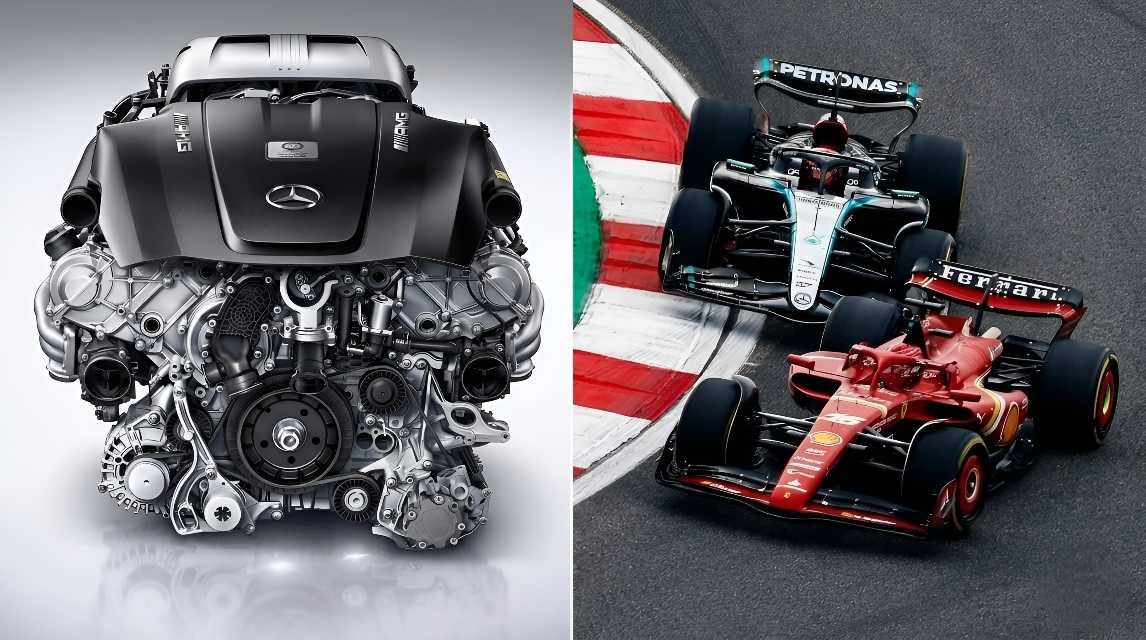
Formula 1’s current generation of power units, introduced under the 2026 technical regulations, was engineered around a landmark principle: near parity between internal combustion engine (ICE) output and electrical energy deployment. In practice, this translates to approximately 400kW from the 1.6-litre turbocharged V6 and 350kW from the MGU-K, a balance the FIA has publicly described as “close enough to 50/50”.
However, after three Grand Prix weekends under the new rules and extensive simulation work during pre-season testing, stakeholders across the paddock have begun questioning whether this equilibrium delivers the racing product, energy management profile, and manufacturer relevance originally envisioned. Multiple credible reports confirm that the FIA, Formula 1, and power unit manufacturers are now actively evaluating a recalibration of that split for 2027 or 2028, with figures such as 450kW ICE / 300kW MGU-K — roughly 60/40 — and 450kW / 350kW — roughly 55/45 — under formal study.
This article examines the technical rationale, regulatory mechanics, competitive consequences, and stakeholder positions surrounding a potential shift away from 50/50. It synthesizes official statements, technical briefings, and paddock feedback to provide a comprehensive view of where F1’s hybrid formula may head next.
The 2026 Power Unit Baseline: How 50/50 Was Defined
The 2026 regulations represent the most significant powertrain overhaul since 2014. Three pillars define the concept:
The removal of the MGU-H was intended to reduce cost and complexity while maintaining road relevance. The 50/50 split was positioned as essential to attract new manufacturers. Audi, Ford, and Honda all cited the electrical emphasis as a decisive factor in committing to F1.
Yet the practical implementation has exposed three core tensions:
Energy Starvation: Batteries sized at 4MJ must harvest up to 9MJ per lap, requiring aggressive downshifting, “super clipping,” and lift-and-coast techniques.
Qualifying Compromise: Drivers report lifting and coasting mid-lap to recharge, undermining the flat-out nature of qualifying.
Racing Artifacts: Deployment strategies have produced “yo-yo” overtaking, where a driver uses full electrical boost to pass, then becomes vulnerable when depleted. 29572eb009b838e1
The Case for Rebalancing: Data From the Track
Early Race Feedback
By the third round of the 2026 season, driver testimony highlighted unintended consequences. World Champion Lando Norris described a loss of control over deployment at Suzuka: “I didn’t even want to overtake Lewis. It’s just that my battery deploys, I don’t want it to deploy, but I can’t control it. So I overtake him, and then I have no battery left, so he just flies past.”
The FIA responded by reducing permitted energy deployment from 8MJ to 7MJ per lap after Japan, effectively ending the strict 50/50 doctrine three races into its life cycle.
Simulation and Testing
During Bahrain pre-season testing, teams were invited to trial reduced MGU-K output to assess whether lower peak electrical power would improve lap-time consistency by easing recharge demands. Technical proposals included:
Super clipping limit raised from 250kW to 350kW to reduce lift-and-coast. Max deployment cut to 200kW-300kW to extend usage.
Recharge limits tightened from 9MJ to 6MJ-8MJ.
Analysis by former technical director Gary Anderson concluded that a 50kW increase in ICE output paired with a 50-100kW reduction in battery output would “be more than enough to make a notable improvement”. That change yields the 450kW/300kW split, or 60/40.
A more conservative option retains 350kW race deployment for overtaking, producing 450kW/350kW, or 55/45. 693b
Regulatory Pathways: Why 2027, Not 2026
The FIA has already ruled out mid-season changes for 2026. Modifying the ICE/battery ratio would require re-engineering fuel flow rates, combustion parameters, and component durability — changes impossible without reliability risk given that current ICEs were designed around existing outputs. Technical sources indicate “the likelihood of implementing such a change for 2026 is effectively zero”.
Therefore, discussions target the next homologation window. The 2026 units are frozen for five years, but the FIA retains mechanisms to adjust energy deployment and fuel flow via Sporting and Technical Regulations. A shift to 60/40 or 55/45 could be introduced for 2027 or 2028 without a full PU redesign, provided manufacturers agree on fuel-flow increases and battery derating.
Stefano Domenicali, F1 CEO, has noted that the sport is now “less in a corner” than when the 2026 rules were drafted, because manufacturers are open to diverse energy sources beyond pure electrification. This flexibility underpins the current talks.
Technical Deep Dive: What Changes at 60/40 or 55/45?
Combustion Side
Increasing ICE output by ∼50kW requires raising fuel flow limits. The 2026 ICE already runs 100% sustainable fuel, so additional power must come from mass flow, not energy density. Engineers estimate a 10-12% fuel flow increase would be necessary, with implications for:
Thermal management: Higher exhaust energy and cooling demand.
Reliability: Components validated for 400kW must be requalified. Weight: Minimal, but ancillaries may grow.
Electrical Side
Reducing MGU-K from 350kW to 300kW or 250kW eases battery duty cycles. Current packs endure 10-15 charge/discharge events per lap. Lower peak power reduces current spikes, extending cell life and simplifying thermal control.
Energy Management
A 60/40 split shifts the strategic emphasis. With more ICE power, drivers can complete corners without relying on electrical torque fill, reducing lift-and-coast. However, retaining 350kW for overtaking under a 55/45 model preserves the “boost” spectacle.
Weight and Packaging
The 2026 battery minimum mass is 35kg. A derated MGU-K could allow smaller inverters and cabling, potentially offsetting any ICE mass increase. F1’s stated goal for 2031 is “cheaper, lighter engines”, and a 2027 adjustment would be an interim step.
Stakeholder Positions: Manufacturers, Teams, Drivers, Fans
FIA and Formula 1 Management
The FIA’s position is that 50/50 was necessary to secure manufacturer participation, but it is not immutable. Domenicali has confirmed that discussions for 2031 may include V8 or V10 concepts with hybrid elements, indicating a philosophical shift away from electrical parity.
Power Unit Manufacturers
Audi, Ford, Honda: Joined on the premise of electrical relevance. A move to 60/40 may concern them, but all three have privately acknowledged drivability issues, according to paddock sources.
Mercedes, Ferrari: Publicly resistant to change mid-cycle, as reported in technical briefings. Their 2026 PUs were optimized for 400kW/350kW, and any shift requires re-validation.
Red Bull Powertrains: Reportedly open to increased ICE, given its emphasis on combustion development.
Drivers Feedback has been consistent: energy management is detracting from pure racing. Max Verstappen and Lewis Hamilton have both warned that battery depletion mid-straight turns “championship battles into energy puzzles”. Fernando Alonso and Carlos Sainz have also cited safety concerns over speed differentials.
Fan Sentiment
Social discourse reveals a polarized community. A significant segment expresses nostalgia for V10/V8 eras and frustration with “hybrid-era” racing, often citing sound and simplicity. Memes and commentary frequently call for ratios like 70/30 or 80/20. Conversely, some fans defend the 50/50 approach as essential for sustainability and manufacturer engagement. The FIA’s admission that 50/50 “was a mistake” became a viral flashpoint.
Competitive Implications of a 2027 Adjustment
Development Race
If fuel flow is increased for 2027, teams with strong ICE heritage — Ferrari, Mercedes HPP, Honda — could gain. Conversely, teams that bet heavily on electrical efficiency may lose relative advantage. The change would reset part of the development curve without obsoleting 2026 investments, because architecture remains.
Racing Product
More ICE output should reduce “super clipping” and allow drivers to attack corners without pre-emptive lifting. Qualifying could return to flat-out laps, addressing Verstappen’s criticism. Overtaking may become less “yo-yo” if electrical deployment is less decisive.
Strategic Variables
A 55/45 model with 350kW overtake mode retains strategic depth. Teams would still manage deployment, but the baseline pace would rely more on ICE, reducing the penalty for early electrical use.
Cost and Sustainability
Increasing fuel flow slightly raises consumption, but 100% sustainable fuel mitigates CO₂ concerns. Reducing battery stress may improve lifecycle costs. The FIA’s long-term pivot toward sustainable fuels over pure electrification aligns with this adjustment.
Alternative Proposals and the 2031 Horizon
Beyond 60/40 or 55/45, three additional concepts are circulating:
Variable Deployment: Allow 350kW only for overtaking, 250kW otherwise.
Active Aero Liberation: Permit DRS-style straight-line mode anytime to reduce drag, offsetting electrical deficit.
2031 Reset: Domenicali has opened the door to V8/V10 hybrids with sustainable fuel. Manufacturers are “less in a corner” and could accept less electrification. The 2027 tweak may therefore be a bridge to a broader philosophical change by 2031.
Risks and Counterarguments
Timeline and Next Steps
Q2 2026: FIA Technical Working Group completes simulations on 450kW/300kW and 450kW/350kW.
Q3 2026: Manufacturers submit feedback; 21-day simulation window closes.
Q4 2026: F1 Commission votes on 2027 Sporting Regulation amendments.
Jan 2027: If approved, fuel flow and deployment tables updated. No new PU homologation required. 2027 Season: New split debuts. Data gathered for 2031 framework.
No changes will occur in 2026. The earliest implementation is 2027.
Conclusion: A Recalibration, Not a Reversal
The discussion around moving from 50/50 to 60/40 or 55/45 is not a repudiation of hybridization, but a refinement based on empirical data. The 2026 regulations succeeded in attracting manufacturers and advancing sustainable fuel. They have also revealed that peak electrical power and battery duty cycles impose compromises on drivability and spectacle.
A measured increase in ICE contribution, paired with retained electrical boost for overtaking, addresses those compromises while preserving the technical narrative that brought new OEMs to the sport. It also aligns with F1’s evolving view that future road relevance may lie in sustainable fuels rather than electrical dominance.
Whether the final figure is 60/40, 55/45, or a dynamic variant, the direction is clear: Formula 1 is tuning its hybrid formula in real time, using the 2026-2030 cycle as a testbed for the next era. The sport’s governance bodies, teams, and drivers appear aligned on one point — the best power split is the one that lets drivers race, not calculate. And by 2027, the numbers on the telemetry screen may look different, not because the hybrid experiment failed, but because Formula 1 learned.
Methodology & Sourcing Note: This analysis is based on technical briefings from The Race, FIA statements, and primary-source reporting from the 2026 season, supplemented by verified paddock commentary and social sentiment data to reflect stakeholder perspectives. All technical figures are drawn from published regulation documents and manufacturer disclosures.


