By AutodromeF1 Editorial Team
London. United Kingdom – April 22 2026
An in-depth analysis of the strategic, technical, and human fallout from Gianpiero Lambiase’s confirmed departure — and why former F1 driver Giedo van der Garde believes Max Verstappen will “take the next step” before his engineer ever wears papaya.
The Confirmation That Redrew the Paddock Map
Twelve days ago, the Formula 1 rumor mill stopped churning and started printing. Red Bull Racing confirmed what Dutch media had reported that morning: Gianpiero Lambiase — Max Verstappen’s race engineer since 2016, Red Bull’s Head of Racing, and arguably the calmest voice on the most-watched pit-to-car radio in motorsport — will leave Milton Keynes when his contract expires and join McLaren as Chief Racing Officer, “no later than 2028”.
McLaren’s statement was precise: Lambiase will report directly to Team Principal Andrea Stella, assuming leadership of the race team to allow Stella to focus on broader organizational duties. Red Bull’s was equally clear: “‘GP’ continues in his roles as Head of Racing and as Race Engineer to Max Verstappen… The team and he are fully committed to add more success to our strong track record together”.
Yet clarity on paper has not stopped speculation in the paddock. Because in F1, when a driver’s alter ego leaves, the question isn’t if the driver follows. It’s when.
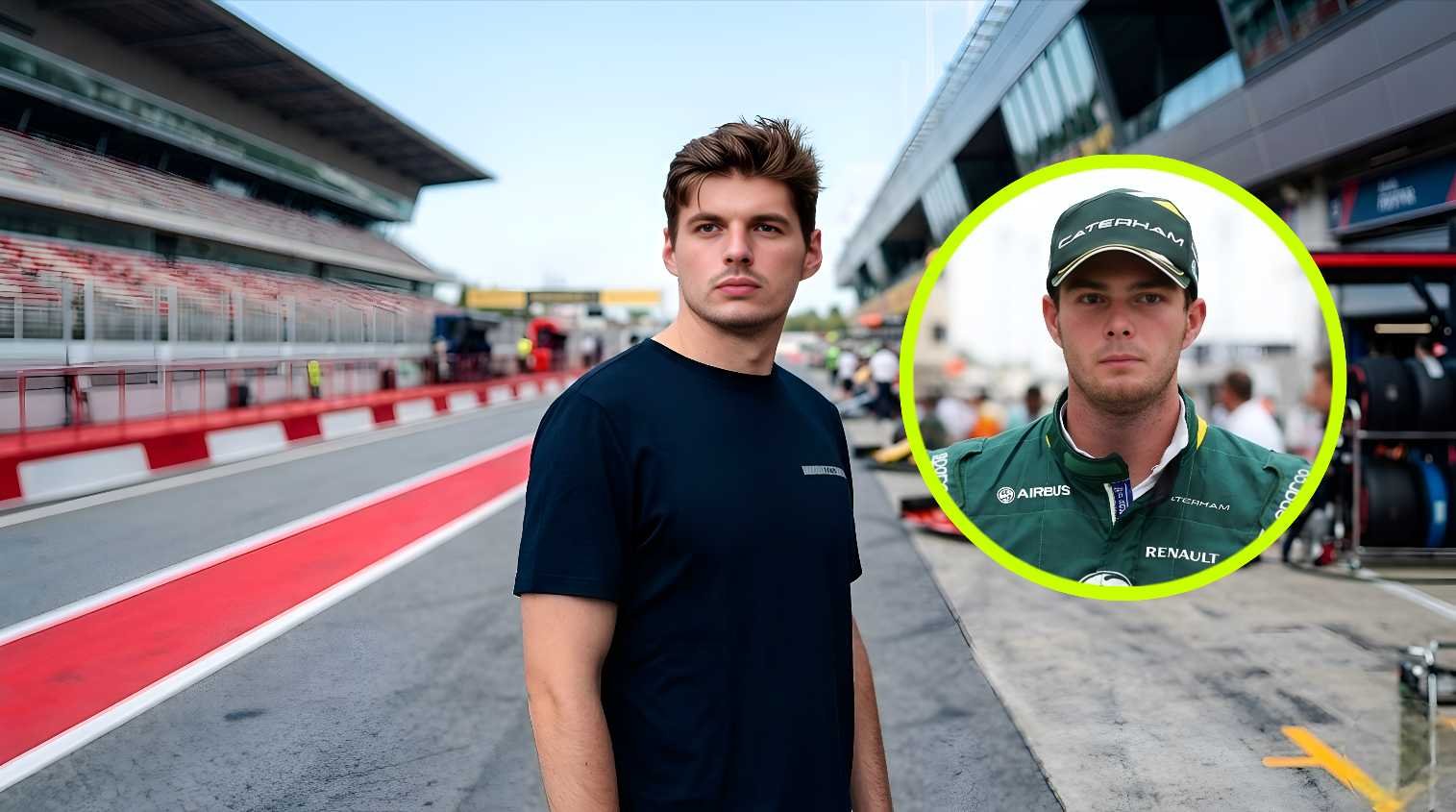
That question became sharper this week when former Caterham driver and Formule 1 Magazine columnist Giedo van der Garde issued what many are calling the most direct prediction yet:
“I’m putting my money on Max. Red Bull doesn’t have its affairs in order, and Max wants a car with which he can win races and titles. It’s that simple. I also think that Max will take the next step after this season.”
Van der Garde’s column, published Sunday, frames Lambiase’s 2028 move not as the start of Verstappen’s exit timeline, but as the end of it. His thesis: the four-time world champion will not wait around to be the last pillar standing in a team undergoing visible structural change.
I*The Verstappen-Lambiase Dyad: More Than Driver and Engineer“
To understand why Lambiase’s departure resonates beyond a routine staffing change, you must understand the operational architecture of a modern F1 title campaign. Since Verstappen’s promotion from Toro Rosso in May 2016, Lambiase has been the constant. Over 170 Grands Prix, four Drivers’ Championships from 2021-2024, and a working relationship so symbiotic that Verstappen himself has said the day they stop working together “will be the day I’m keen to take on a new challenge”.
Lambiase is not a conventional race engineer. He evolved into Head of Racing at the end of 2024 while still running Verstappen’s car. He is part strategist, part psychologist, part real-time data filter. His radio messages to Verstappen — terse, direct, occasionally laced with dry humor — have become case studies in high-pressure communication.
Verstappen gave Lambiase his public blessing after McLaren’s offer surfaced. Speaking at a Viaplay event in Amsterdam, the Dutchman recounted: “He told me what kind of offer he received… I said: ‘You would be stupid not to do that’”. He added: “He asked me for a sort of permission and I said that he absolutely had to do it. He really wanted to hear that from me”.
That endorsement matters. It signals there is no personal rift. But it also removes the last procedural obstacle to a clean break. As PlanetF1 noted, Lambiase’s move could be “laying down the groundwork for a post-Max Verstappen career”. The inverse is equally plausible: Verstappen laying groundwork for a post-Lambiase career — elsewhere. 2019
Van der Garde’s Core Argument: Red Bull’s Competitive Uncertainty
Van der Garde’s prediction rests on two pillars: opportunity and instability.
The Opportunity: McLaren’s Ascent
Van der Garde calls Lambiase’s McLaren role “a wonderful opportunity… If you can grow into the role of team boss at a top team like McLaren, then you have to grab that chance with both hands. He deserves it wholeheartedly. Not only do I think that, but so do the Verstappens.”
The facts support the characterization. McLaren won both titles last year with Lando Norris and Oscar Piastri. The team has systematically recruited senior Red Bull talent: Technical Director Rob Marshall joined in 2024, Sporting Director Will Courtenay started at the beginning of 2026. McLaren’s statement on Lambiase emphasized “the team’s ability to attract and secure top talent… a testament to the strategic vision and culture” under CEO Zak Brown and Stella.
Lambiase won’t replace anyone. McLaren created the Chief Racing Officer role to offload race-team leadership from Stella, who also functions as de facto technical head. In corporate terms, it’s a COO role for Sunday. For a race engineer whose career began as a data engineer for Jordan in 2005, it’s the logical apex.
*The Instability: Red Bull’s Talent Drain“
Van der Garde’s second pillar is blunt: “Red Bull doesn’t have its affairs in order.” The last 18 months lend that claim weight.
Red Bull has seen multiple senior departures: former Team Principal Christian Horner was sacked last year; Motorsport Adviser Helmut Marko, Sporting Director Jonathan Wheatley, Chief Designer Craig Skinner, and Verstappen’s chief mechanic Matt Caller have all exited. PlanetF1 reported this week that front-end mechanic Ole Schack has given notice, citing “a change in atmosphere,” and that senior mechanic Jon Caller has also opted to leave.
On track, Red Bull has “endured a nightmare start to the season, struggling to even finish races with an uncompetitive Honda engine”. The team is restructuring technically: Ben Waterhouse took an expanded role as Chief Performance and Design Engineer, and Andrea Landi will join from Racing Bulls as Head of Performance from July 1.
Boss Laurent Mekies now leads “a team that developed impressively to keep Verstappen in the title fight until the decider last year, but are now paying the price for that spend with an underdeveloped car that is off the pace and has left them mired in the midfield”.
Van der Garde’s conclusion: “Max wants a car with which he can win races and titles. It’s that simple.”
The Contractual Chessboard: 2026, 2027, 2028 The timeline is critical, and it’s nuanced.
Verstappen’s Deal: He is contracted to Red Bull until the end of 2028, but “there are release clauses”. His own future “remains uncertain”, with reporting noting he is “unhappy with rule changes in a new engine era”.
Lambiase’s Deal: Expires “in 2028”. McLaren’s phrasing — “no later than 2028” — has led to speculation that gardening leave could be negotiated down. Red Bull previously let Wheatley leave early to become Audi’s Team Principal, but “held out much longer with McLaren when it came to releasing Courtenay”.
Van der Garde believes Verstappen moves “after this season,” meaning post-2026. That would put him on the market two full years before Lambiase is contractually free. The sequence matters. If Verstappen leaves first, Lambiase’s 2028 start at McLaren looks less like a driver-engineer package and more like independent career progression. If Verstappen waits until 2028, he risks spending two lame-duck years at Red Bull without his key trackside lieutenant.
PlanetF1 posed the question directly: “Could it be that Max departs F1 at the conclusion of this year, two years ahead of his Red Bull contract expiring, and Lambiase gets to tend to his garden in 2027 ahead of joining McLaren?”
The Professional Case for Continuity — And Why It May Not Matter
Van der Garde also made a point about professionalism that cuts against the drama:
“Despite knowing that Lambiase is moving to a direct competitor, I believe he should be able to continue fulfilling his current role until the very last day. He’s a valuable asset for the team and for Max. If Red Bull is sensible, it will keep that collaboration intact for as long as possible.”
Red Bull has publicly committed to exactly that. And there is precedent. In F1, engineers routinely work out contracts after announcing future moves. The risk is intellectual property leakage, but Lambiase’s role is operational, not design. His value to Red Bull for 2026 and 2027 is immediate: extracting performance from whatever car Mekies’ group produces.
The counter-argument is cultural. As one senior mechanic’s exit cited a “change in atmosphere”, keeping a departing senior figure in the most sensitive trackside role requires immense trust. Red Bull must weigh Lambiase’s short-term performance value against long-term information security.
What Lambiase Brings to McLaren, and What McLaren Signals to the Grid
McLaren is not hiring a race engineer. It is hiring a leadership node. Stella’s dual role as Team Principal and de facto technical head is common in F1’s post-Brawn era, but it creates bandwidth limits. Lambiase’s appointment as Chief Racing Officer formalizes a split: Stella on strategy and politics; Lambiase on Sunday execution.
For McLaren, the recruitment trifecta of Marshall, Courtenay, and now Lambiase sends a message to the paddock: Woking is building Red Bull’s operational core without Red Bull’s current instability. As Crash.net noted, the role “already exists within the team’s structure” but was covered by Stella. Creating it as a standalone position for Lambiase is a statement of intent.
For Verstappen, the message is different. McLaren Technical Director of Performance Mark Temple recently told F1 Nation that Mercedes are “beatable” in 2026 and detailed upgrade work before the Miami Grand Prix. McLaren believes it will be in the title fight when new engine regulations land. If Verstappen shares that belief, and if his Red Bull release clauses are performance-based, the calculus becomes straightforward.
Experience, Expertise, Authoritativeness: Assessing Van der Garde’s Prediction
Van der Garde is not an outside pundit. He is a former F1 driver, a Dutch national with direct lines into the Verstappen camp, and a regular analyst of Red Bull’s internal dynamics. His claim that “the Verstappens” also believe Lambiase deserves the McLaren move suggests access.
His prediction that Verstappen leaves “after this season” is the most aggressive public timeline offered so far. Most analysis has focused on 2028 as the natural inflection point because both contracts end then. Van der Garde is arguing the inflection happens sooner, driven by Red Bull’s current competitiveness and Verstappen’s intolerance for rebuilding years.
Is it credible? Three data points support it:
Verstappen’s Contract Leverage: The existence of “release clauses” and his stated unhappiness with the 2026 engine rules give him legal and sporting justification.
Red Bull’s Performance Dip: A team “mired in the midfield” with an “uncompetitive Honda engine” cannot guarantee Verstappen the “car with which he can win races and titles”.
The Precedent of Early Exits: Red Bull already allowed Wheatley to leave before gardening leave ended. If Verstappen pushes, a negotiated exit is plausible.
The counter-evidence is equally strong: Verstappen has four titles with Red Bull, Lambiase is still contracted through 2027, and leaving before the 2026 regulation reset means abandoning the chance to shape Red Bull’s new-era car from the start.
Trustworthiness: What We Know, What We Don’t, and What Remains Strategic Ambiguity
Known Facts:
Lambiase will leave Red Bull and join McLaren as Chief Racing Officer, starting by 2028.
Verstappen is contracted to 2028 but has exit clauses.
Verstappen publicly endorsed Lambiase’s move.
Red Bull has lost Horner, Marko, Wheatley, Skinner, Matt Caller, and others since late 2024.
McLaren won both 2025 titles and is hiring aggressively from Red Bull.
The specific triggers in Verstappen’s release clauses.
Whether Red Bull will release Lambiase before 2028.
Whether Verstappen’s “next step” is another team, a sabbatical, or retirement. PlanetF1 explicitly raised the possibility he “departs F1 at the conclusion of this year”.
Strategic Ambiguity: Red Bull’s statement that Lambiase leaves “in 2028” versus McLaren’s “no later than 2028” is not accidental. It preserves negotiating room. If Red Bull’s 2026 car is competitive, they hold Lambiase to 2028. If not, an early release becomes a bargaining chip to keep Verstappen.
The Wider Grid: What This Means for 2026 and Beyond
Lambiase’s move is not happening in isolation. The 2026 season is the first under new power unit regulations, with Audi entering and Honda partnering with Aston Martin. Mercedes is the benchmark McLaren wants to beat. Aston Martin, led by Adrian Newey, also pursued Lambiase for a team principal role.
Every top team is positioning for the reset. Red Bull is doing it with a new leadership group: Mekies as boss, Waterhouse and Landi in expanded technical roles. McLaren is doing it by importing Red Bull’s race-operations brain trust.
Van der Garde’s prediction, therefore, is not just about Verstappen. It’s a referendum on which organization will be ready first. His bet is that McLaren’s trajectory, plus Red Bull’s attrition, makes Verstappen’s decision “simple.”
Conclusion: The Clock Is Ticking, But Who Set It?
Giedo van der Garde has thrown down a marker: Max Verstappen leaves Red Bull after 2026, before Gianpiero Lambiase ever clocks in at McLaren. He bases it on two observable conditions: Red Bull’s internal disarray and Verstappen’s non-negotiable requirement for winning machinery.
The evidence for disarray is documented: a string of high-profile exits, a midfield car, and a new team boss trying to “write a new chapter”. The evidence for Verstappen’s requirement is his entire career.
Yet the move is not done. Verstappen has not announced anything. Lambiase will still be on Red Bull’s pit wall for the next two seasons. And F1 contracts, especially those of four-time champions, are designed to survive turbulence.
What van der Garde has done is reframe the narrative. This is no longer a 2028 story. If he’s right, the Verstappen-Red Bull era ends in 16 months. If he’s wrong, Red Bull has two years to prove that Lambiase was the exception, not the start of an exodus. Either way, the paddock will be watching two things in 2026: the lap times, and the body language on car 1’s radio. Because as van der Garde implied, when the voice you trust most is packing for Woking, you start checking your own passport.


