By AutodromeF1 Editorial Team
London. United Kingdom – April 22 2026
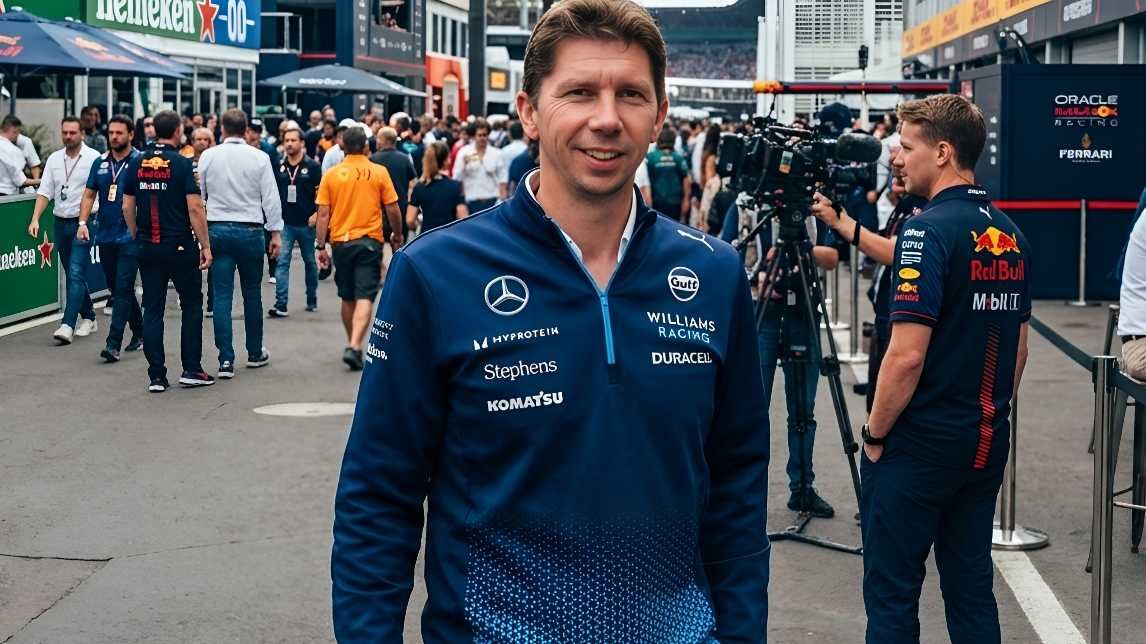
Williams Racing Team Principal James Vowles has formally endorsed a suite of urgent “sensible changes” to the 2026 Formula 1 Technical and Sporting Regulations, following a landmark unanimous agreement between the FIA, Formula One Management (FOM), and the ten competing constructors.
The adjustments, ratified following a series of high-level “crunch meetings” in the wake of a volatile opening to the 2026 season, are designed to rectify unforeseen performance imbalances and safety risks inherent in the sport’s new hybrid era. The refined regulations are set to make their competitive debut at the upcoming Miami Grand Prix, marking a pivotal mid-season course correction for the championship.
A Unified Front for Racing Integrity
The 2026 season, characterized by a radical shift to a 50/50 power split between internal combustion engines (ICE) and electrical energy, has faced intense scrutiny since the opening round in Melbourne. While the racing has remained visually spectacular, teams and drivers quickly identified fundamental flaws in energy management and on-track safety.
James Vowles, speaking via official team channels, praised the swift and collaborative nature of the intervention.
“These are sensible changes, and the teams, the FIA, and Formula 1 have done significant work over the past few weeks to reach this agreement,” Vowles stated. “While F1 has delivered some exceptional racing so far this year, it is imperative that we remain proactive in our pursuit of improvement. These refinements represent a common-sense approach to enhancing both the safety and the competitive product for the fans.”
The endorsement from Vowles—a figure widely respected for his strategic acumen and engineering background—signals a rare moment of total paddock alignment. His comments suggest that the updates are not a “panic move” but a surgical recalibration of the 2026 framework.
Technical Breakdown: Solving the “Super-Clipping” Crisis
The primary technical catalyst for these changes was the phenomenon known as “super-clipping.” Under the original 2026 rules, many power units were automatically diverting energy from the engine to the battery mid-straight, causing cars to lose significant speed even while the driver remained at full throttle. This created dangerous closing speed differentials between cars and forced drivers into excessive “lift-and-coast” tactics during qualifying and race laps.
Key Power Unit Adjustments
The FIA has introduced specific numerical shifts to ensure “flat-out” driving remains the benchmark of the sport:
- Qualifying Optimization: To prevent qualifying from becoming a mere exercise in battery management, the maximum permitted energy recharge has been reduced from 8MJ to 7MJ.
- Super-Clip Surge: The peak power available during a “super-clip” event has been increased from 250 kW to 350 kW. This adjustment reduces the time required for recharging, allowing drivers to spend more of the lap at maximum deployment.
- Race Boost Capping:
In race conditions, the maximum power available through the “Boost” function will now be capped at an additional 150 kW, preventing the erratic performance spikes that led to near-misses in the season’s early rounds.
The “Miami Start”: Mitigating Opening-Lap Chaos
Beyond the power units, the FIA has prioritized a revision of starting procedures following a string of high-profile incidents. The opening laps of the 2026 Australian and Chinese Grands Prix were marred by “low-power” starts, where cars failed to deploy electrical energy correctly off the line, creating a “concertina effect” that led to several heavy collisions.
Specifically, the issues involving Williams driver Franco Colapinto in Australia served as a catalyst for a new safety protocol.
The Low-Power Start Detection System
Debuting at the Miami International Autodrome, a new automated system will monitor car telemetry during the launch phase. If a car experiences a failure in its standard deployment, the system will trigger an automatic MGU-K (Motor Generator Unit-Kinetic) failsafe to ensure the car maintains a minimum safe speed, preventing follow-on drivers from striking a stationary or slow-moving vehicle.
Additionally, the FIA has simplified the rear lighting systems. Affected cars will now display distinct, high-intensity lateral flashing lights to provide immediate visual cues to following drivers during energy harvesting or system malfunctions.
Safety and Sporting Fairness: The Path Forward
The revisions also extend to wet-weather protocols. Learning from the visibility issues encountered during the 2026 Japanese Grand Prix, the FIA has mandated a reduction in maximum ERS (Energy Recovery System) deployment in low-grip conditions. This change is intended to limit sudden torque spikes, giving drivers greater control over the car on slippery surfaces and reducing the likelihood of high-speed aquaplaning.
Mohammed Ben Sulayem, President of the FIA, echoed Vowles’ sentiments in a separate statement, emphasizing that the integrity of the competition remains the governing body’s “North Star.”
“Safety and sporting fairness are our top priorities,” Ben Sulayem remarked. “These refinements address the specific challenges identified in the opening events of this new era. By acting now, we safeguard the quality of the competition for the remainder of the 2026 World Championship.”
Analysis: A New Era of Collaboration
The speed with which these changes were implemented—less than two months into the new regulation cycle—highlights a significant shift in F1 governance. Historically, technical changes of this magnitude often resulted in months of political gridlock. However, the 2026 season’s “yo-yo” racing and the vocal concerns of champions like Max Verstappen forced a more streamlined approach.
For Williams, these changes offer a potential lifeline. The team has struggled with the intricacies of energy harvesting in the first three rounds. By standardizing deployment zones—specifically setting the MGU-K to 350 kW in acceleration zones and limiting it to 250 kW elsewhere—the field is expected to bunch up, rewarding chassis efficiency over pure software mapping.
Implementation Timeline

Full Adoption of Safety Light Protocols | May 24, 2026 (Monaco GP) |
As the paddock arrives in Florida for the Miami Grand Prix, all eyes will be on the telemetry. While some skeptics, including Red Bull management, have suggested the 2026 rules remain “fundamentally complex,” the Vowles-backed “sensible changes” represent the sport’s best chance at stabilizing its most ambitious technical revolution to date.
The Miami Grand Prix will serve as the ultimate litmus test for whether these refinements can deliver the “excitement without major overhauls” that James Vowles and the FIA have promised.


