By AutodromeF1 Editorial Team
London. United Kingdom – April 23 2026
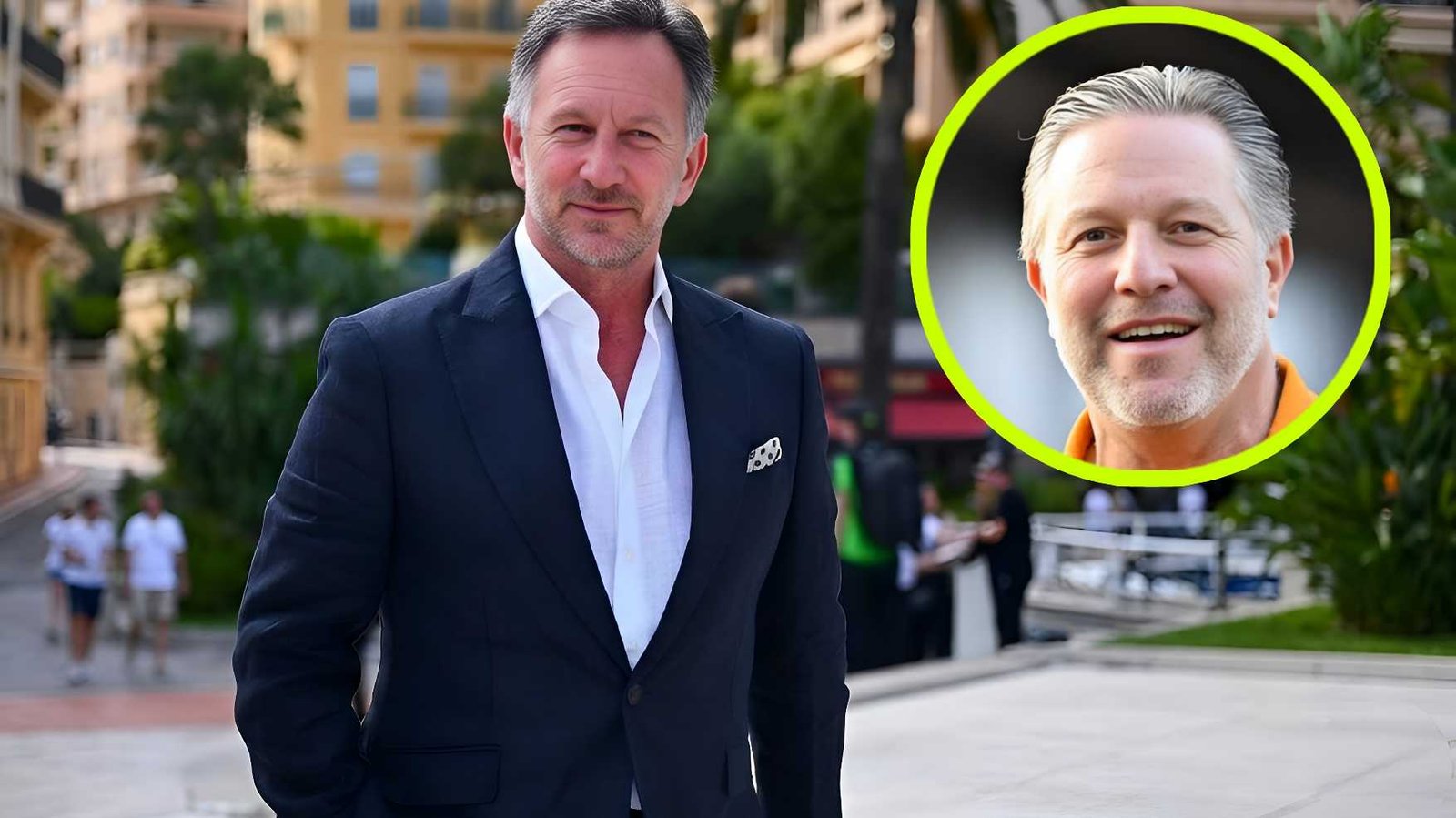
McLaren Racing CEO Zak Brown has publicly endorsed a potential Formula 1 comeback for former Red Bull Team Principal Christian Horner, describing the ousted team boss as a “great operator” whose return would benefit the championship. Brown’s remarks arrive as Horner’s Red Bull gardening leave nears its end, fueling paddock speculation that the 52-year-old could re-emerge in a senior role—potentially with an ownership stake—before the 2026 season concludes. Despite a bitter professional rivalry that defined much of Red Bull’s dominance era, Brown’s comments underscore a growing consensus that F1’s commercial and entertainment value is inextricably tied to strong, polarizing personalities. 2018
Brown’s Position: Respect Amid Rivalry
Speaking to Bloomberg and reiterated in recent paddock interviews, Brown made clear that personal friction does not diminish professional respect.
“I think Christian is a great personality for the sport. Sport always has great personalities. They come and go,” Brown said. “He’s a great operator. His track record speaks for itself.”
The McLaren chief expanded on the theme, noting that Formula 1’s unique appeal stems from competition both on and off track. “When you get into sport, not everyone’s best friends… you need all different types of characters,” he explained. “I think that’s what makes the sport very exciting, that’s that kind of the Netflix effect, is what happens off the track.”
Brown’s stance is notable given the public animosity between McLaren and Red Bull during the latter half of Horner’s tenure. In 2024, Brown branded Red Bull’s political tactics under Horner as “nasty”, while Horner privately referred to Brown in unflattering terms during Netflix’s Drive to Survive. Yet Brown now argues the paddock is “a little bit of a nicer pitlane at the moment, but that’s… probably temporary”, adding: “I hope he does come back.”
The comments reflect a strategic maturity. With McLaren having overhauled Red Bull to win both the Drivers’ and Constructors’ Championships in 2025, Brown’s organization no longer sits in Red Bull’s shadow. From a position of competitive strength, Brown can afford to advocate for a rival whose presence elevates the sport’s global profile—and, by extension, its commercial revenues.
The Horner Context: 20 Years, 14 Titles, $100M Exit
Christian Horner’s departure from Red Bull Racing in July 2025 ended a 20-year reign that delivered eight Drivers’ Championships and six Constructors’ Championships. His dismissal followed the British Grand Prix, with Laurent Mekies installed as Team Principal.
Horner’s formal exit was only finalized months later after protracted severance negotiations. Sources indicate the settlement could be worth as much as $100 million over five years, covering wages and bonuses through his original 2030 contract. Crucially, the agreement reportedly allows Horner to return to a Formula 1 role in 2026, though not immediately. Sky Sports News understands he is serving gardening leave until the end of 2025, with a return possible “as early as January 2026”. The Race reports the specific window opens “somewhere after the first 2026 flyaways but before the summer break”.
Since July, Horner has been linked to Alpine, Aston Martin, Haas, and even Ferrari. Alpine appears the most persistent rumor, with Horner reportedly leading a rival bid for Otro Capital’s stake in the Enstone-based team. Industry consensus suggests Horner does not merely want to be a team principal again; he seeks equity, mirroring the model adopted by Mercedes’ Toto Wolff, who owns a third of the Brackley squad.
Former Haas boss Guenther Steiner doubts a 2026 return, arguing “he wants to be part of a team owning it” and “I don’t think there’s anything for sale”. Yet Brown disagrees: “Given his age and his history in motor racing, I’d be surprised if he didn’t show up somewhere in motor racing”.
Why Brown’s Endorsement Matters: Integrity, Independence, and the ‘Netflix Effect’
Brown’s support for Horner cannot be divorced from his broader campaign against multi-team ownership and conflicts of interest in F1. He has warned that shared ownership between manufacturers and customer teams risks compromising sporting integrity, citing Daniel Ricciardo’s 2024 Singapore GP fastest lap—set for Racing Bulls—that cost Lando Norris a championship point. In that context, Horner represents a known quantity: a fiercely independent competitor who built Red Bull from Jaguar’s ashes into a powerhouse. Brown acknowledged Red Bull’s contribution: “I think he’s had a stellar career… lots of drivers’ championships, world championships”.
Moreover, Brown understands the commercial calculus. Formula 1’s boom has been driven as much by personalities as podiums. “It’s a small group of team bosses and drivers, so I think the fans can get to know us all,” Brown said. “I’ve got my friends in pitlane and some that aren’t, but I think that’s what makes it exciting and it’s authentic and genuine.”
The ‘Netflix effect’—referencing Drive to Survive—has made intra-team politics a core product. Horner’s rivalries with Brown and Wolff were central to seasons 5-7 of the series. With Liberty Media and the FIA eager to sustain audience growth ahead of the 2026 regulation reset, the return of a proven protagonist is commercially rational.
The 2026 Landscape: Why Horner’s Return Would Be Seismic
Formula 1 enters its most significant technical overhaul in history this season. Cars are 20cm shorter, 30kg lighter, feature active aerodynamics, and run a 50/50 split between internal combustion and electrification. An ‘Overtake’ mode replaces DRS.
For McLaren, which finally dethroned Red Bull in 2025, the reset is both threat and opportunity. Brown calls it “the exciting part of Formula One”. For Horner, it’s a blank slate. His expertise in building a championship-winning technical structure from scratch—Red Bull Powertrains—makes him uniquely valuable to midfield teams like Alpine or Aston Martin seeking to capitalize on the new rules. Horner himself remains measured. In Red Bull’s departure statement he said: “Leading Red Bull Racing has been an honour and privilege… I’m incredibly proud of what we achieved”. PlanetF1.com understands he is “not currently in active discussions over an F1 comeback with his current focus on his family”. Yet Brown is convinced: “First of all, I think Christian will be back… I could be wrong — but I think Christian will be back”. He even joked that Horner’s return “will be in this year’s episodes” of Drive to Survive.
Governance and Guardrails: The FIA’s Role in Any Return
Brown’s call for Horner’s return comes with an implicit condition: clear governance. He has written to the FIA and Formula 1 to highlight concerns about co-ownership and staff movement between Red Bull and Racing Bulls. He notes Gianpiero Lambiase, Max Verstappen’s race engineer, cannot join McLaren until 2028 due to his contract, yet staff “semi-regularly move between Red Bull and Racing Bulls… without financial compensation”.
If Horner returns with equity in a team, Brown’s position suggests he would expect the same scrutiny. “I think having engine power units (manufacturers) and suppliers is as far as it should go and then in my view all 11 teams should be absolutely as independent as possible”. The FIA’s handling of Red Bull’s bib-adjuster controversy in late 2024—where Brown said Red Bull’s explanation “doesn’t stack up”—shows the governing body is under pressure to enforce transparency. Horner’s return would test those standards again.
Expert Assessment: Risk, Reward, and Reputation
Experience: Horner’s 406 Grands Prix, 124 wins, and 8,009 points represent the most successful team principal CV of the 21st century. His ability to manage technical, political, and commercial arms of an F1 operation is unmatched. Expertise: Beyond race operations, Horner oversaw Red Bull Advanced Technology and the formation of Red Bull Powertrains, positioning him as one of few principals with direct power unit experience ahead of 2026.
Authoritativeness: Brown’s endorsement carries weight because it comes from a direct competitor who benefited from Horner’s downfall. That he still advocates for Horner’s return signals a paddock-wide recognition that F1’s ecosystem is healthier with him in it.
Trustworthiness: The severance terms—allowing a 2026 return—were negotiated with Red Bull GmbH, not imposed. This suggests Red Bull itself does not view Horner as a legal or reputational liability post-settlement. Allegations from February 2024 were dismissed following two internal investigations, and Horner denied them throughout.
Risk: The primary risk is cultural. Brown admits “the line got crossed before” under Horner, referencing political fighting. New employer Laurent Mekies has changed that dynamic. Any team hiring Horner must weigh whether his win-at-all-costs approach fits the post-2021 cost cap era. Reward: For a team like Alpine, which will run Mercedes engines from 2026-2030, Horner offers instant credibility, sponsor appeal, and a proven roadmap to titles. For F1, it restores a marquee rivalry. “Would you like to see Christian Horner revive his rivalry with Toto Wolff?” one outlet asked fans. Brown’s answer is yes.
Conclusion: The Inevitability of Comebacks
Formula 1 has a long history of exiled figures returning: Flavio Briatore, Ross Brawn, even Ron Dennis. Brown’s logic is grounded in that precedent. “Given his age and his history… I’d be surprised if he didn’t show up somewhere”. As of April 2026, Horner has no confirmed role. He was recently “spotted enjoying a break in Scotland with his wife Geri”. But the contractual runway is clear, the financial settlement is secure, and the endorsements from rivals are public.
Zak Brown summarized the sentiment best: “Formula 1 has always great controversies. So I wouldn’t be too concerned… I think he’ll be back. And you know what, I hope he does come back.”
In a sport where memory is short but legacies are long, Christian Horner’s second act may be his most consequential. And if it happens, it will be with the blessing of the very men he once sought to beat.
Disclaimer: This analysis is based on publicly reported statements and settlement terms as of April 2026. Team discussions remain private and no appointment has been confirmed.


