
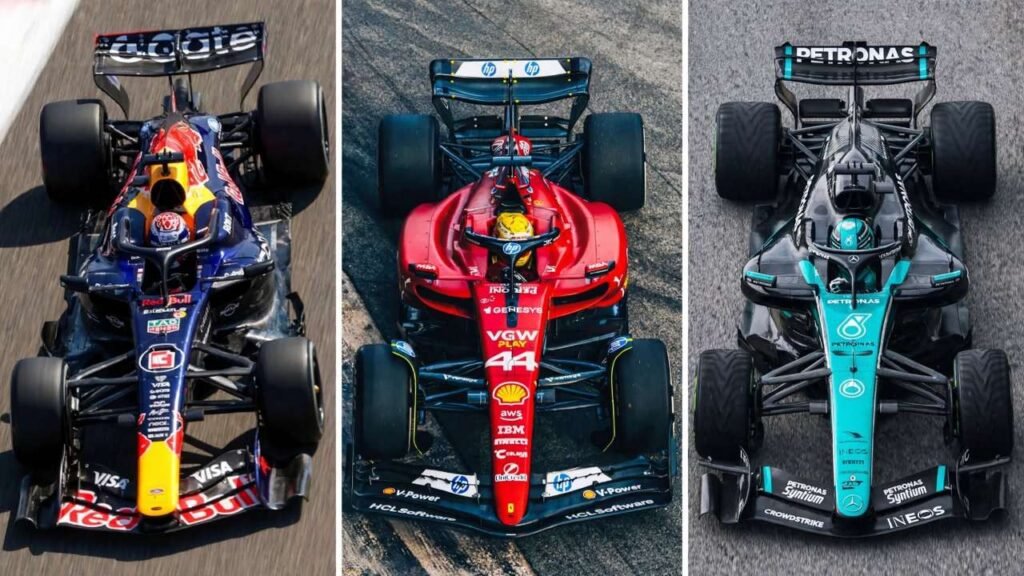
New real-time sensors target clever power unit solutions.
Formula 1’s controversial engine compression solutions are reportedly set to disappear in 2027. According to reports, the FIA will introduce a sensor that measures compression ratios in real time, ensuring no power unit exceeds the 16:1 limit at operating temperatures. The reported measure targets the dual combustion chamber approach linked to Mercedes and a similar concept attributed to Red Bull Powertrains, and it would close a regulatory grey area that has divided manufacturers since the start of the 2026 season.
A Real-Time Sensor to Police the 16:1 Compression Ratio
Compression ratio describes how tightly the fuel and air mixture is squeezed inside a cylinder before ignition. A higher figure generally improves thermal efficiency, which means more energy can be extracted from the same amount of fuel. That is why the number is tightly regulated, and why even a small advantage can become a major point of contention among engine suppliers.
Under the 2026 power unit regulations, the maximum was lowered from 18:1 to 16:1. The reduction was designed in part to help newcomers such as Audi and Red Bull Powertrains compete with established manufacturers. The difficulty lay in the method of verification, because the original text specified a measurement taken at ambient temperature, with the engine cold.
How the Compression Ratio Dispute Divided Manufacturers
Rivals suspected that Mercedes had engineered a way to satisfy the cold measurement while allowing the effective ratio to rise as components heated up and expanded during running. Ferrari, Audi and Honda raised their concerns, arguing that a limit which can be exceeded on track undermines the intention of the rule. Red Bull Powertrains was also reported to be pursuing a comparable concept.
Mercedes maintained that its interpretation complied with the text of the regulations, and it said any rule change would make no difference to its competitiveness. The situation placed the FIA in a delicate position, since it had to balance support for engineering innovation against the need to guarantee a level playing field across five power unit suppliers.
ALSO READ: Verstappen Taunts Hamilton With His Own Words
The FIA Compromise and the Road to 2027
At the end of February, the FIA announced that a compromise had been reached. The amendments were approved unanimously through an electronic vote of the World Motor Sport Council. From 1 June 2026, the compression ratio would be controlled in both hot and cold conditions, and from 2027 onwards it would be controlled only in operating conditions.
That framework effectively ends the distinction between a cold check and real running conditions. The sensor described in reports would provide the means to apply the rule consistently, giving inspectors a direct reading rather than an estimate based on laboratory procedures. Details on its design, location and calibration have yet to be confirmed.
What the 2027 Change Means for Engine Suppliers and Teams
The consequences extend well beyond one manufacturer. Mercedes supplies its factory team as well as McLaren, Williams and Alpine, while Red Bull Powertrains, which now builds its own power units, supplies Racing Bulls. Ferrari provides engines to Haas and Cadillac, and Honda works with Aston Martin. A tighter, more transparent measurement regime therefore affects most of the grid.
For manufacturers, timing is critical. Developing and validating revised engine components can take months, which makes early regulatory clarity valuable. Manufacturers that objected to the earlier interpretation now have a defined target, while those suspected of exploiting it must plan for a stricter standard once the new rules take full effect.
ALSO READ: Wolff: Mercedes Lost Two Sponsors Over Antonelli
Why Regulatory Clarity Matters for Formula 1’s Future
The compression ratio saga illustrates how a single technical parameter can shape an entire season’s political climate. When a rule is open to more than one reading, manufacturers invest heavily in exploiting it, rivals respond with complaints and lobbying, and the governing body is forced to arbitrate under pressure. A measurable, enforceable standard removes much of that uncertainty.
It also highlights the tension at the heart of modern Formula 1 engineering. Regulations are written to promote competition and attract new entrants, yet the most resourceful manufacturers will always search for the margins that the text leaves open. Closing those margins quickly, and in a way that every competitor accepts, is one of the sport’s recurring challenges.
For supporters, the practical outcome should be a clearer competitive picture. If every power unit is held to the same limit under the same conditions, performance differences are more likely to reflect genuine engineering quality than regulatory interpretation. That outcome would strengthen confidence in the results on track and reduce the scope for off-track disputes.
Several questions remain open. Reports have not detailed how the sensor will be installed, whether it will be supplied centrally or by each manufacturer, or how its readings will be validated. Procedures for handling a reading that exceeds the limit, including any penalties, will also need to be defined before the 2027 season begins.
Until those points are settled, the confirmed position is the one the FIA has already published: hot and cold control from 1 June 2026, and operating-condition control only from 2027. The sensor, as reported, is the proposed mechanism for enforcing that standard, and its formal introduction would be the clearest sign that the grey area is finally closed.
Manufacturers, teams and supporters will now watch for the next official communication from the governing body. Any confirmation of the sensor’s specification, the date of its first use and the sanctions attached to a breach will determine how smoothly the transition into the 2027 regulations unfolds, and whether the compression ratio debate can finally be put to rest. The direction is now unmistakable: one limit, measured under real conditions, for everyone.