Former Liberty Media CEO says $30bn buyout is best bet.
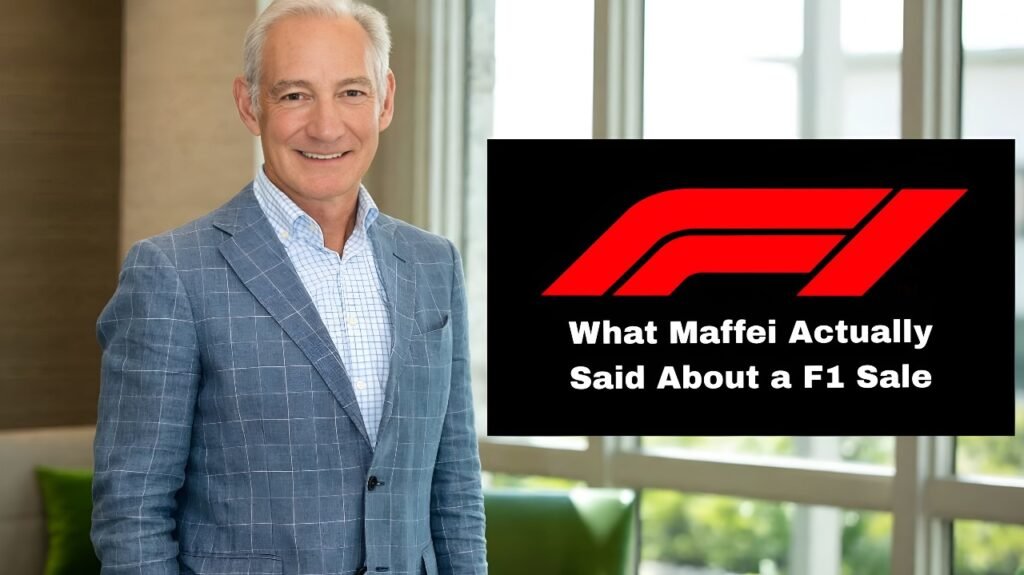
Formula 1 could be taken private within two years in a transaction valued at about $30 billion, according to Greg Maffei, the former chief executive of Liberty Media. Speaking at the Sportico Invest New York 2026 conference, Maffei said he would place his own money on that outcome. The remarks carry weight because Maffei spent two decades at Liberty Media and led the company when it acquired Formula 1 in 2017, in a deal that valued the sport at roughly $8 billion.
What Maffei Actually Said About a Formula 1 Sale
Asked whether Formula 1 would still be publicly traded in two years, Maffei answered bluntly: “I’ll say F1 is gone.” He then explained that if he had to put his money down, that is where he would place it. In his view, the public markets and a board with a fiduciary obligation to shareholders will ultimately decide the question, and on the margin that makes a sale the more probable outcome.
It is important to read these comments precisely. Maffei no longer runs Liberty Media, so he does not speak for the company, and he did not announce a transaction. His statement is a forecast from an executive who knows the asset intimately, not a confirmed plan. At the time of writing, no sale process has been publicly announced. Maffei is now an outside observer with deep institutional knowledge, which makes his view informative but not authoritative on Liberty’s intentions.
Why a $30 Billion Valuation Is Now Being Discussed
The $30 billion figure attached to Maffei’s forecast is a headline estimate of what a take-private could be worth. It is not an offer, a bid or a formal valuation. For context, Liberty Media completed its purchase of Formula 1 in January 2017, when the business was valued at about $8 billion. A transaction near $30 billion would be a multiple of that original price, which illustrates how far the commercial standing of the championship has moved in the years since.
A take-private replaces a stock market listing with private ownership, usually through a buyer or consortium that acquires all outstanding shares. For a business of Formula 1’s size, such a move would involve complex financing, extensive due diligence and approval from the company’s board and shareholders. That is why forecasts of this kind, however informed, should be treated as one possible path rather than a settled outcome.
Inside the Liberty Media Ownership Shake-Up
Maffei’s comments arrived only days after a significant governance change at Liberty Media. On November 5, 2026, the company announced that it had acquired all of the high-vote Series B common stock held by entities related to John Malone, its longtime controlling figure. Those holders owned about 2.3 million Series B shares, roughly 97 per cent of that class, which carried approximately 48 per cent of the company’s voting power.
In exchange, Liberty issued low-vote Series A shares and non-voting Series C shares, at a ratio of 2.6 shares for every Series B share. As a result, the Malone holders’ voting power fell to about 3 per cent, and no shareholder now controls more than 9 per cent of the total vote. Malone also stepped down as chairman emeritus and remains with the company as a senior adviser.
Liberty said the transaction followed unsolicited third-party offers for the Series B stock, and that its purpose was to prevent a significant voting position from passing to an outsider. The board also adopted a shareholder rights plan, commonly known as a poison pill, effective November 4, 2026, with a 10 per cent trigger. The plan is scheduled to expire on November 3, 2027.
What the Voting Change Means for Formula 1
The voting reset does not put Formula 1 up for sale, and Liberty has not said that it intends to pursue a sale. What it changes is the structure of control. Before the exchange, a single group commanded nearly half of the votes. Today, voting power is distributed far more broadly. In practical terms, any future transaction involving the Formula One business would depend on a wider shareholder base and on a board weighing offers against its duty to shareholders, which is precisely the dynamic Maffei described.
The rights plan points in a complementary direction. Because it is designed to discourage anyone from building a large voting position without engaging the board, it gives directors greater leverage in any approach. Taken together, the two measures spread voting power more widely while protecting the board’s ability to negotiate on behalf of all shareholders.
ALSO READ: Verstappen: I Would Never Run Two No. 1 F1 Drivers
Key Developments to Watch Next
Several developments deserve close attention in the coming months. The first is any formal statement from Liberty Media about strategic options for its Formula One Group. The second is filings with United States securities regulators, which are the formal route for disclosing material agreements. The third is the expiry of the rights plan in November 2027, which sets a natural horizon for the current defensive arrangements.
For fans, nothing disclosed so far alters how the sport is run on track. For investors and commercial partners, however, the combination of Maffei’s forecast, the simplified voting structure and the new rights plan makes ownership a far more prominent storyline. Until Liberty Media or a prospective buyer says otherwise, the accurate summary is that a private future for Formula 1 is a credible possibility voiced by a well-placed insider, and not an announced event.
Primary source reference: Sportico, reporting from its Invest New York 2026 conference, supplemented by Liberty Media’s own official announcement of November 5, 2026.