

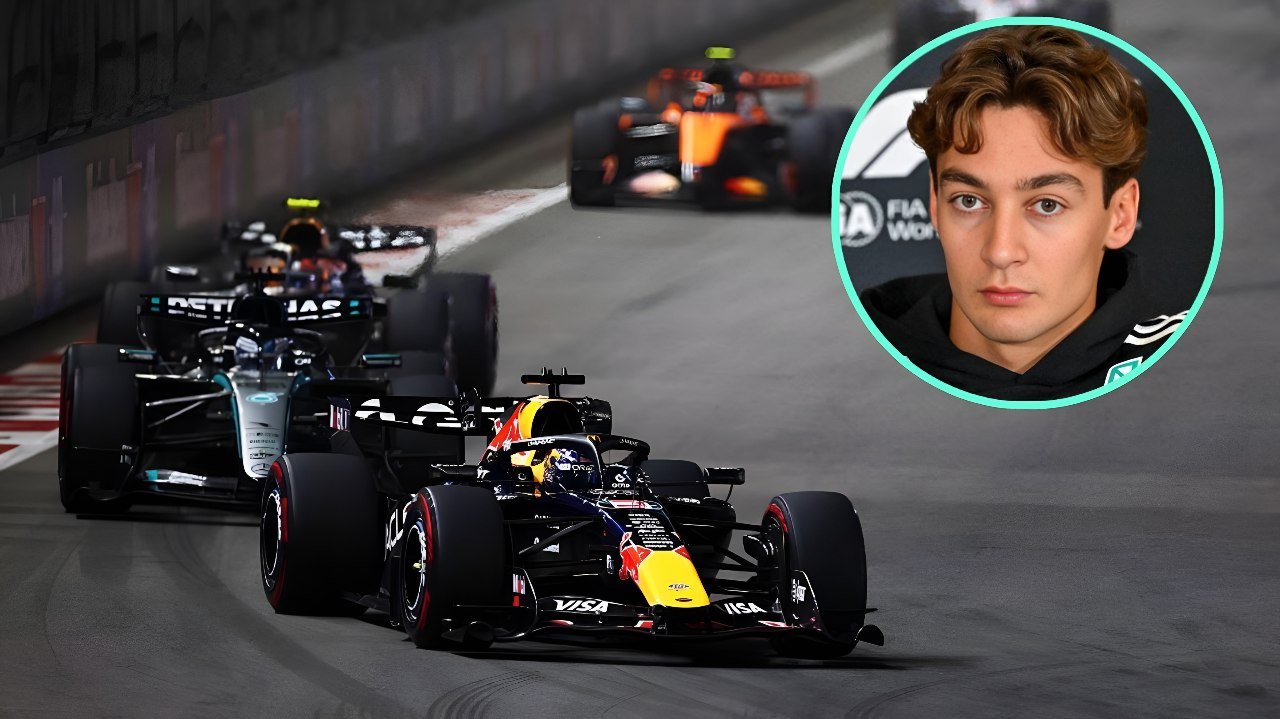
A no-defending offer made on lap 11 never reached Verstappen
George Russell offered Max Verstappen a temporary non-aggression pact during the Las Vegas Grand Prix, but the proposal never reached its intended recipient. The unusual overture came over team radio on lap 11, when the Mercedes driver was prepared to set the rivalry aside for mutual benefit. The episode, uncovered through a review of the race communications, offers a rare glimpse of pragmatism between two of the sport’s most fiercely competitive drivers.
Russell’s Lap 11 Radio Message Explained
By lap 11, Russell and Verstappen were repeatedly exchanging the lead and had begun to pull away from Isack Hadjar, who was running third. With that gap opening, Russell addressed his race engineer, Marcus Dudley, over team radio. He said he was happy to work together with Verstappen if that would help them break away from the pack, and that if the Red Bull driver wished to trade positions back and forth, he was willing to do so, provided neither driver defended.
The proposal was a practical one. In Formula 1, two drivers who fight each other wheel to wheel can allow the cars behind to close the gap, so an agreement to stop defending can, in theory, benefit both. Russell’s suggestion followed that logic. It was not an alliance or a long-term arrangement, but a temporary understanding tied to one goal: breaking away from the pack.
Why the Team Radio Message Never Reached Red Bull
Dudley did not acknowledge the message. On the Red Bull side, Verstappen’s race engineer, Tom Hart, did not pass the suggestion on to his driver. As a result, the cooperation never began. Verstappen was never told that his rival was open to a truce, and no agreement, formal or informal, ever took shape between the two cars.
A message of this kind depends on engineers on both sides acting as intermediaries. A driver cannot negotiate directly with a rival during a race, so any proposal must be relayed, weighed and accepted by people whose priority is their own driver’s result. Neither team is obliged to act on an unsolicited suggestion. In this case, the idea went nowhere, and the opportunity, if it was ever real, passed without comment.
Russell’s Barrier Slide While Chasing the Win
Verstappen went on to win the Las Vegas Grand Prix. Russell, by contrast, dropped to ninth place after sliding into the barrier while trying to repass his Mercedes teammate, Kimi Antonelli, for second. The error turned a promising race into a damaging result, and it made the unrelayed lap 11 message look like a road not taken.
Russell was candid about his decision. He explained that the risk had been too high and that he paid the price, acknowledging that a conservative approach would probably have delivered third place. Instead, he said, he was going for the win. That answer fits the character of the lap 11 message: a driver who recognised when cooperation might help, and who chose aggression when he believed victory was within reach.
Verstappen’s Reaction and the Practice Collision Fallout
The radio proposal arrived against a tense backdrop. The two drivers had already collided in practice, and Russell had publicly accused Verstappen of trying to undermine rivals, saying that somebody needed to put him in his place. Those comments had kept the dispute alive, which makes the offer of cooperation all the more striking.
Verstappen’s reaction to Russell’s mistake was blunt. He suggested that karma had played a part and that his rival deserved the outcome. There is no indication that he knew of the earlier offer, and how he would have responded cannot be known. The argument that had begun in practice simply resumed after the chequered flag.
Russell, for his part, kept his criticism separate from his admiration. He said he holds the utmost respect for Verstappen’s talent and everything he has achieved, while making clear that the two men disagree on many other matters. It is a distinction that explains how a driver can criticise a rival’s conduct in one moment and propose cooperation with him in the next.
ALSO READ: Leclerc Admits Blame for Costly Hamilton Collision
What the Unheard Message Reveals About Formula 1
The incident illustrates a long-standing truth about the sport: rivalry and pragmatism coexist. Drivers who clash fiercely in practice or on the track will still consider cooperation when the race situation rewards it. Russell’s message was not a gesture of friendship. It was a calculation about pace, position and the threat from behind, made by a driver who believed that shared effort could protect a leading position for both cars.
It also highlights how much of a Grand Prix unfolds out of public view. Team radio exchanges that never reach the television audience, or that go unanswered, can still shape a story once they are reviewed after the event. In this case, a single unacknowledged sentence has become a talking point after the race, adding context to a weekend already defined by collision, controversy and a dramatic error.
For anyone following this rivalry, the lesson is straightforward. Russell was prepared to work with Verstappen when it suited both men, and equally prepared to gamble when victory seemed possible. The dispute between them did not soften after the chequered flag. The pact that never happened will remain a footnote to the Las Vegas Grand Prix, yet it captures the essence of the contest: two competitors who disagree on much, who fight for every position, and who, for one brief moment on lap 11, saw a reason to cooperate. In the end, the message that might have united them was never passed along to Verstappen himself.