

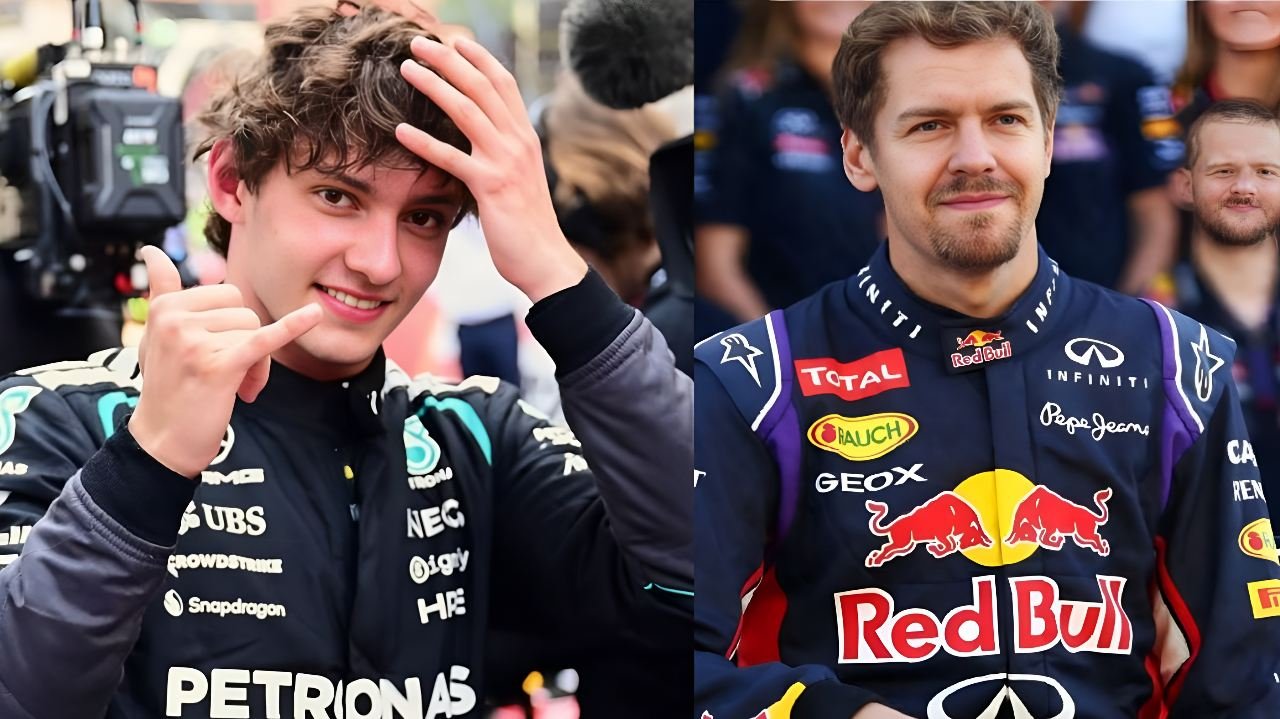
Mercedes driver ends Vettel’s 16-year record at 20 years old
Kimi Antonelli has become the youngest world champion in Formula 1 history, sealing the 2026 drivers’ title at the Mexico City Grand Prix at the age of 20 years and 68 days. The Mercedes driver secured the championship with a third-place finish on 1 November 2026, ending a record that had stood for 16 years and opening a new chapter in the sport’s long history.
The achievement carries meaning far beyond a single age statistic. Antonelli reached the summit in only his second season in the world championship, having taken the seat at Mercedes previously occupied by seven-time champion Lewis Hamilton. He is the first driver born in the 2000s to win the title, the 36th different champion in the history of the competition, and the first Italian to be crowned since Alberto Ascari claimed his second title in 1953, which brings an end to a wait of 73 years for the country.
How Antonelli Clinched the 2026 F1 World Championship
The championship was decided at the Autodromo Hermanos Rodriguez in Mexico City, where Antonelli needed only a ninth-place finish or better to secure both the crown and the record attached to it. He delivered considerably more than the minimum. A third-place finish was enough to confirm the title with four races of the season still to run, a margin that underlines how complete his campaign had been.
Victory in the race itself went to Max Verstappen, who held off Hamilton to take the win. Yet the result at the front of the field was not the story of the afternoon. Once Antonelli had taken the chequered flag, the focus turned to what his podium meant for the championship, and the emotion of the moment became clear. He paid a tearful tribute to Mercedes and described himself as speechless, calling it a day he would remember forever.
In the build-up to the race, Antonelli had been candid about the pressure of the occasion, admitting that he felt tense and tired as the championship came within reach. That honesty is a useful reminder that behind the statistics is a 20-year-old who was managing the expectations of a major manufacturer team, a nation and a global audience at the same time. Hamilton, whose seat Antonelli now occupies, described the achievement as phenomenal and said he was grateful to be racing at the moment history was made.
For Italian motorsport, the significance is hard to overstate. Seventy-three years separate Ascari’s final title from Antonelli’s first, and the long absence of an Italian champion had become one of the sport’s enduring statistics. That gap is now closed, and it has been closed by the youngest champion the world championship has ever produced.
Antonelli vs Vettel: F1’s Youngest World Champions Ranked
A record is only as meaningful as the benchmark it replaces, so the numbers deserve to be set out plainly. Antonelli was 20 years and 68 days old when he won the title. The previous benchmark belonged to Sebastian Vettel, who won his first championship with Red Bull at the 2010 Abu Dhabi Grand Prix at the age of 23 years, 4 months and 11 days, which equates to 23 years and 134 days. The difference is more than three years, an unusually wide margin for an age record in elite motorsport.
Vettel’s own triumph in 2010 was far from routine. He arrived at the Abu Dhabi finale 15 points behind Fernando Alonso, yet left the circuit as champion, edging the title by just four points. It was a dramatic conclusion to a season that rewarded patience and nerve as much as raw speed.
Vettel had taken the age record from Hamilton, who won his first title in 2008 at 23 years and 300 days and held the distinction for two years. The five youngest champions in history now read as follows: Antonelli at 20 years and 68 days in 2026, Vettel at 23 years and 134 days in 2010, Hamilton at 23 years and 300 days in 2008, Alonso at 24 years and 57 days in 2005, and Max Verstappen at 24 years and 73 days in 2021.
The comparison with more recent champions is equally instructive. Lando Norris, who won his first title in 2025, was 26 years and 24 days old, an age widely regarded as young for a first championship. Winning at 20 therefore sits well outside the normal pattern of the modern era, and it explains why this milestone is being treated as a defining moment rather than a routine statistic.
Records Antonelli Broke on the Way to the 2026 Title
Antonelli’s championship was built on a series of other age records set across the 2026 season. At the Chinese Grand Prix he became the youngest pole sitter in Formula 1 history at 19 years, 6 months and 18 days, surpassing Vettel’s mark of 21 years, 2 months and 11 days from the 2008 Italian Grand Prix. On the same weekend he also became the youngest hat-trick scorer, again surpassing a Vettel record, which had stood at 21 years, 11 months and 18 days from the 2009 British Grand Prix.
He also became the youngest driver ever to lead the world championship, and the youngest to reach five Grand Prix victories. Each of these milestones was a stage in a progression rather than an isolated result, and together they show a driver who converted early speed into sustained scoring over a full season. By the time he reached Mexico City, he was already more than three years younger than Hamilton was when he won the title in 2008.
It is notable that Vettel’s name appears again and again as the previous record holder. Between 2008 and 2010 he rewrote the youngest-driver benchmarks at a pace few expected to be challenged, and for years those marks seemed close to untouchable. Antonelli’s 2026 season has replaced several of them within a single campaign, which is why the scale of the change, rather than any one number, defines the story.
ALSO READ: Mercedes Software Fix Targets Vegas Energy Failure
What Vettel’s Multi-Title Records Mean After This Milestone
Vettel himself had said before the championship was decided that he would be very happy to see Antonelli break his record. When it happened, he sent a heartfelt message of congratulations and shared advice on preparing for life as a world champion. It was a gracious response from a four-time title winner who understands better than most what the first championship demands and what comes after it.
Antonelli, for his part, has been candid about the generational distance between the two men. Speaking at a press conference before the United States Grand Prix, he admitted that he had no memory of Vettel becoming champion because he was only four years old at the time. The remark illustrates how long the record stood and how young the new champion truly is.
Importantly, Antonelli’s achievement does not erase Vettel’s other age records. Vettel remains the youngest double, triple and quadruple world champion, having won consecutive titles in 2011, 2012 and 2013 after his first in 2010. Those marks continue to stand as milestones to chase, and any attempt to overtake them would require Antonelli to follow his first championship with sustained success in the seasons ahead.
For now, the facts are clear and verifiable. Antonelli is the 36th world champion, the youngest in history, the first Italian champion in 73 years and the first champion born in the 2000s. He earned the title in his second season, with four races remaining, after a campaign that also produced pole position, hat-trick and championship-lead records. The task for Mercedes and for Antonelli now is to determine whether 2026 marks the start of a long period of success or a single historic peak. That question will be answered on track in the seasons to come, but the record books have already been permanently changed.