

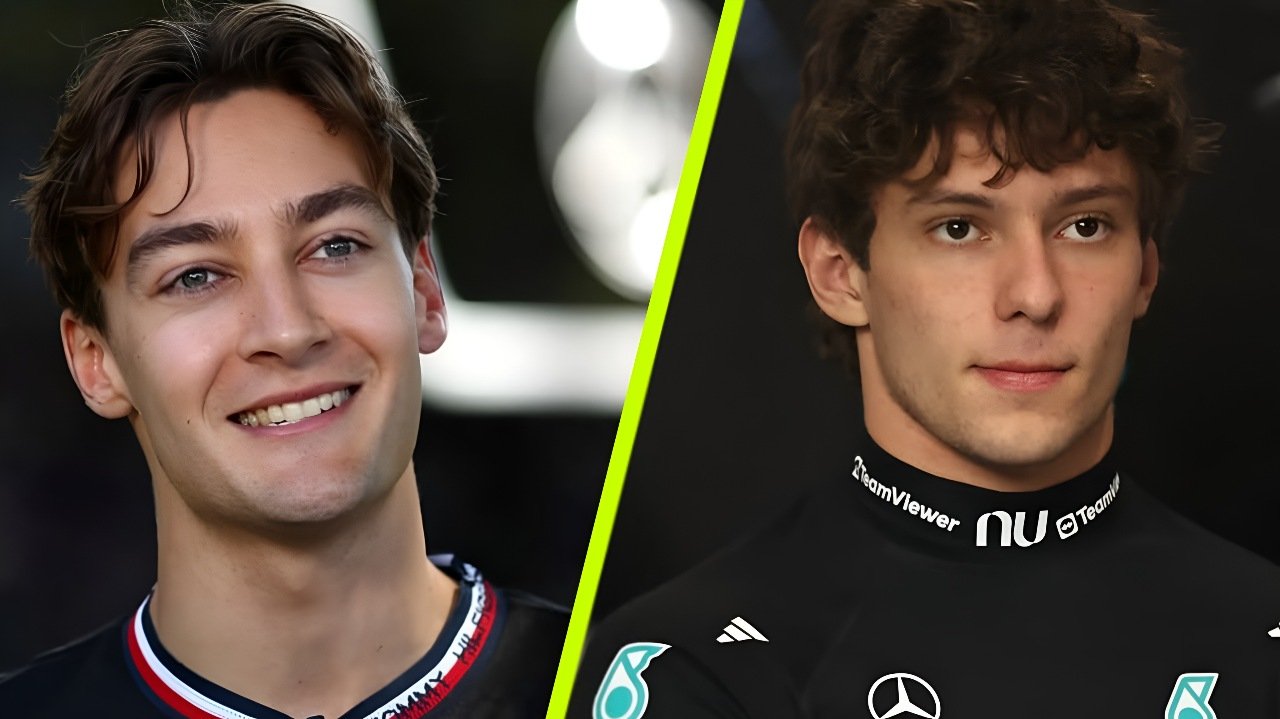
Russell Takes Lusail Pole as Mercedes Reviews Its Exit Order
George Russell claimed pole position for the Qatar Grand Prix at Lusail on 28 November 2026, beating Mercedes team-mate and newly crowned world champion Kimi Antonelli by 0.128 seconds. The result was overshadowed by a radio exchange in which Antonelli questioned the team’s decision to send him out first for the final Q3 runs. Mercedes secured its first front-row lockout since the Canadian Grand Prix in May, yet the mood in the garage was not one of uniform celebration. Antonelli, who had been quickest in all three practice sessions, said afterwards that he had asked to leave the pit lane at the back of the queue and that the team’s call had a real effect on his session. Toto Wolff acknowledged on the radio that the matter would be reviewed. This report sets out what happened, what was said, and why the order of cars on a Formula 1 out-lap can matter so much.
Qualifying at Lusail International Circuit rewards precision and careful tyre management on a track that is demanding on rubber. Russell set a 1:21.695 on his first flying lap in Q3, and that lap proved sufficient to settle pole position. Antonelli was 0.128 seconds adrift in second place, with Lando Norris third, roughly six-tenths behind the pole time. The Mercedes pair therefore held a commanding advantage over the rest of the field.
Qatar GP Qualifying Result: Russell Leads Every Segment
Russell’s performance was comprehensive. He topped every segment of qualifying, which meant he set the benchmark in Q1, Q2 and Q3 and never surrendered the top position to a team-mate who had dominated practice. That contrast is notable. Antonelli had been the fastest Mercedes driver in all three practice sessions, which made him the natural favourite heading into the hour that decides the grid. Qualifying, however, is a different discipline from practice. It demands a single lap built from a tyre prepared precisely, a clear track and total commitment, and Russell delivered all three at the first attempt in Q3.
This was Russell’s sixth pole position of the 2026 season. He last took pole at this circuit in 2024, and he has not yet converted a Qatar pole into a victory, a statistic that adds a note of unfinished business to his weekend. For Mercedes as a whole, the front-row lockout carried its own significance, because it was the team’s first since the Canadian Grand Prix in May.
The wider picture matters for context. Antonelli arrived in Qatar as the reigning champion, with the season’s biggest question already answered. A driver in that position might be expected to approach qualifying with freedom. Instead, the weekend produced a rare moment of friction, not about pace but about process. Antonelli identified the middle sector of the lap as the place where he lost time to Russell, a precise and measured assessment that suggests he understood the deficit as more than a matter of running order. The difference on the stopwatch was small in absolute terms, yet in a sport decided by thousandths, 0.128 seconds is a substantial margin between team-mates in the same machinery.
Antonelli Radio Message Challenges Mercedes Run Order
The most discussed moment of the session came over the radio. As the Mercedes cars left the pit lane for their final Q3 attempts, Antonelli was at the front of the queue, ahead of Russell. He immediately asked the team, “Why did you send me first?” The question reflected a preference he had expressly made known beforehand: he wanted to go out last.
After the session, Antonelli expanded on his reasoning. He said he had a good feeling going into Q3 and that, for the final run, he wanted to go at the back, but the team sent him first. He said the two sides needed to review the decision together, and that the call had definitely had an impact on his session.
It is worth being precise about what the evidence shows. Pole position was settled by Russell’s first run in Q3. The order in which the cars left the pit lane for the final attempts therefore did not decide who started on pole. What the dispute addresses is whether Antonelli was given the best opportunity to extract his maximum on the lap he drove, and whether the team honoured a clearly stated request. Antonelli himself pointed to the middle sector as the place where he struggled compared with his team-mate, and he also said the run order affected him. Both statements deserve to be reported together, because neither alone gives the complete account.
The disagreement is also a reminder of how closely a modern Formula 1 team must manage the relationship between two drivers. Radio messages are public, broadcast within moments and analysed by supporters within minutes. A single sentence from a driver can set the narrative for an entire weekend. Mercedes responded quickly and did not attempt to minimise the concern, which is a sign of a team confident enough in its own culture to accept scrutiny.
Lusail Slipstream and Track Position in Q3 Explained
To understand why Antonelli cared so much about his place in the queue, it helps to understand the aerodynamics. When a car follows another closely on a straight, it moves through air that has already been disturbed, which reduces the drag it experiences. This effect, known as the slipstream or tow, can raise top speed and cut lap time on circuits with long straights. Reports from the session indicate that Antonelli wanted to leave last because of the power of the slipstream at Lusail, and because running later could offer the best possible track conditions.
Both factors are real. A driver who leaves the pit lane at the back of a queue can organise his out-lap to follow a team-mate and benefit from the tow, and a surface that has just been driven by many cars can be marginally quicker than one that has not. Running first, by contrast, offers clean air but no tow. In qualifying, the ideal choice is rarely obvious, and teams must weigh competing priorities for two cars at once.
Timing is another consideration. Out-laps in Q3 must be carefully paced so that the tyres reach the correct temperature without the driver being caught in traffic or failing to start the flying lap before the chequered flag falls. Ordering the cars is therefore a matter of risk management as well as speed. A team cannot simply place a preferred driver last and assume the outcome will follow, because every position in the queue carries a trade-off.
None of this means the decision was right or wrong in an absolute sense. It means that Antonelli’s request rested on a legitimate technical rationale, which explains why the team accepted that its process required examination.
ALSO READ: Kimi Antonelli Becomes F1’s Youngest Champion Ever
Wolff Review and Mercedes Team Management Under Scrutiny
Toto Wolff spoke on the radio during the session and again afterwards. Over the team radio, he accepted responsibility, saying the matter rested with the team and that the process would be reviewed. That immediate acknowledgement is significant in a sport where teams often defend operational decisions by default. It signalled that Mercedes regarded Antonelli’s concern as valid enough to merit internal examination. After the session, Wolff also described Russell’s pole position as merited, giving full credit to the lap that decided the hour.
Managing two top drivers inside one team is a recurring challenge. When both are capable of winning, even small procedural decisions can feel significant, and clear communication is the primary tool for preserving trust. By acknowledging the issue openly, Mercedes protected that trust at a moment when it could have eroded.
For readers following the championship narrative, the incident offers a useful lens. Antonelli’s title is already secured, so the stakes of the dispute are reputational and operational rather than a battle for points. Yet the Qatar Grand Prix still matters. Russell begins from pole with a chance to convert it into his first win at the circuit, while Antonelli, starting alongside him on the front row, has the opportunity to answer on track.
In summary, the verified facts are clear. Russell took pole by 0.128 seconds with a 1:21.695, led every segment of qualifying, and gave Mercedes its first front-row lockout since May. Antonelli publicly questioned the decision to send him out first, explained that he had wanted to go last, and said the call had an impact. The team acknowledged the issue and promised a review. The coming races will show whether that review changes how Mercedes approaches its next qualifying session, and whether a moment of friction becomes a lesson in better communication.